Solitary Beauty Peak, Guilin: Climb & Visitor Guide
Plan a visit to Solitary Beauty Peak in Guilin: weigh the steep climb, find key rock carvings, and fit in the Jingjiang Princes' City.
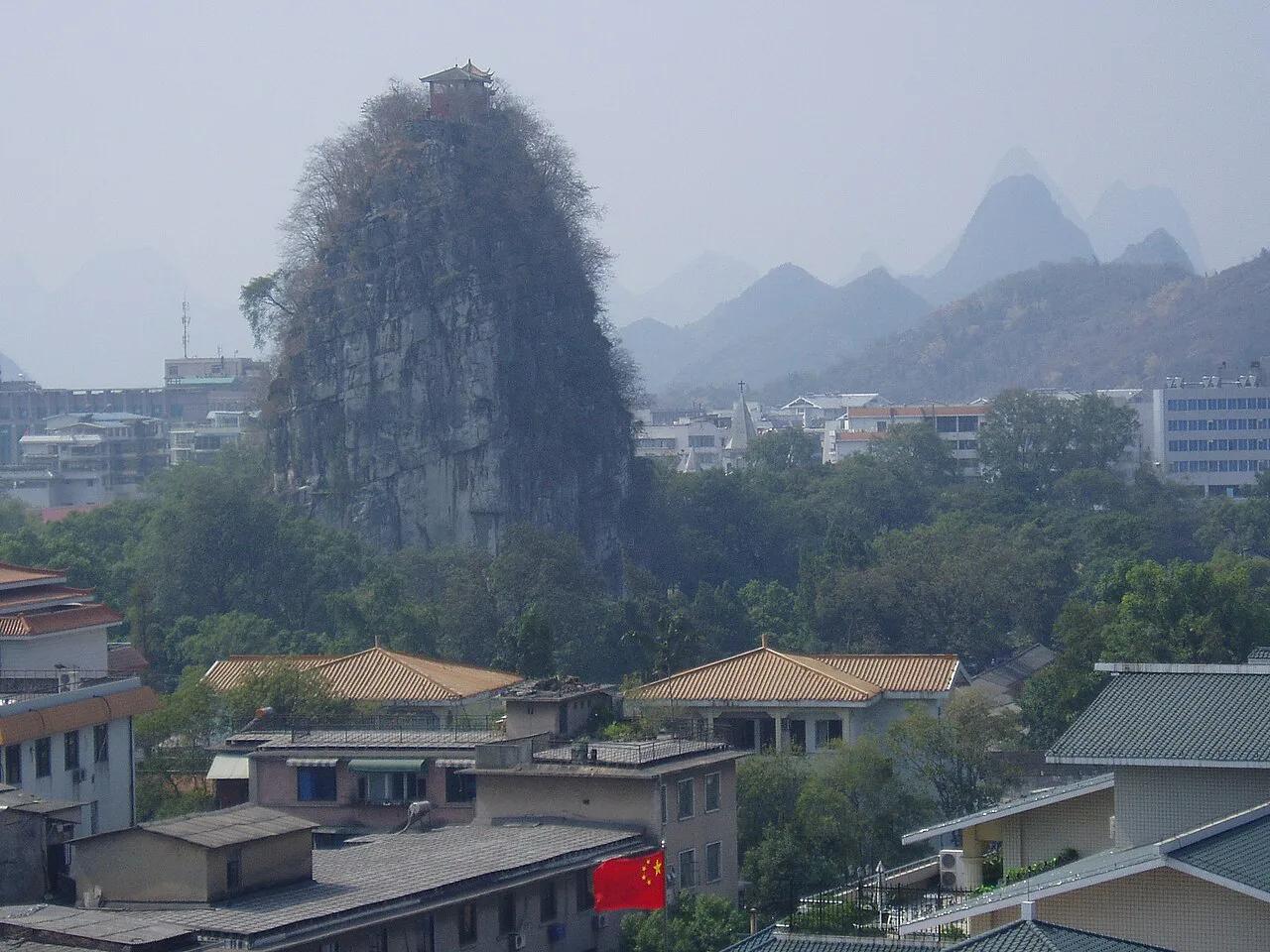
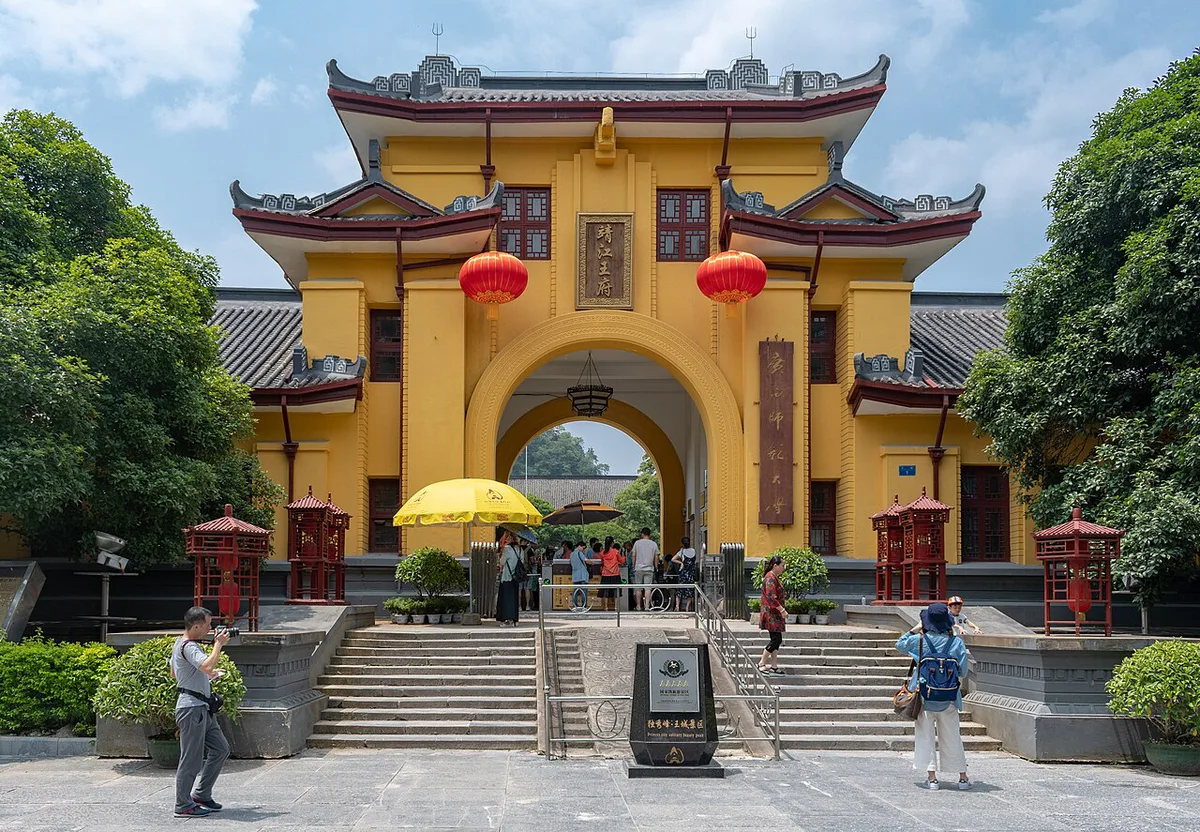
Last updated November 2026: Solitary Beauty Peak (Duxiu Feng 独秀峰) is a steep karst peak inside the Jingjiang Princes' City (靖江王城) in central Guilin. You therefore encounter it together with the site of a Ming-era princely palace and the old Guangxi Examination Hall. Go for rock carvings, history and a city view, but weigh the steep stairs before committing to the summit.
Featured image: Zhangzhugang, CC BY-SA 3.0, via Wikimedia Commons.
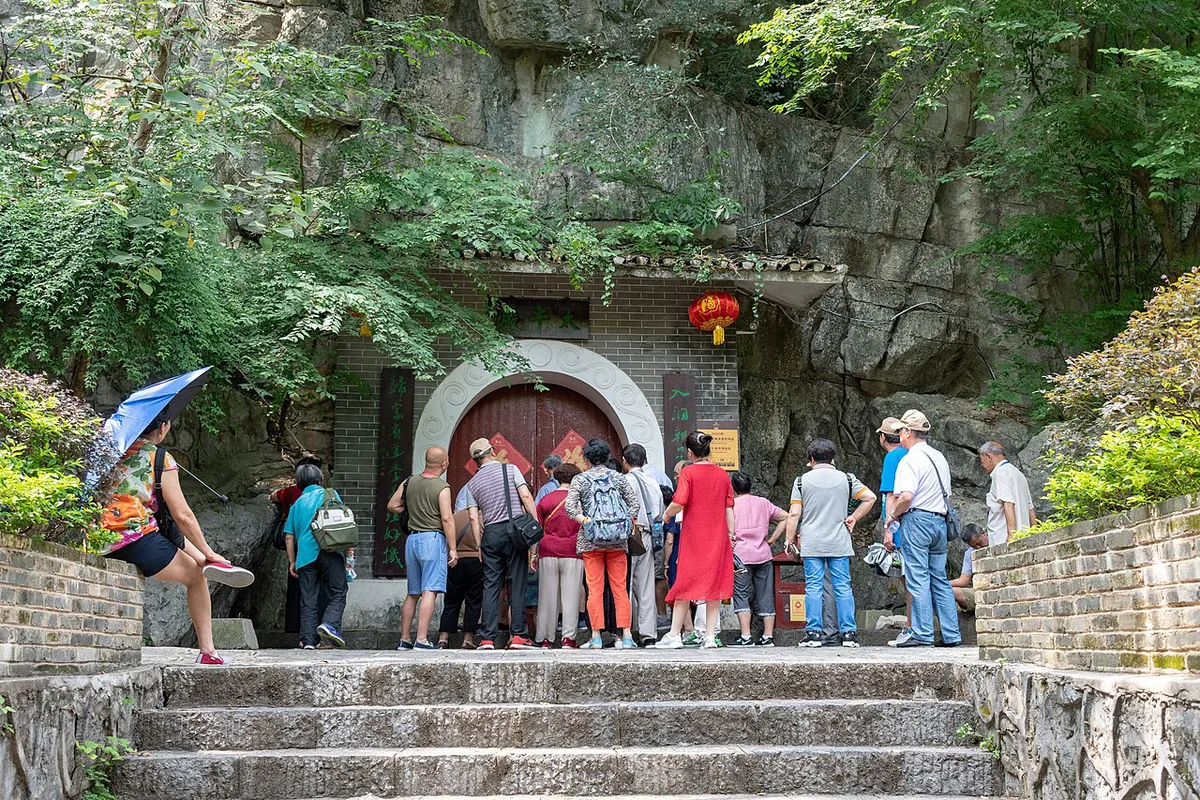
Is Solitary Beauty Peak Worth Visiting?
It is a strong choice if you want a viewpoint with a story attached. Inscriptions mark the rock, while the surrounding Princes' City adds royal and imperial-exam history. Confident stair climbers with an interest in both have the clearest reason to go.
If you only want scenery, judge the visit by your appetite for the ascent. For other outdoor options, start with our guide to Guilin's mountains.
What the Climb Is Like
Expect a real stair climb. Accounts range from slightly steep to very steep, and narrow treads may make it awkward to pause on the way up. Do not plan on it being an easy stroll. Wear comfortable shoes with good grip, and keep enough energy and attention for the way down.
Before buying a ticket, ask staff about handrails, resting places and the descent route, including whether it is one-way. Also ask whether rain or other conditions have closed the summit path, and when the last climb begins. Use these points to decide whether to go up:
- Confident on stairs: the summit is a reasonable priority if steep, narrow steps do not bother you.
- Knee, balance or mobility concerns: get specific route details first, and be prepared to skip the climb.
- Uneasy with heights or steep descents: think about the return journey as carefully as the ascent.
- Families with young children: consider whether each child can manage narrow steps where stopping may be awkward.
- Older travelers: decide by current stair ability and comfort, since age alone does not settle the question.
Rock Carvings and the Summit View
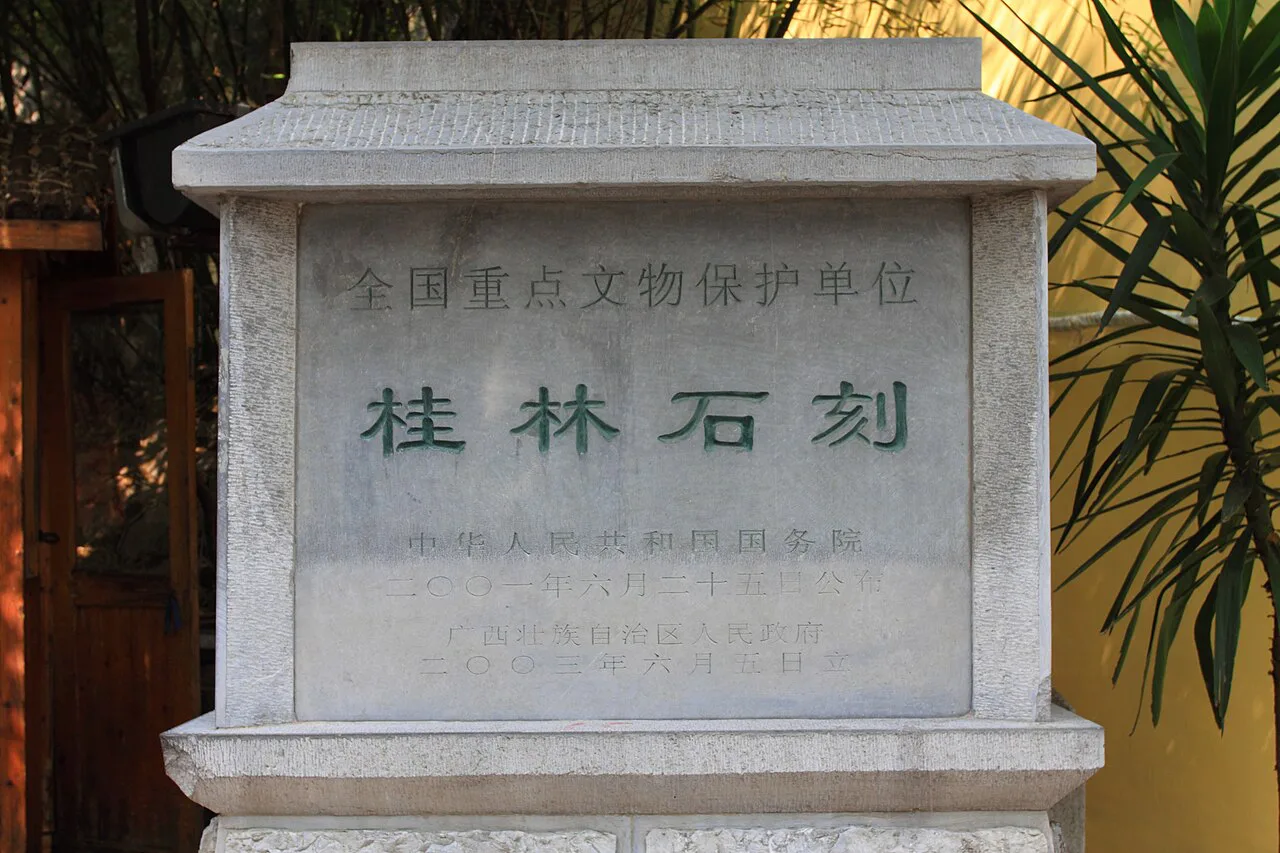
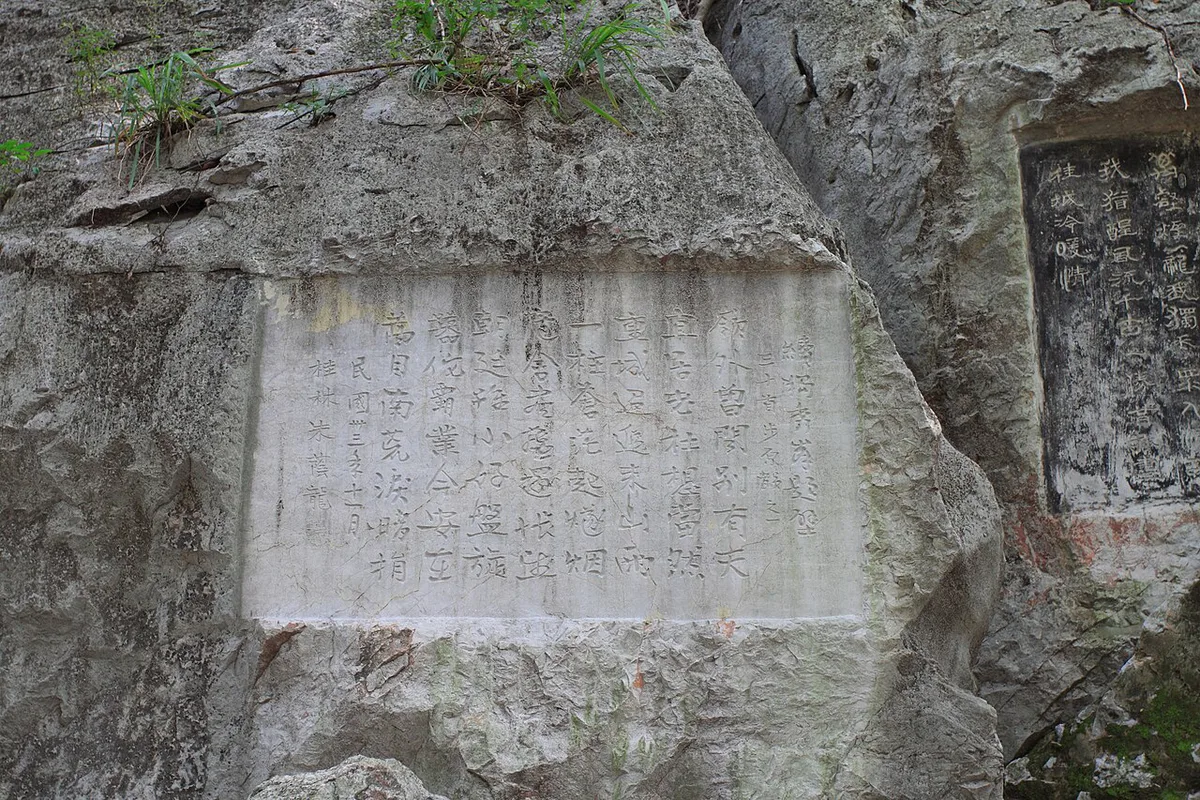
Start with 桂林山水甲天下, often understood as “Guilin's scenery is the finest under heaven.” This famous phrase is linked to a carving at the foot of the peak and to a poem by the official Wang Zhenggong (王正功). Matching the Chinese characters can help you find it, even if you cannot read the surrounding text.
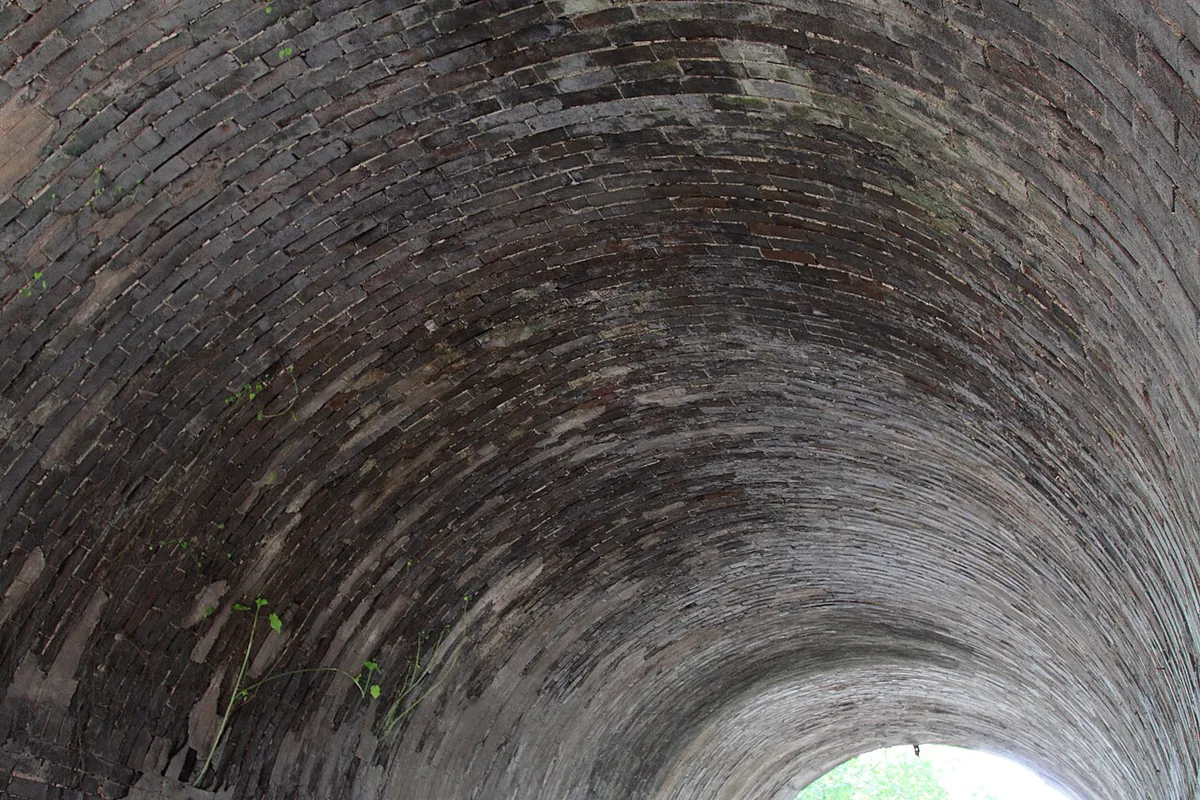
Keep looking as you move around the rock. A line attributed to Yan Yanzhi praises the peak's solitary rise above the city. It gives useful context for the English name. A large inscription known in English as “Pillar of the Southern Sky” presents the peak as a towering support. Along the climb, watch for the “Heavenly Ladder” inscription too.
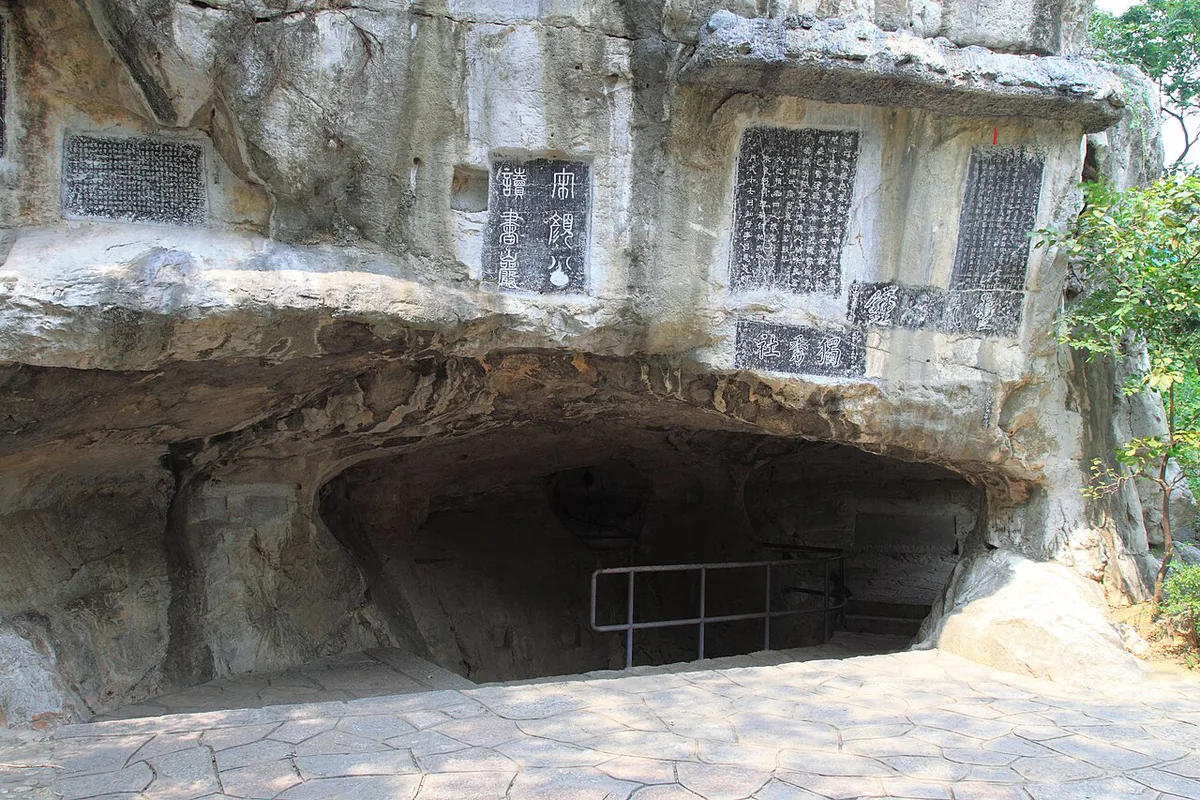
On the south side, look for 3 Shou (寿, longevity) characters arranged vertically. By tradition, the top one was a gift from Empress Dowager Cixi. At the foot of the peak is Taiping Cave, formerly called West Cave. As the story goes, a Jingjiang prince found “Taiping Tongbao” coins there, took them as a good omen and renamed the cave. Ask at the site whether it is open.
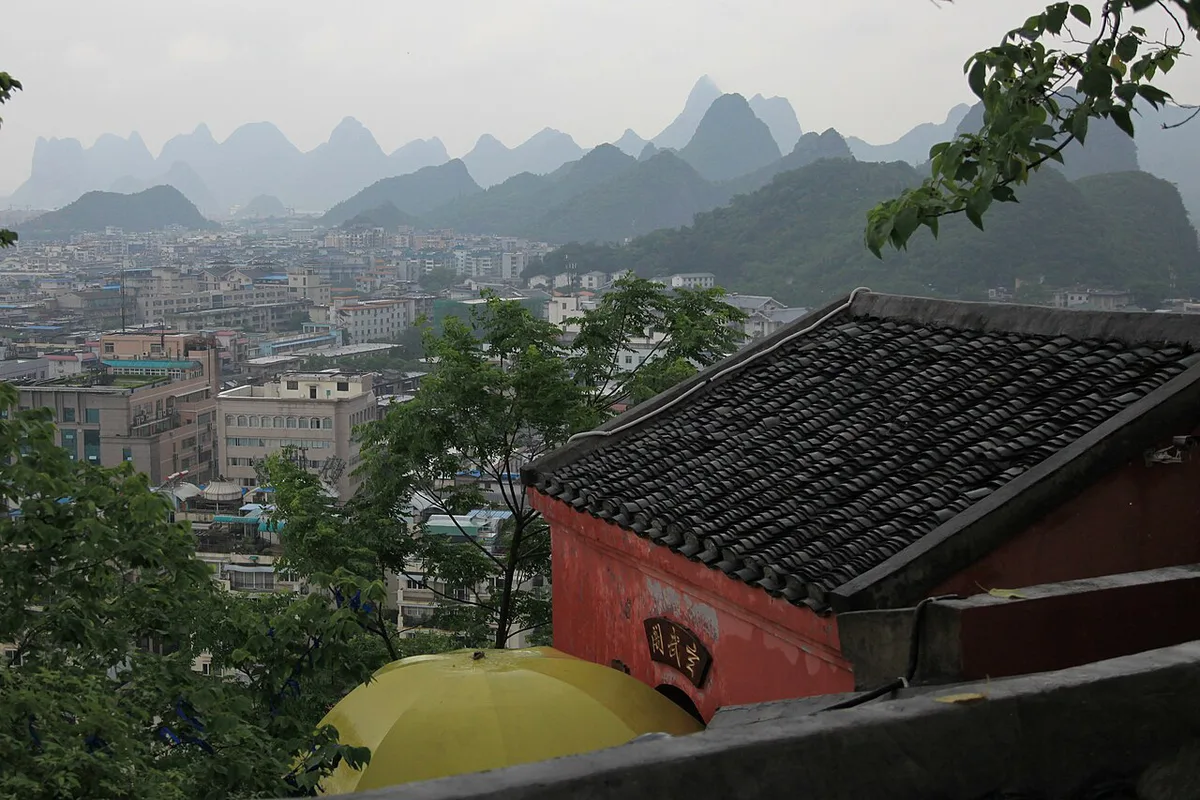
From the summit, you can look across Guilin, the surrounding hills and the Princes' City. Visibility depends on conditions, so a hazy or wet day may give you less to see.
What Else to See in Jingjiang Princes' City
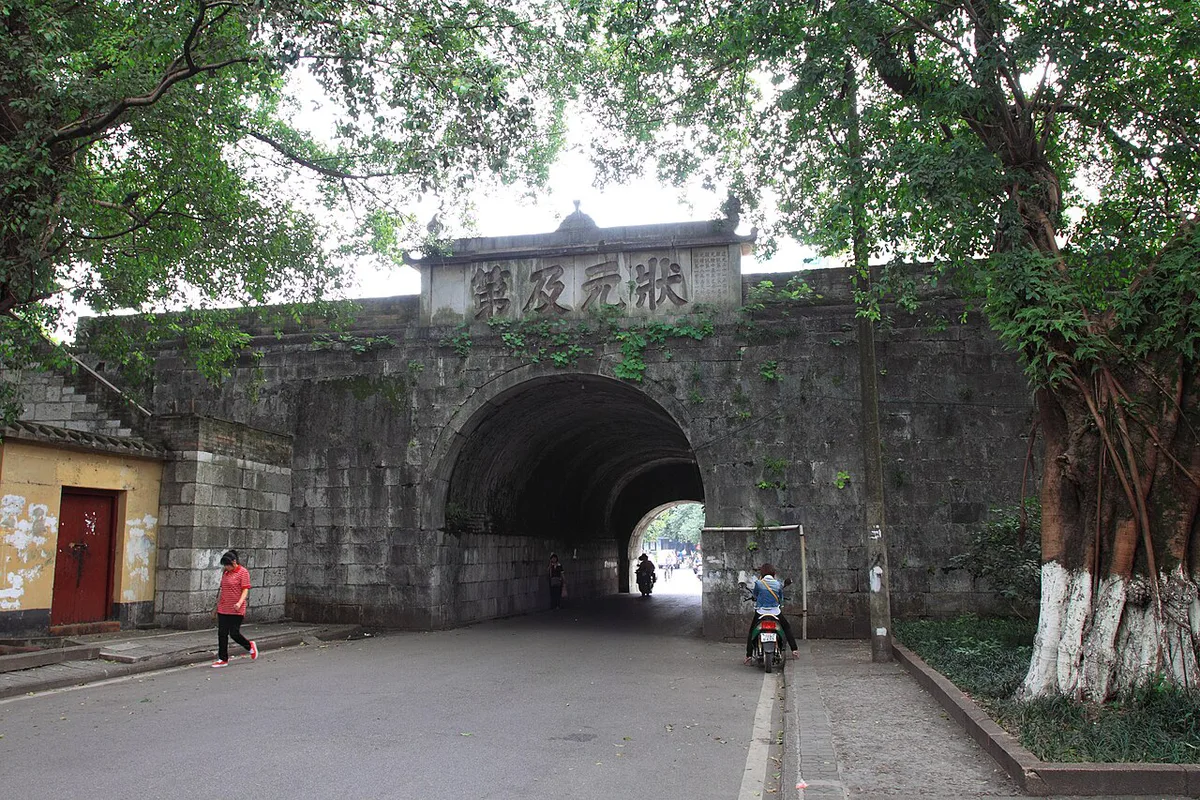
This walled-city visit is about more than the peak. It was the palace setting for the Ming-dynasty Jingjiang princes and later history also gathered here, including the Guangxi Examination Hall. Give the exam section time if you are curious about how provincial testing fits into the site's story.
In the exhibition halls, look for replica princely crowns and royal dress. These reproductions help you picture court clothing, but they are not original royal possessions. Visitor activities have included making a rubbing of the character “Fu” (福, good fortune) and trying an exam paper. Check whether either is currently running and whether it costs extra.
Modern history appears through a monument to Sun Yat-sen's Northern Expedition Headquarters and the “Zhongshan Never Dies” memorial tower. Yangzhi Pavilion, set among trees, is another feature to include if your pace allows.
How Much Time to Allow
As a rough planning figure, allow 1–2 hours. Treat that as flexible if you want to climb, read exhibits and join an activity. Choose your main interest first, so the part you care about most does not get squeezed into the end.
Set aside 1–2 hours here, and fit the steep climb and the descent inside that window if the peak is on your list.
A guide can be useful if the stories behind the carvings are your priority. Compare the current fee and available language with your interest in the history. If you prefer to explore independently, ask about English signs and audio guides at the entrance. When time is short, trim optional activities before rushing through your chosen carvings or exhibits.
| Priority | Climb | Focus | Trade-off |
|---|---|---|---|
| View first | Yes | Summit and carvings along your route | Requires stair effort; the view depends on conditions |
| History first | Optional | Carvings, exhibition halls and Examination Hall | Needs more attention to interpretation |
| No climb | No | Ground-level sights that are open to you | No summit view; check access and ticket value first |
Tickets, Hours and Getting There
Use No. 1 Wangcheng Road, Xiufeng District, Guilin, as the address for Jingjiang Princes' City. Show a driver the Chinese name 靖江王城, and confirm the visitor entrance before setting out. For public transit, use a live map to find the current stop and walking route.
Check the scenic area's official ticket channel for the gate price, opening hours and last entry. A reseller's starting price may not match the gate fare or include the same things. Before paying, settle these questions:
- Does admission include the peak, exhibitions and Examination Hall?
- Can you enter without climbing, and is there a different ticket for that choice?
- Do you need advance booking or identification, such as your passport?
- Which concessions and bag rules apply?
- Which activities or guide services cost extra?
Mistakes to Avoid and Where to Go Next
Avoid leaving the ascent until late in your visit, especially before you know the summit cutoff. Do not let the view push the carvings out of your plan. If stairs are a concern, resolve ground-level access and ticket terms before paying. Staying in central Guilin may be convenient if this visit is a priority, but compare your actual route from any lodging.
For another outing, read about visiting Elephant Trunk Hill. You can also compare it with our Fubo Hill visit guide. Another option is to explore planning for Diecai Hill. If a park better suits your day, consider a Seven Star Park visit. For a different mountain choice, look into a Yao Mountain outing. To place Guilin's peaks in a broader setting, read about China's wider karst landscapes.
Notes for your Guilin trip
Optional updates to our guides.
Also worth reading
Keep planning
More guides you'll find useful