6 Best Ways to Experience the Yulong River, Yangshuo
Plan a Yulong River visit in Yangshuo: compare bamboo rafting with riding or walking, choose bridge and village stops, and sort piers and return transport.
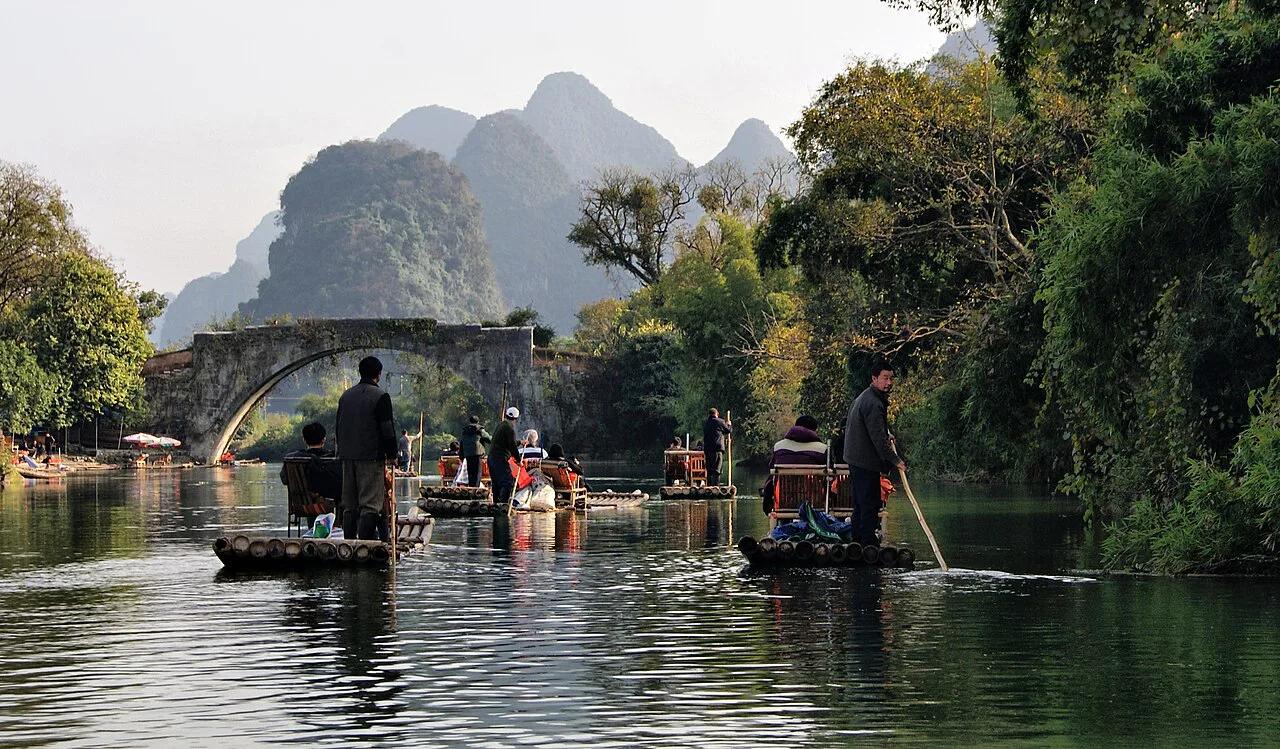
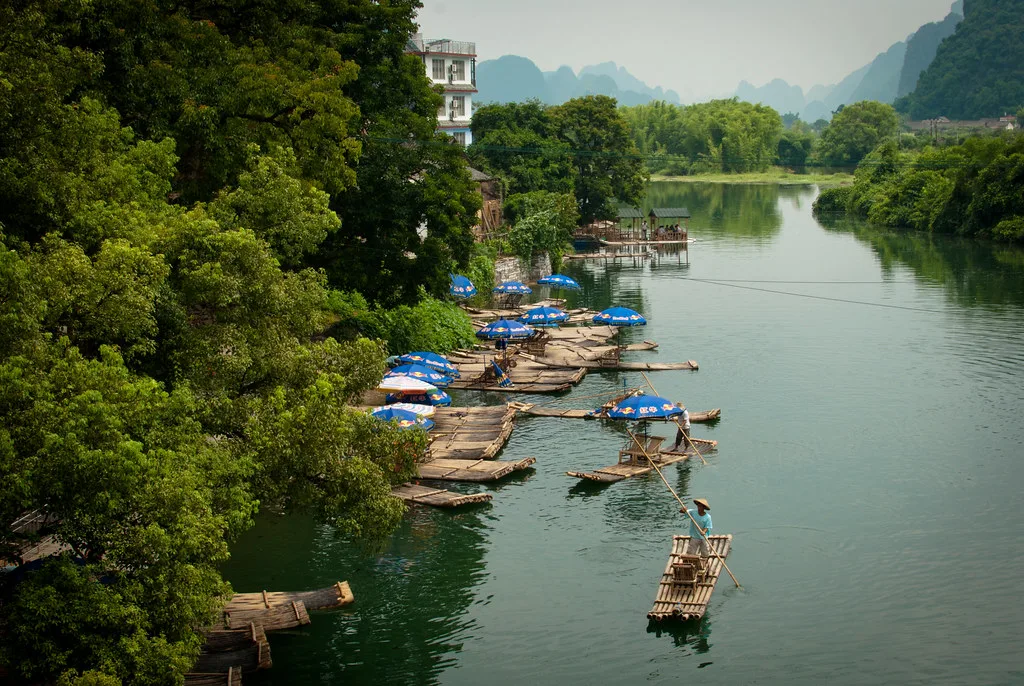
Last updated November 2026: the Yulong River (遇龙河) is a Li River tributary in Yangshuo, known for karst peaks, countryside and hand-poled bamboo rafts. Raft if the water-level view matters most, or ride if you want to choose your own stops. Combine them only when you have a clear plan for getting from the finishing pier to your next stop.
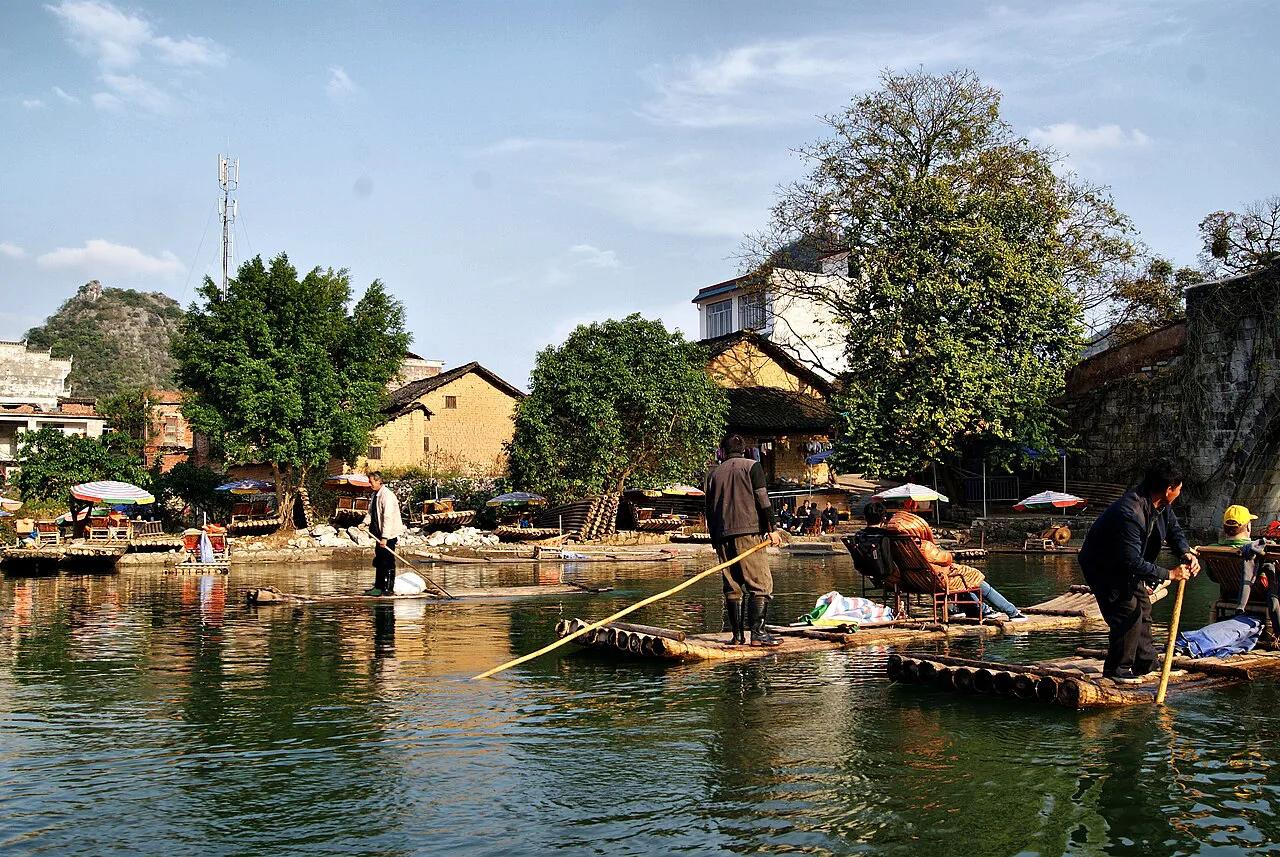
Featured image: HALUK COMERTEL, CC BY 3.0, via Wikimedia Commons.
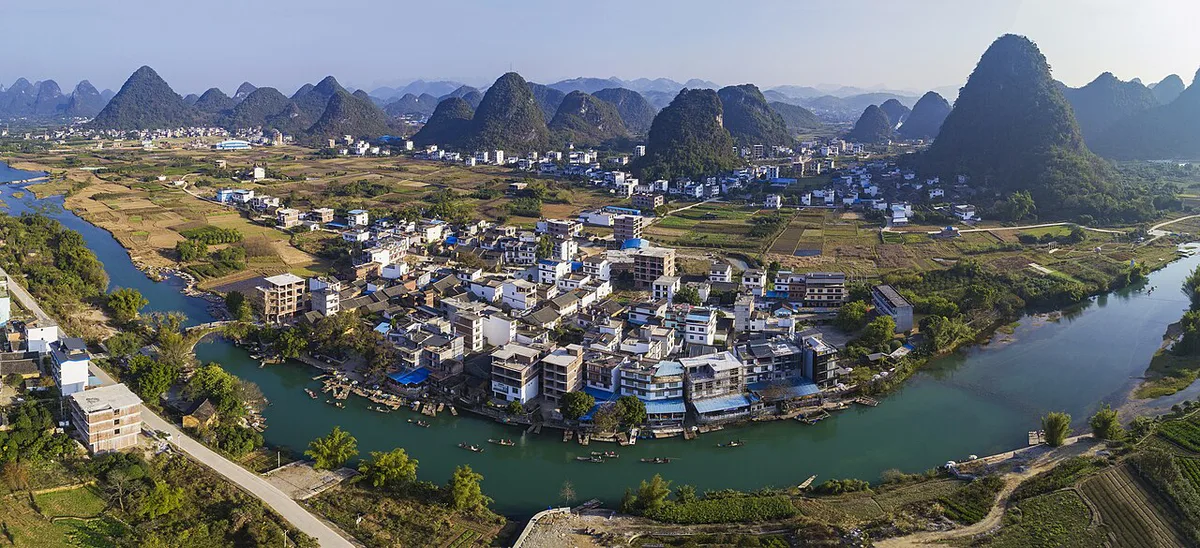
6 Best Ways to Experience the Yulong River
We'd choose the main activity first, then add stops that fit its start and finish. No yuan fare or pier timetable is quoted here, so get both from an official seller before building your day.
1. Raft the upper section
This section is described as running from Jinlong Bridge to Jiuxian. Its draw is rural scenery seen from a hand-poled raft, with more dams than the lower section. Watch the riverbanks between drops, then secure your phone as the raft approaches a dam, because riders can get splashed.
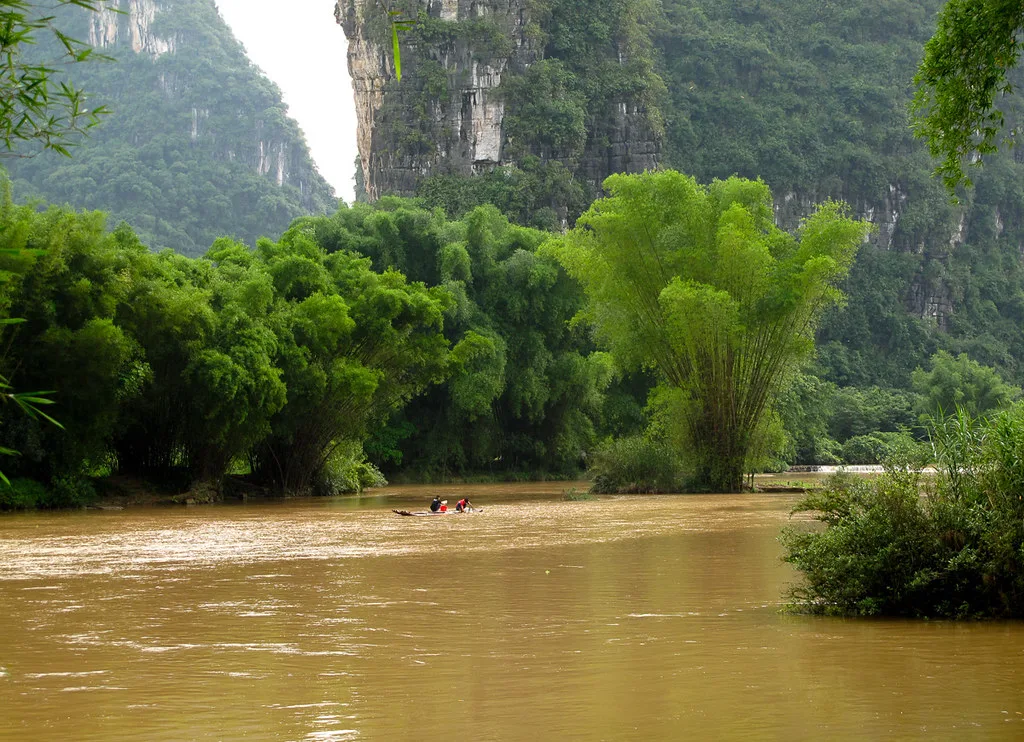
Our pick for travelers who want countryside and some splashing is this stretch. Ask the seller for the exact boarding pier, finishing pier, time on the water and return arrangement. Skip it if sudden jolts or wet clothing would be a problem.
2. Raft the lower section
Departures for this section are described as starting from Jima and Shui'edi docks. It sits closer to Ten-Mile Gallery, which makes it the logical option to examine if you want both in one outing. From the raft, compare the karst peaks and riverbanks at water level before continuing by land.
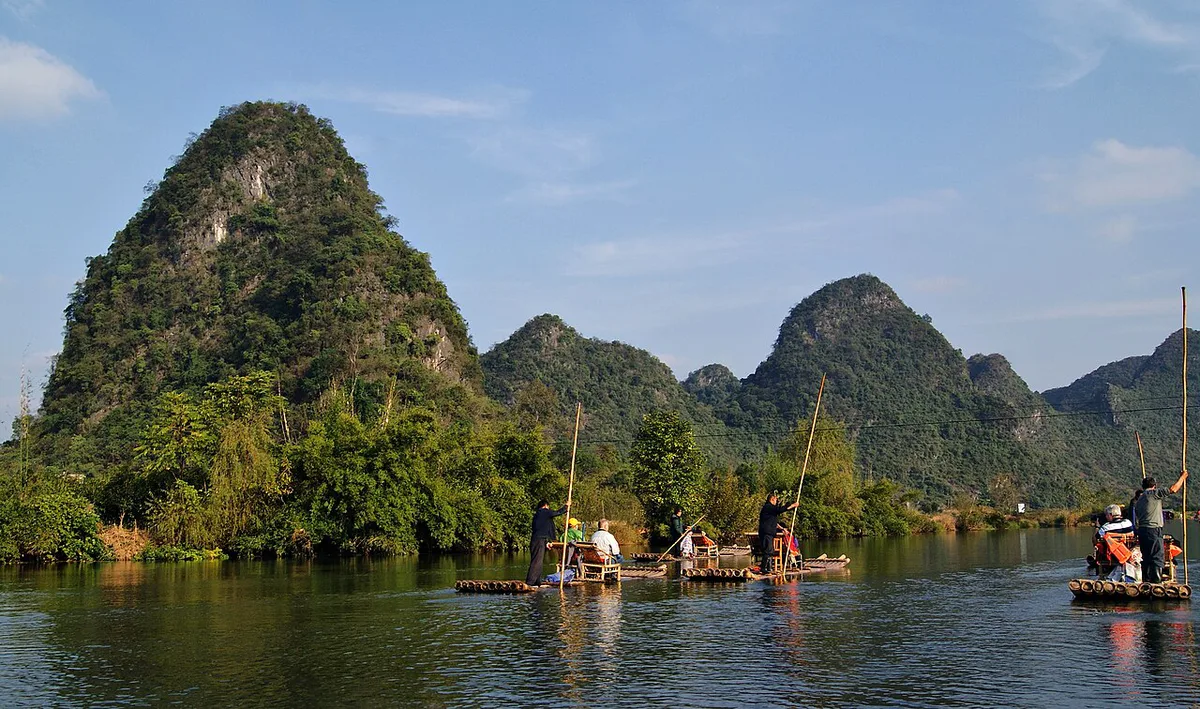
Do not book from the section name alone, since your finishing point determines the onward journey. Get that endpoint, the ride duration and any dam crossings in writing or on the booking screen. Pass if you cannot arrange transport from where the ride ends.
3. Ride or walk the riverside paths
Exploring by land lets you stop for views of the water, peaks and countryside without committing to a raft departure. An e-bike or bicycle suits flexible stops, while walking works best as a short out-and-back outing. Choose a turnaround time before leaving so the return does not squeeze your next connection.
Ask the rental shop about eligibility for foreign visitors, permitted riding areas, parking and battery return rules. Wear a helmet on an e-bike. Skip riding if you are uneasy around traffic or on wet surfaces, and avoid assuming every riverside path connects.
4. See Yulong Bridge and Fuli Bridge
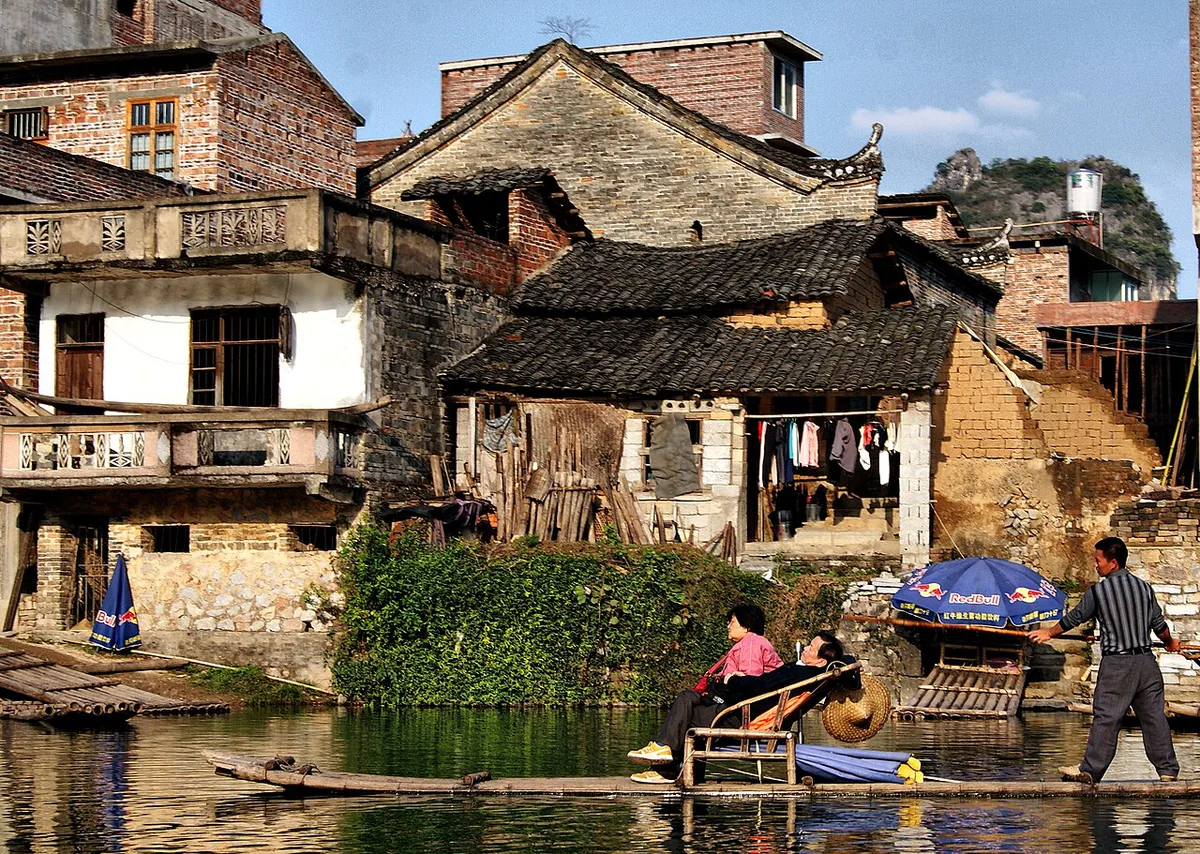
These old stone crossings add a built landmark to the river scenery. Both are described as Ming or Qing-era bridges, without a separate construction date established here for either one. At Fuli Bridge, look for its single arch and view its shape against the water.
Search for Yulong Bridge by its Chinese name, 遇龙桥, because English labels can be confusing. Our Dragon Bridge visitor guide can help with planning, but match the Chinese name and map location first. Skip a special detour if time is tight, and do not assume your raft passes either bridge.
5. Visit Jiuxian Village
Jiuxian offers a change from open river views, with old residences and alleys. Walk through the lanes and compare their older buildings with the surrounding countryside. It is also the named endpoint in the upper-section route from Jinlong Bridge.
That connection makes it worth considering after rafting, but ask how far your actual landing is from the village stop. Use our Jiuxian Village planning guide to shape this part of the visit. Leave it out if your priority is time on the water or your onward transfer leaves little margin.
6. Add Ten-Mile Gallery
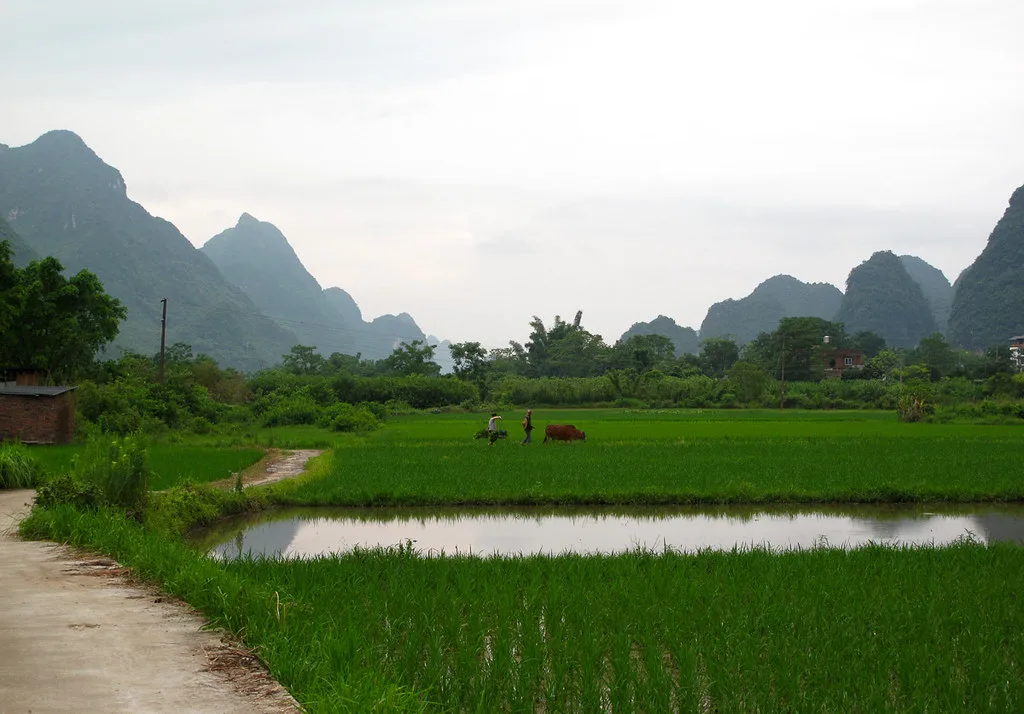
Ten-Mile Gallery brings more karst peaks and rural scenery into a land-based visit. Cycling is a useful way to look around because you can pause for views along your chosen stretch. Make sure your map points to Yangshuo, as similar “Ten-Mile Gallery” names can cause confusion.
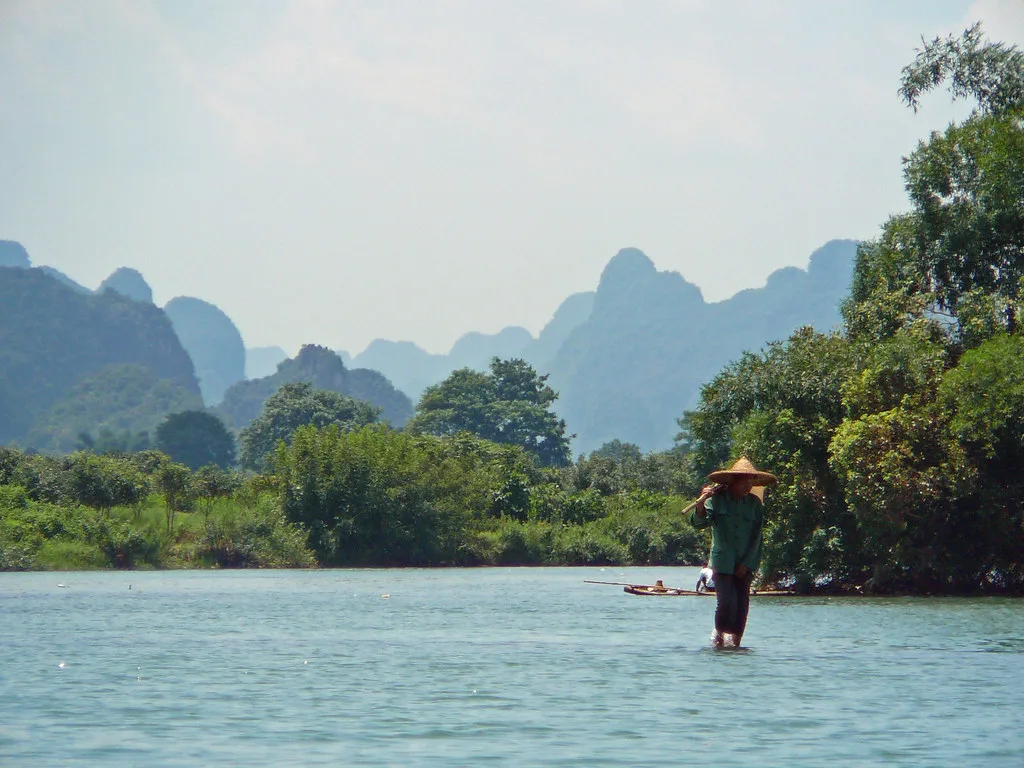
We'd consider it alongside the lower raft section because that stretch is closer to the Gallery. Plan the bicycle drop-off and pier transfer together, then use our Ten-Mile Gallery route guide for more detail. Skip the extension if retrieving a parked bike would make the day awkward.
Should You Raft, Ride or Combine Both?
Our editorial verdict depends on what you would miss most. Rafting puts you on the water, whereas riding gives you more control over stopping points.
| Choice | Likely fit | Main trade-off | Sort out first |
|---|---|---|---|
| Raft | Water views come first | One-way transfer and possible splashes | Both piers and the fare unit |
| E-bike or bicycle | Flexible stops matter | Traffic, weather and parking | Rental rules and permitted paths |
| Combine | You have room for both | Bike retrieval and tighter timing | Where to leave the bike |
| Short land stop | Time is limited or rafting does not appeal | Less river travel | A reachable viewing point and return ride |
Which Bamboo Rafting Section Should You Choose?
Compare the 2 raft sections by logistics as well as scenery. You may also see half and full routes offered, but those labels do not necessarily mean upper and lower. Ask for named endpoints, especially if this is your first ride. Our detailed bamboo rafting guide covers this activity further.
- Upper: Jinlong Bridge to Jiuxian; more dams and rural scenery. Consider it if that mix appeals.
- Lower: starts at Jima and Shui'edi docks; closer to Ten-Mile Gallery. Establish the finishing pier before pairing them.
- Any other route: compare its endpoints, ride time, fare unit, dams, nearby stops and return transport.
How Much Time Do You Need?
An online rafting listing suggests 1–3 hours for sightseeing, but that is not a route-specific or door-to-door estimate. Add travel to the pier, queues, village stops and the journey back.
Treat the 1–3 hours figure as sightseeing time only, since the trip to the pier and back sits on top of it.
- Short visit: choose a nearby land viewpoint, or raft only if the full transfer chain fits.
- Half day: build around one raft section or a ride, with a modest village or bridge stop if transport works.
- Full day: consider combining rafting and land exploration, leaving slack for bike retrieval and weather changes.
Tickets, Hours and Booking Checks
Some online listings label the river as free and open 24/7. Do not treat that as free or round-the-clock rafting. Buy rides through an official pier or authorized booking channel, and avoid unofficial low-price offers from street sellers. Book ahead in peak season. For wider official local information, visit the Guilin Municipal Government website, but get raft-specific terms from the operator.
- Match the start and end piers, departure time and operating status.
- Ask whether the yuan fare covers one person or a whole raft, plus any transfer.
- Read refund and weather-cancellation terms before paying.
- Ask about age, mobility, life jackets, luggage, raft capacity and passport requirements.
When to Go and What to Expect
We'd aim for a morning departure when softer light and a possibly less crowded ride matter. During holidays, start early, although no time slot guarantees space or silence. Rain can add mist and make paths slippery. It does not mean rafts will operate, so check for a suspension before traveling to the pier. Wear non-slip shoes, protect electronics from water, and bring sun protection and suitable layers.
Getting There, Getting Back and Where to Stay
From Guilin, one approach is high-speed rail to Yangshuo Station followed by a taxi to your pier. Do not assume that station is beside the river or in central Yangshuo. China Railway 12306 is the place to look up trains. From Yangshuo town, enter the exact boarding point rather than just the river name. Chaoyang Wharf appears in a rafting-area address, but it may not be your departure point. Arrange the return from your finishing pier and ask about luggage before setting out. For accommodation, compare riverside and town addresses for scenery, dinner access, evening transport and travel to your chosen dock.
Mistakes to Avoid and Who Should Skip Rafting
Our main warning is simple: do not plan around a pier you have not matched to your booking. Travelers worried about dam drops, getting wet or boarding should ask about those conditions and consider staying on land. For another outing, read about kayaking options around Yangshuo, without assuming that kayaking is allowed on this river. A Big Banyan Tree visit is another possible side trip; map it separately rather than treating it as a raft stop.
Frequently Asked Questions
Can you swim in the Yulong River?
We wouldn't plan a visit around swimming, as permission to swim here is not established. Stay out of the water unless current local rules and on-site staff clearly allow it, particularly around docks, rafts and dams.
Explore More Guides
Keep planning your trip with these guides.
Guides
Notes for your Guilin trip
Optional updates to our guides.
Also worth reading
Keep planning
More guides you'll find useful