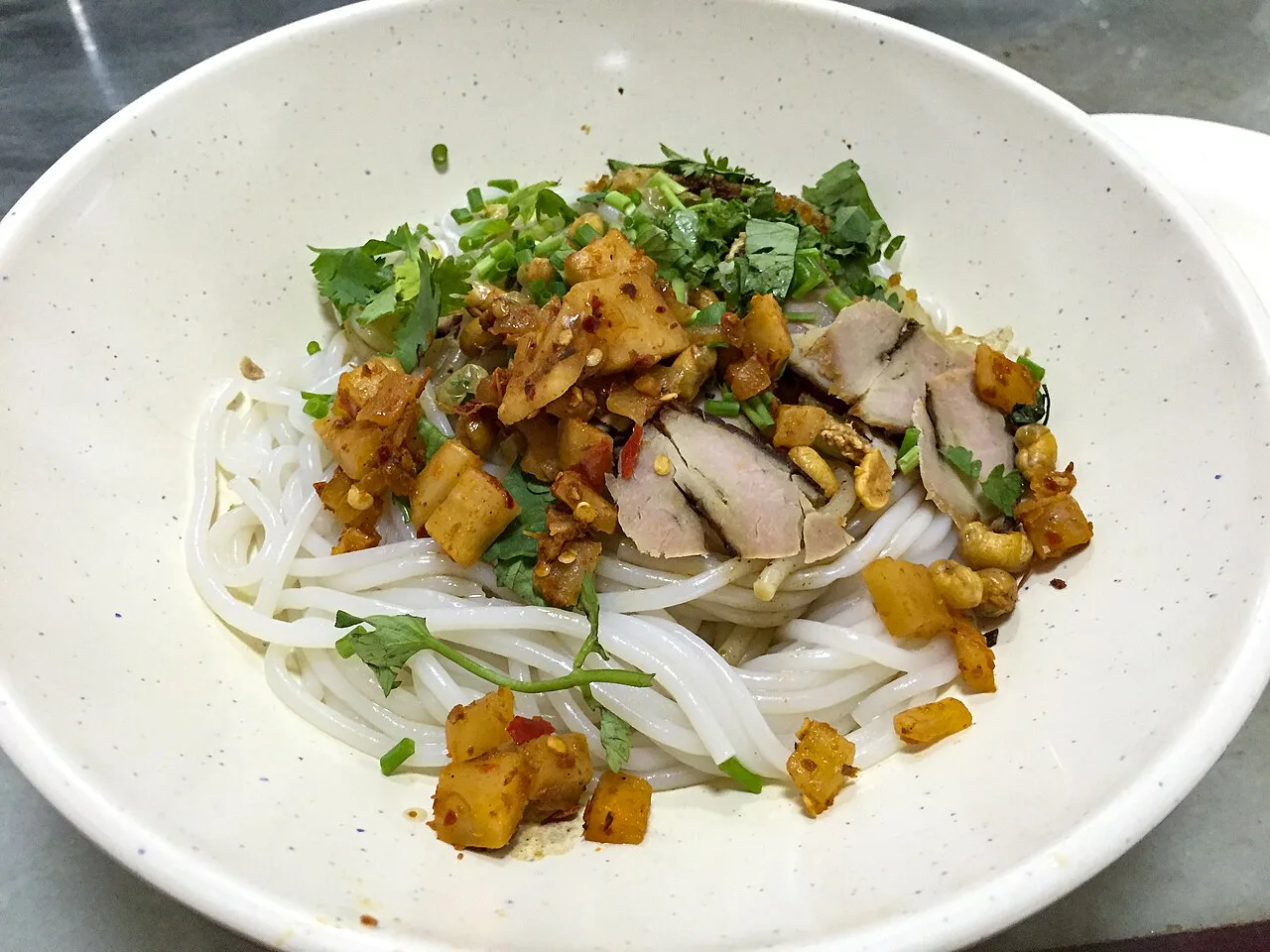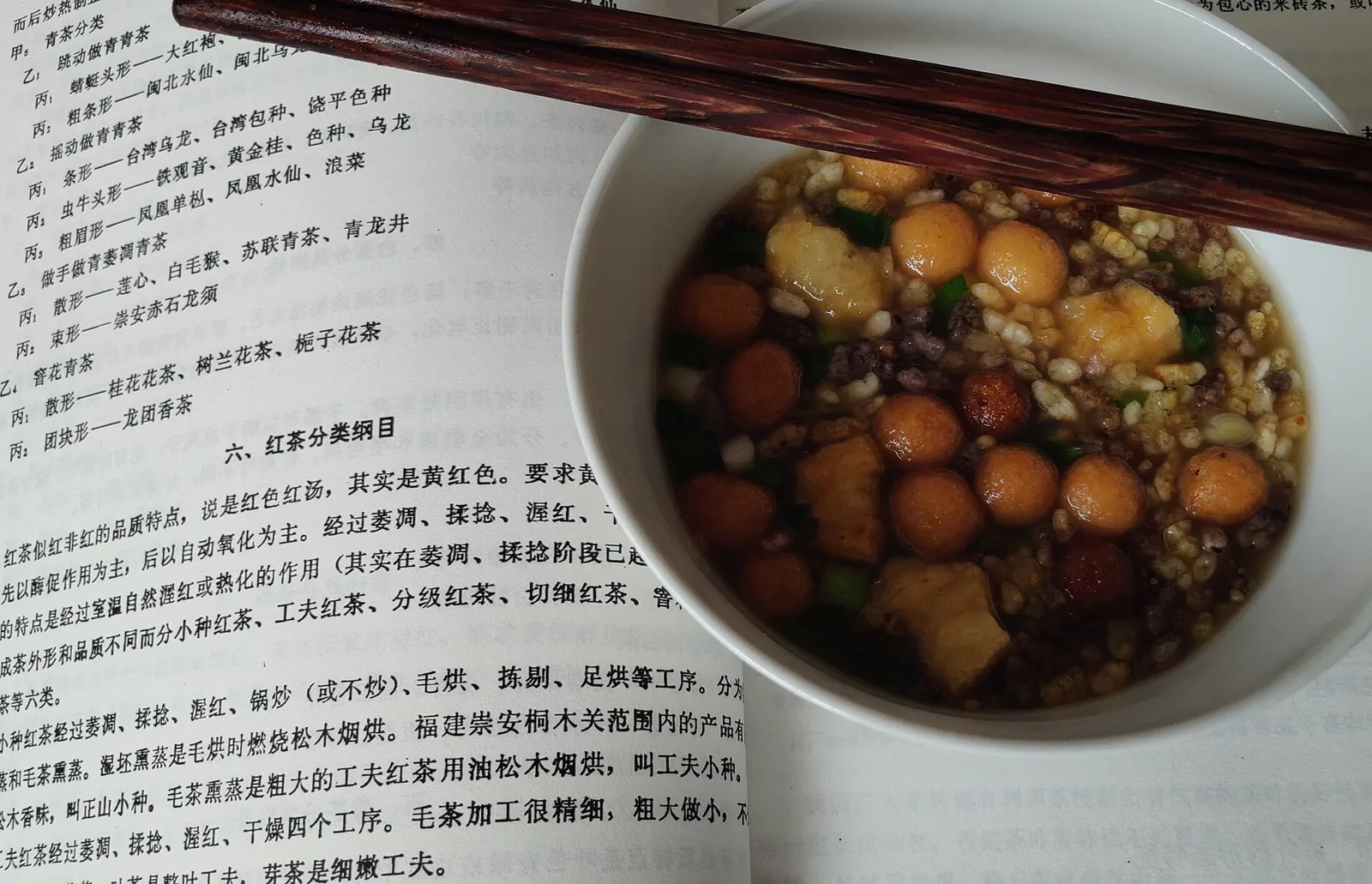
Youcha in Guilin: What Oil Tea Is and How to Order It
New to youcha? Learn what Guilin oil tea is, what to ask about ingredients and price before ordering, how to pick a place, and whether it suits you.
Last updated November 2026: in Guilin, youcha (油茶, oil tea) is a savory drink or light meal built on tea leaves. Cooks pound and fry the leaves with oil and ginger, then boil them with water. Use this guide to decide whether to try a bowl, what to ask before ordering and how to choose where to go.
Featured image: Klemhao, CC BY-SA 4.0, via Wikimedia Commons. Resized and converted to WebP.
What Is Youcha?
Despite its English name, oil tea here is something to drink or eat, not a bottle of tea-flavored oil. In this preparation, "oil" makes sense through the method, because the tea leaves are fried with it. Ginger goes into that stage too. Water follows, and boiling turns the fried mixture into the tea.
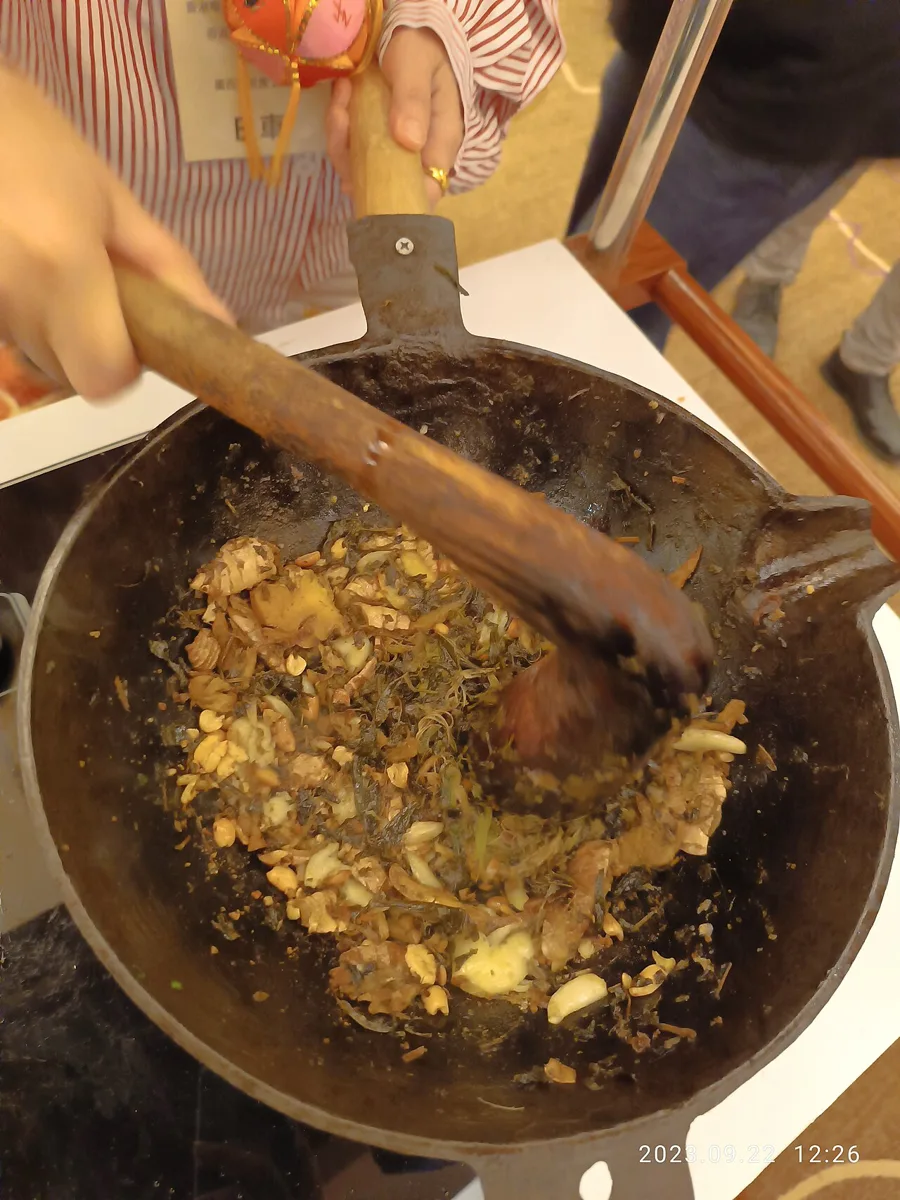
You may also meet the phrase "oil tea" in writing about camellia plants grown for seed oil. That is a separate subject from the prepared food described here. When searching or asking locally, show the characters 油茶 and make clear that you want something to eat or drink.
Calling it a drink or a light meal leaves room for different expectations. A serving on its own may not match what you consider breakfast or lunch. Before you plan around it, ask what arrives with the tea and which items are separate. Do not assume that a particular topping, snack or side comes with every order. For other dishes to plan around, browse our Guilin food guide.
What Should You Expect From Guilin Oil Tea?
Start with a savory expectation. If "tea" makes you picture a sweet milk drink or a plain steeped cup, reset that idea before ordering. Oil, ginger and boiled tea leaves give you a better starting point.
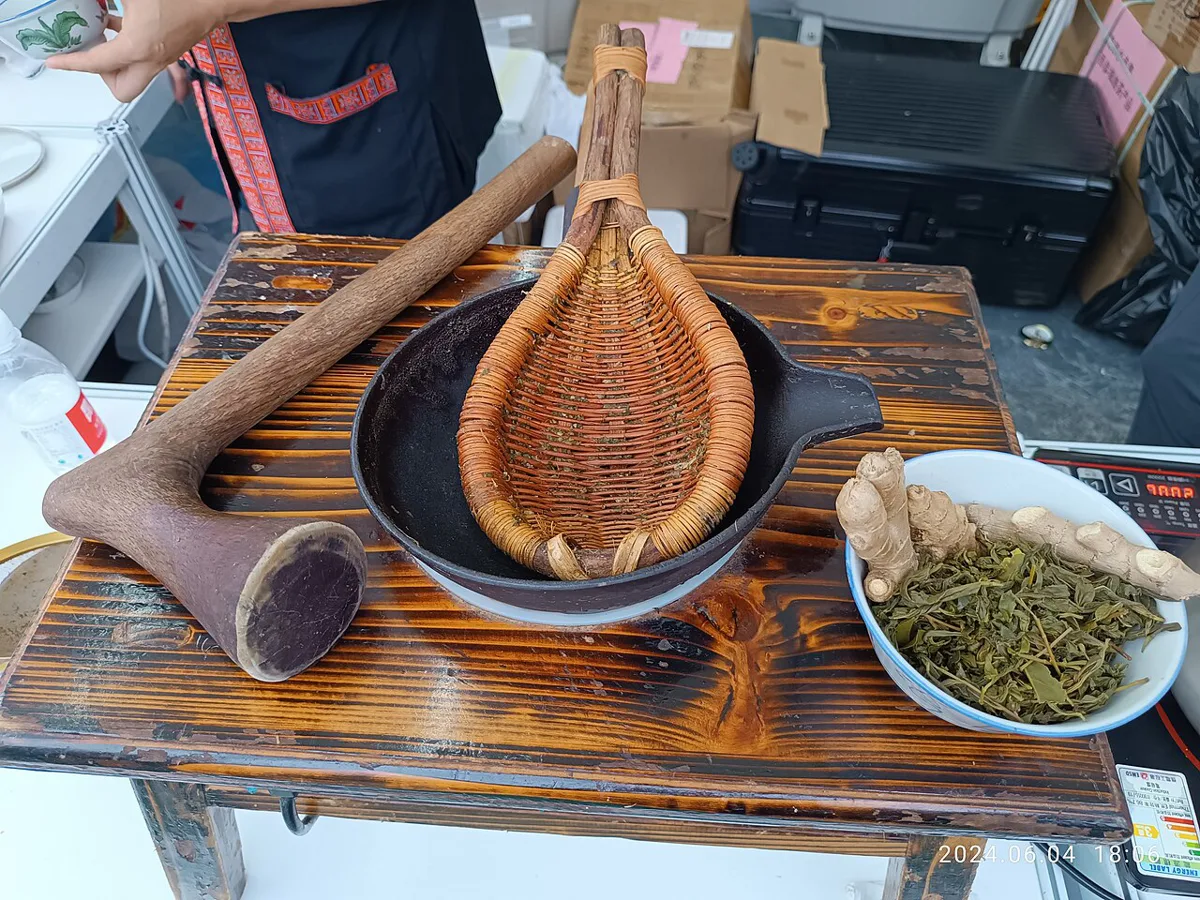
Those ingredients cannot tell you exactly how strong a particular bowl will taste. They also do not settle its salt level, thickness or aftertaste. Recipes should not be treated as identical from one kitchen to another. If ginger or bitter flavors are a concern, mention them first. You can also ask whether a small taste is possible, without expecting every business to offer one.
Curious eaters who enjoy savory drinks have a clear reason to try it. Approach more cautiously if you dislike ginger or need to limit tea. Anyone expecting dessert should choose something else. For your first order, keeping the rest of the meal flexible lets you add food after seeing the serving.
How Should You Think About Youcha's Local Roots?
You may see youcha linked with Yao communities in Guilin. Do not read that association as meaning that only Yao people make or drink it. It also does not show that every version follows one community's method or that the food belongs to Guilin alone.
For deeper cultural reading, look for records that name both the community and the place. The China Intangible Cultural Heritage Network is one starting point for heritage research. Match any record to the specific tradition it describes before applying its details to your meal.

Household customs and restaurant service can also differ. If you are invited to share youcha, follow your host's lead and ask before adding anything. In a business, let staff explain their serving order. Avoid assuming that refills are free or that one refusal gesture works everywhere.
How Do You Order Youcha and Check Ingredients?
Settle the order before food is prepared, especially if you are eating alone or have dietary limits. A translation app can help you show short, direct questions. Ask one at a time so each answer is clear.

- Contents: What goes into the base, and what is added afterward?
- Included food: Which toppings or accompaniments come with this order?
- Charging: Is the price per bowl, per person, per pot or for a set?
- Group size: Can one person order, or is there a minimum?
- Refills: Are they available, and do they cost extra?
- Cooking fat and stock: Does any part contain animal products?
- Allergens: Does the recipe or preparation area involve peanuts, soy, wheat, sesame or another ingredient you must avoid?
- Changes: Can salt, spice, ginger or toppings be adjusted?
What Dietary Cautions Apply to Oil Tea?
Because youcha starts with tea leaves, do not treat it as caffeine-free. The basic description also cannot tell you how much caffeine a serving contains. If you avoid caffeine completely, skip it.
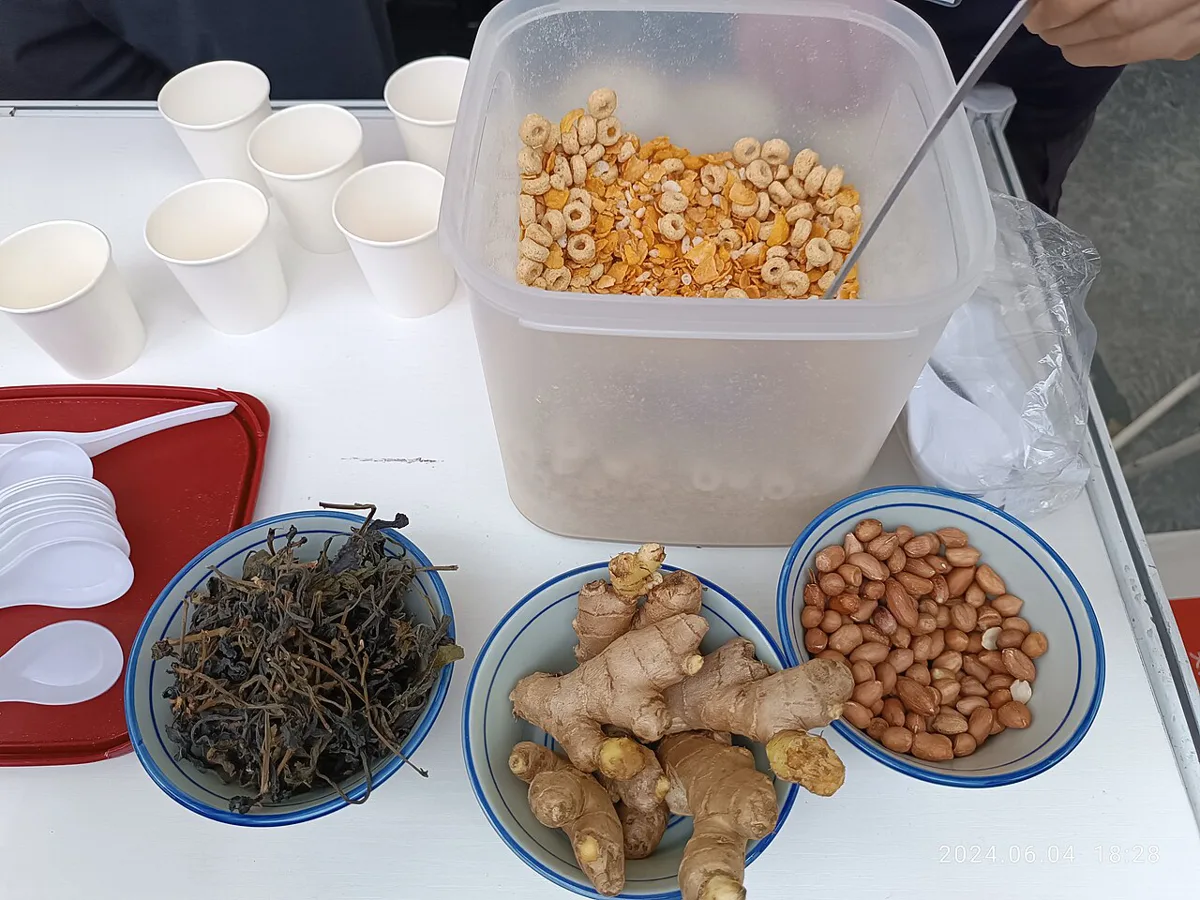
Vegetarian, vegan and gluten-free diners need details about the actual recipe. A tea-based name does not reveal the cooking fat, cooking liquid or added foods. Removing a visible topping may not remove an ingredient already cooked into the base. For a serious allergy, choose another food if staff cannot clearly explain both ingredients and cross-contact.
The most useful mistake to avoid is ordering from the name alone. "Tea" does not tell you how filling the order will be, what it contains or how you will be charged.
Where Can You Try Youcha in Guilin?
No specific Guilin venue is recommended here, because current youcha service has not been established for a named address. Search maps or menus using 油茶, then look for a recent listing that shows the food itself. Before crossing town, ask the business whether it is serving it that day. Our guide to Guilin restaurants can help with wider meal planning, but do not assume a listed restaurant serves oil tea.
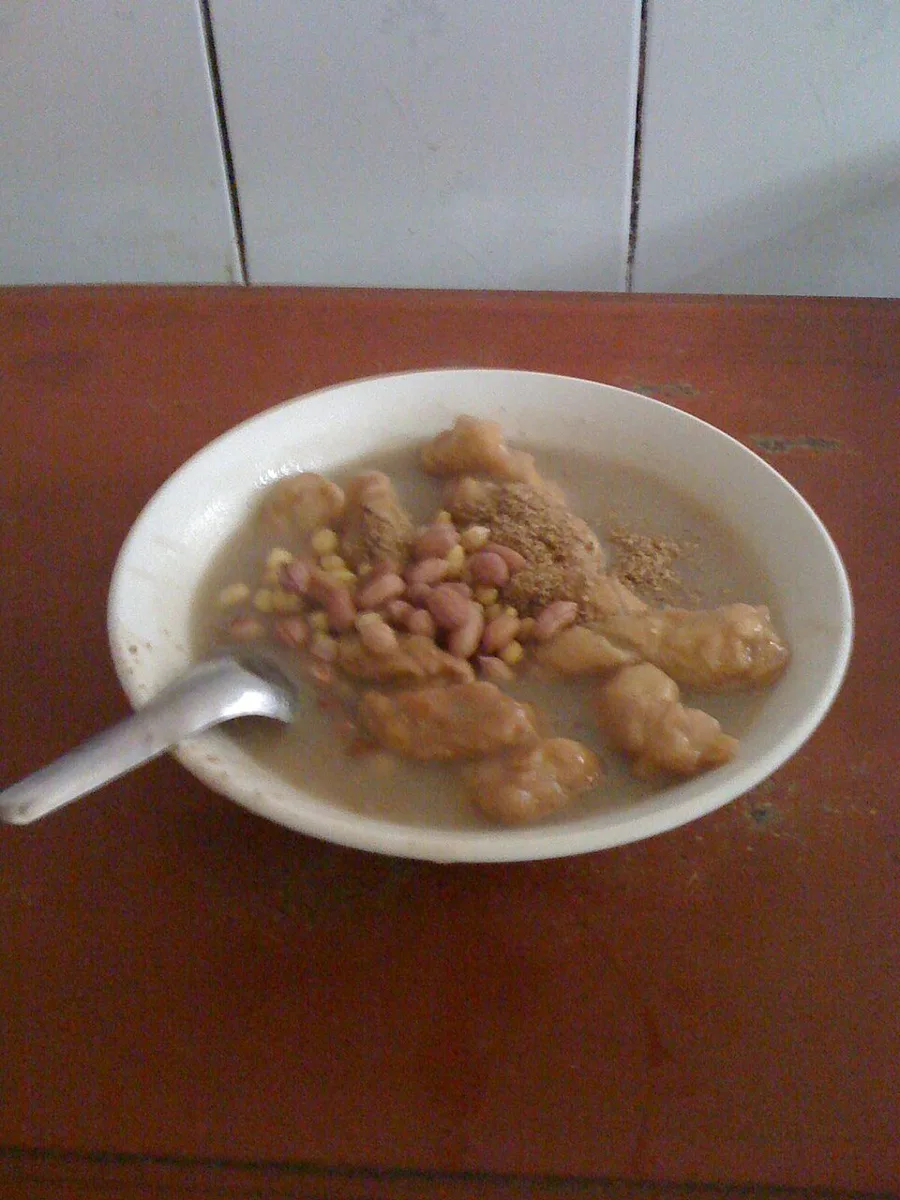
Choose a candidate by what you can establish before leaving. Current prices and opening hours should come from the venue, with Chinese yuan (¥) as the local currency. Compare the answer with your appetite and group size.
- Availability: Is youcha being served at the time you plan to visit?
- Access: Does the exact address fit your route and available time?
- Order: Can your group buy a suitable amount?
- Cost: What does the quoted charge include?
- Timing: Should you expect to wait for preparation or a table?
- Diet: Can staff answer your essential ingredient questions?
Is Youcha Worth Trying on Your Guilin Trip?
For a curious first-time visitor, youcha is worth considering when a nearby business can serve it and explain the order. Its savory preparation offers a different idea of tea, but it need not take over your itinerary. If time is short, skip a long detour unless trying this food is a personal priority.
Selective eaters should start with a modest order when that option exists. People with strict dietary needs should let ingredient clarity decide. For a more familiar-sounding next meal, explore Guilin Rice Noodles: What's in the Bowl and What to Ask. If you want to plan further food browsing, use our Guilin night market guide. Treat that as a separate outing rather than a promise that you will find youcha there.
For trip-planning details, see UNESCO Intangible Cultural Heritage.
Notes for your Guilin trip
Optional updates to our guides.
Also worth reading



Keep planning
More guides you'll find useful