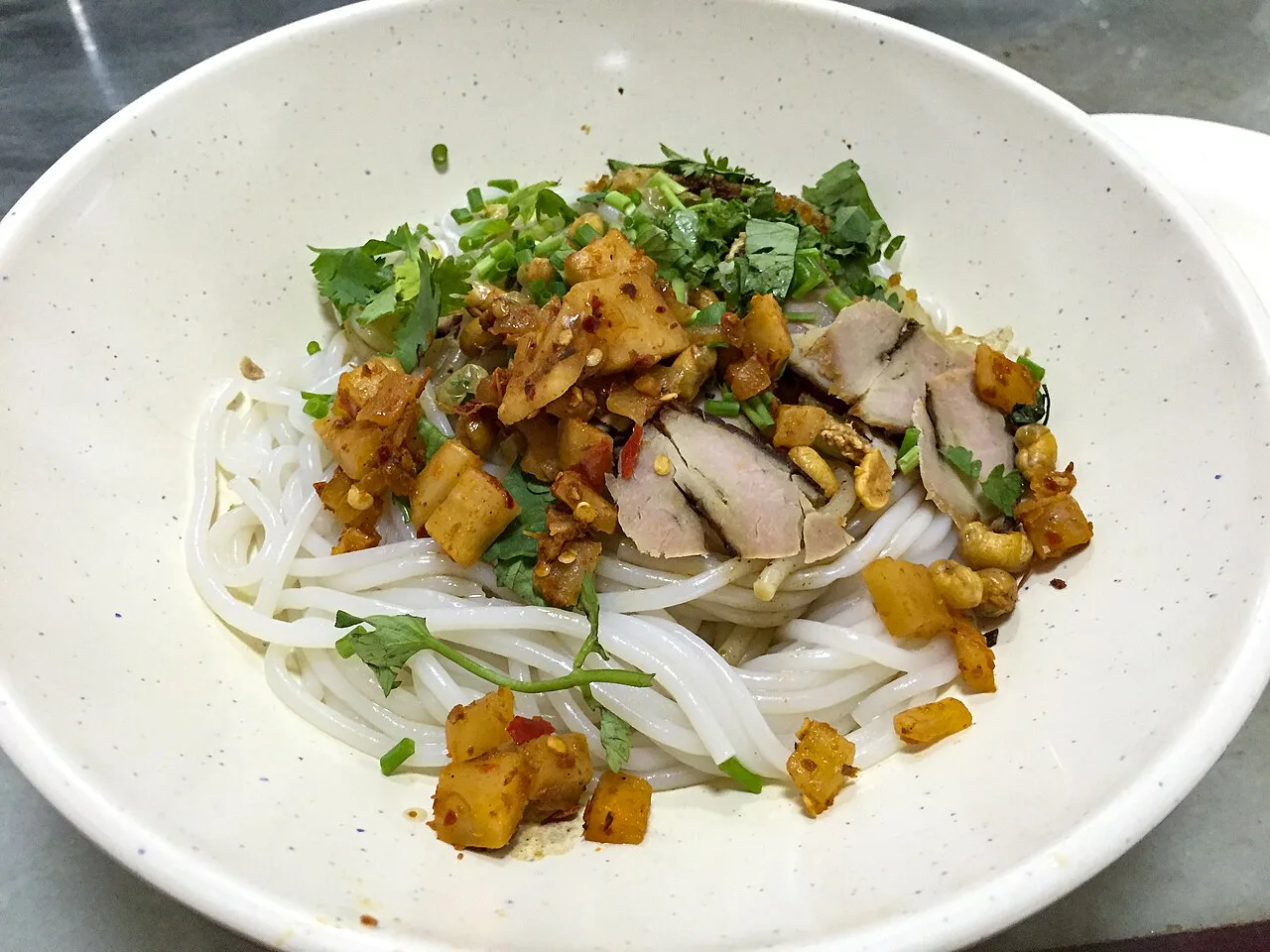
Guilin Rice Noodles: What's in the Bowl and What to Ask
What are Guilin rice noodles? See what goes in the bowl, which Chinese phrases help with spice and meat, and how to choose where to try them.
Last updated November 2026: Guilin rice noodles (桂林米粉, Guilin mifen) are the rice-noodle dish of Guilin, a city in Guangxi, China. A bowl typically combines rice noodles with a seasoned brine and toppings, and sour beans or bamboo shoots are among the possible additions. Use this guide to understand those parts, ask about spice and meat, and choose a shop that fits your day.
Featured image: MiaMOOA Mukazz, CC0, via Wikimedia Commons.
What Goes Into a Bowl of Guilin Rice Noodles
Think of your bowl in layers: noodles, brine, toppings and any extra seasoning. That makes it easier to ask about one part without rejecting the whole dish. For other local dishes to try on the same trip, browse our guide to Guilin food.
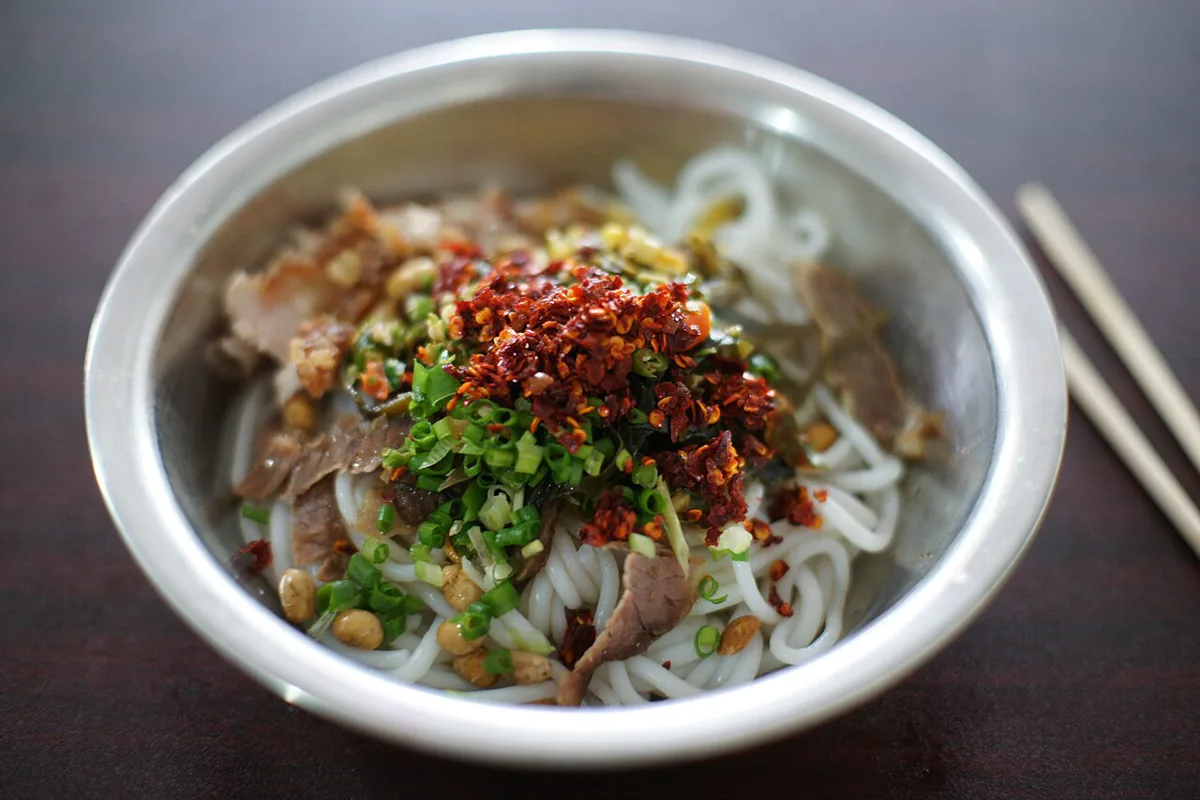
Brine is the seasoned liquid that gives the noodles much of their flavor. Don't assume every shop uses one recipe. An older student-written account names fennel, orange peel, anise and liquorice among its seasonings. Read that as an example, since it isn't a complete ingredient list for any particular counter. If one of those ingredients matters to your diet, ask the shop about its own brine.
- Noodles: the rice-based foundation of the dish.
- Brine: a seasoned liquid with its own ingredients, which you should ask about separately from the toppings.
- Additions: sour beans and bamboo shoots are two to recognize.
- Extra seasoning: taste your bowl before adding anything strong. If you like heat, read about Guilin's chili sauce.
Which Style or Topping to Choose
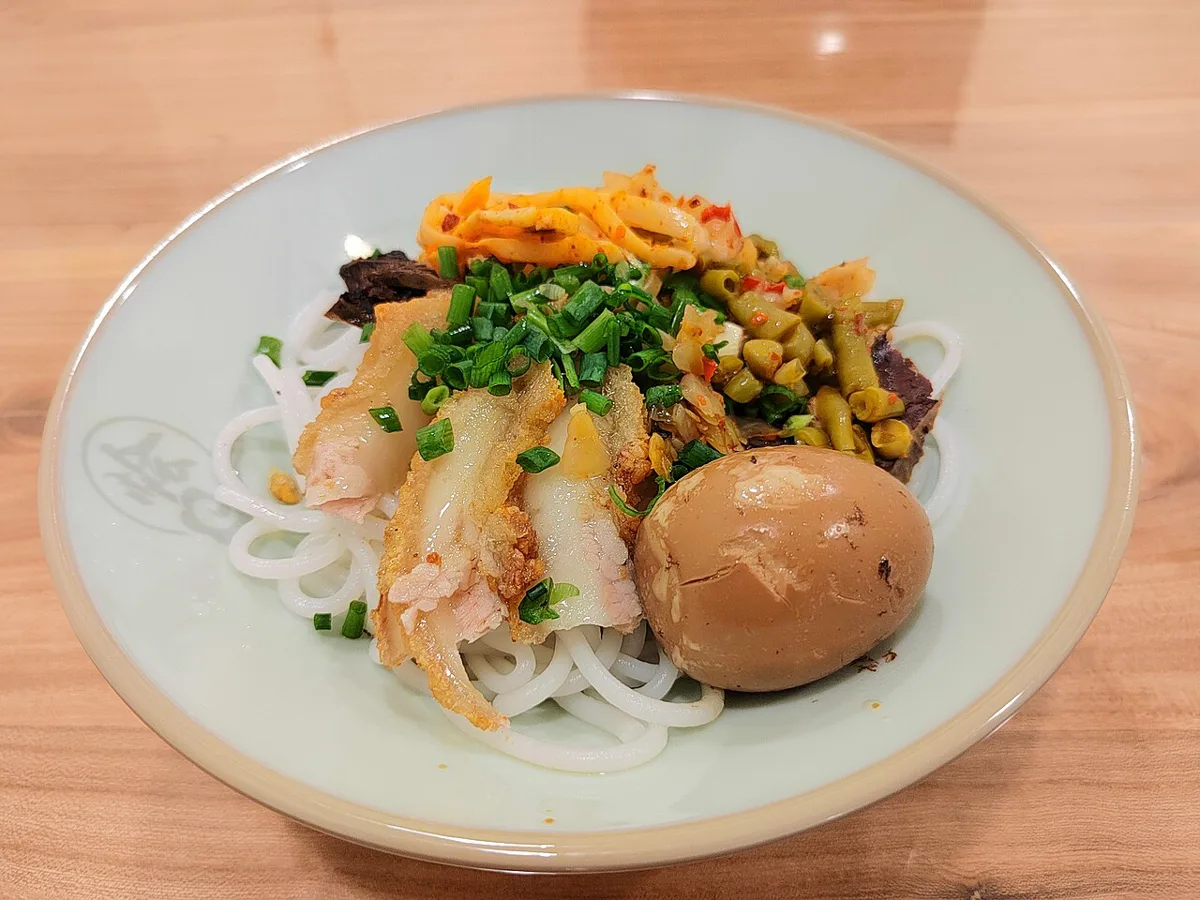
Style names can reflect seasoning, cooking method or what goes on top. English translations may be loose, so look at the Chinese menu, any photos and the bowls being served. An English label alone won't tell you whether a version arrives in soup or dry-mixed. It also won't settle how spicy it is.
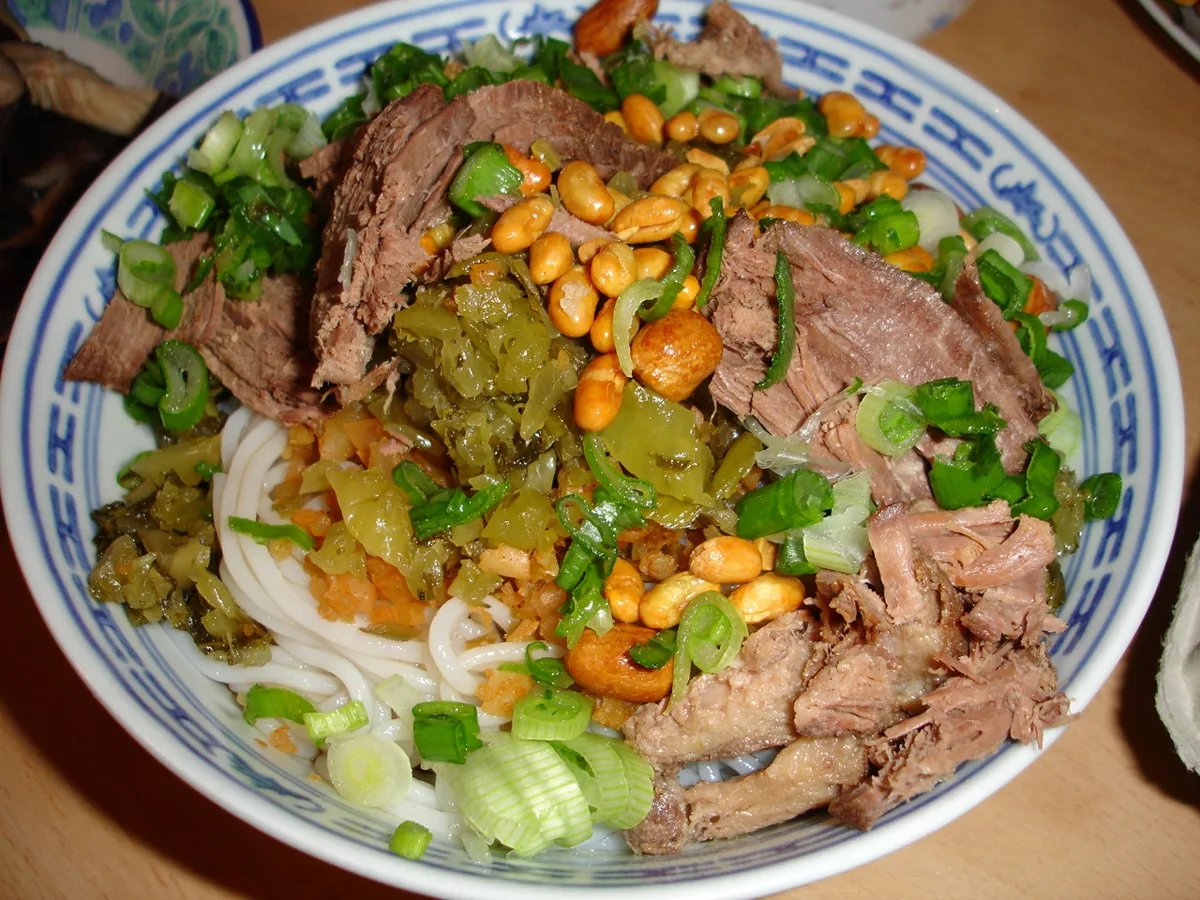
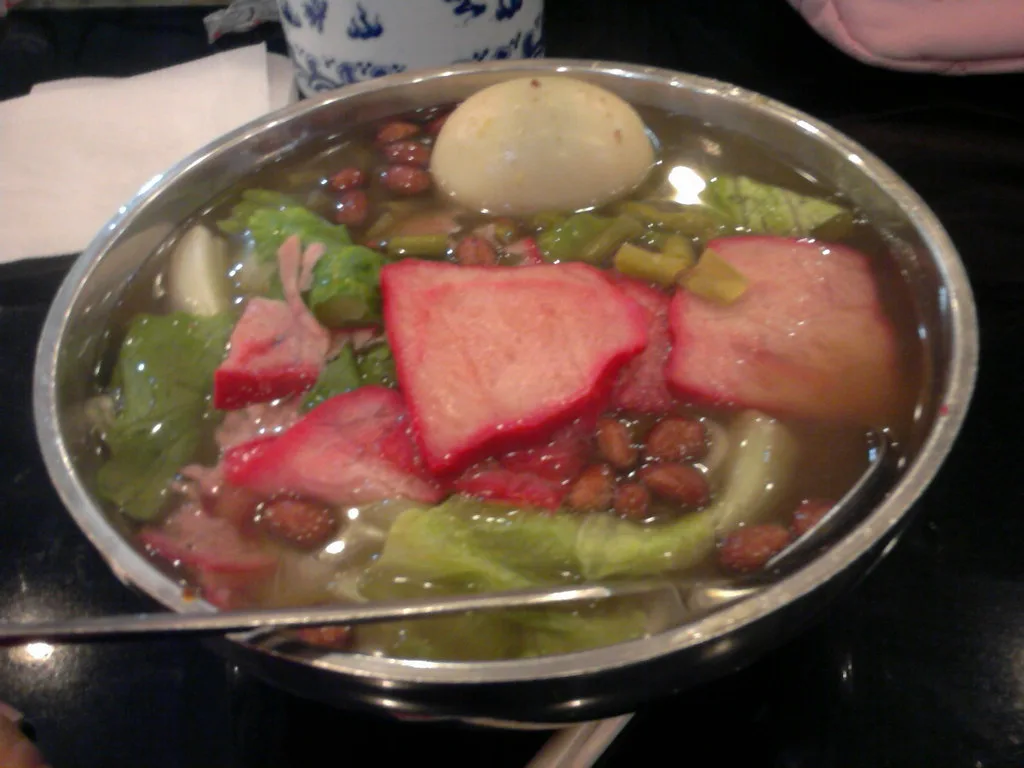
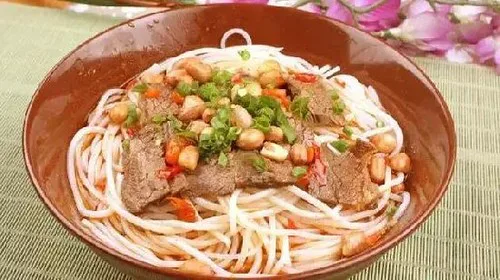
For a first order, choose a bowl whose toppings you can identify. Menus may use terms such as crispy pork, marinated beef or beef tripe. Those words are useful to recognize, but they don't guarantee what a Guilin shop sells. Tripe is stomach lining, so skip it if you avoid offal. Ask about other organ meats too.
- Braised-food style: ask which braised items are included, especially if you avoid certain meats or offal.
- Lettuce style: don't read the name as meaning vegetarian, because it says nothing certain about the brine or sauce.
- Beef brisket style: a possible choice if you want beef, provided you also ask what else goes into the bowl.
Chinese Phrases for Ordering in Guilin
Save these Mandarin phrases on your phone so you can show the characters as well as say them. Start with the dish name, then add only the requests that matter to you. Short questions are easier to answer at a counter than a long explanation.
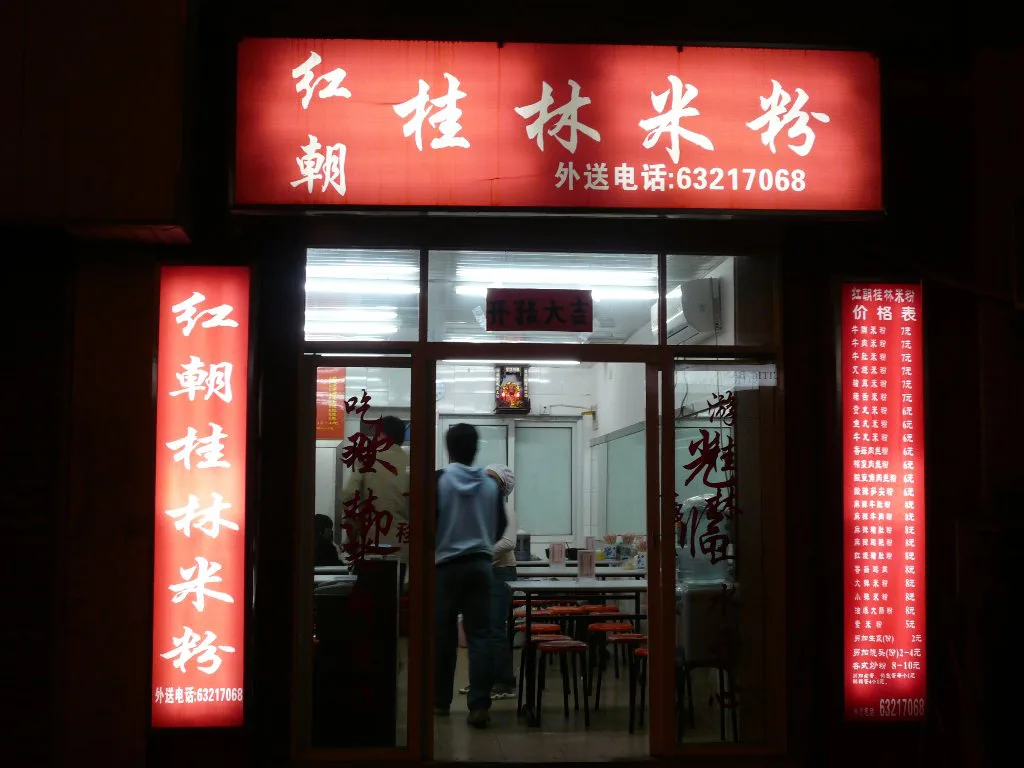
Payment order, portion sizes and condiment setups shouldn't be taken for granted. Watch how the person ahead of you orders, or point to the menu and let staff guide you. Before pouring in broth or adding toppings from a shared station, ask how that shop serves them.
- 桂林米粉 (Guìlín mǐfěn): Guilin rice noodles.
- 不要辣 (bú yào là): No chili heat, please.
- 少辣 (shǎo là): Only a little heat.
- 我不吃内脏 (wǒ bù chī nèizàng): I don't eat offal.
- 里面有肉吗?(lǐmiàn yǒu ròu ma?): Is there meat in it?
- 卤水里有肉吗?(lǔshuǐ lǐ yǒu ròu ma?): Is there meat in the brine?
- 有汤吗?(yǒu tāng ma?): Is there soup?
How to Order a Portion and Eat Your First Bowl
Some noodle menus list sizes in liang (两), a traditional Chinese unit equal to 50 grams. You may see 二两 (èr liǎng, two liang) or 三两 (sān liǎng, three liang). Treat these as size steps, not the weight of the finished bowl with its sauce and toppings. If you're unsure how hungry you are, start with the smaller one.
- 二两米粉 (èr liǎng mǐfěn): A two-liang serving of rice noodles.
- 三两米粉 (sān liǎng mǐfěn): A three-liang serving of rice noodles.
- 怎么加汤?(zěnme jiā tāng?): How do I add soup?
A well-known way to eat the dish is to start without soup. If your bowl arrives that way, try this order:
- Mix the noodles soon after you get them, lifting from the bottom so the brine and toppings spread through the bowl.
- Taste before adding chili or other condiments. Add a little at a time and mix again.
- Eat some or all of the noodles dry-mixed to get the flavor of the brine.
- If the shop offers soup, add some afterward, or drink it on the side if that's how it is served.
This is a habit rather than a rule. Some styles or shops serve the noodles already in soup, so follow the counter's setup. If you avoid certain meats, ask what is in the soup before you pour it, even if you've already checked the brine.
Choosing a beef topping doesn't make a bowl halal, since the other ingredients and the kitchen matter too. If this affects you, read our guide to halal food in Guilin before choosing a shop.
Vegetarian, Gluten-Free and Allergy Questions
A bowl without visible meat isn't necessarily vegetarian. Brine, broth, cooking fat and sauces can matter as much as the toppings. Rice noodles also don't make a finished dish gluten-free. Seasonings, other ingredients and shared cooking equipment need the same attention.
Bring a written list of what you can't eat, in Chinese. Ask separately about the noodles, brine, broth, sauces and each topping. With celiac disease or a serious allergy, ask about cross-contact too. If staff can't give you a clear answer, choose another meal. Removing a visible topping may leave the problem ingredient behind.
- Dietary mistake to avoid: treating a meatless-looking bowl as vegetarian.
- Spice mistake to avoid: adding hot condiments before you taste.
- Menu mistake to avoid: relying only on a translated style name.
Choosing Where and When to Try It
Begin with your route for the day. A shop near your lodging or next sight can keep breakfast or lunch simple. A detour makes more sense when a particular menu suits you better. Weigh the extra travel against any queue you can see, the ease of ordering and the posted prices.
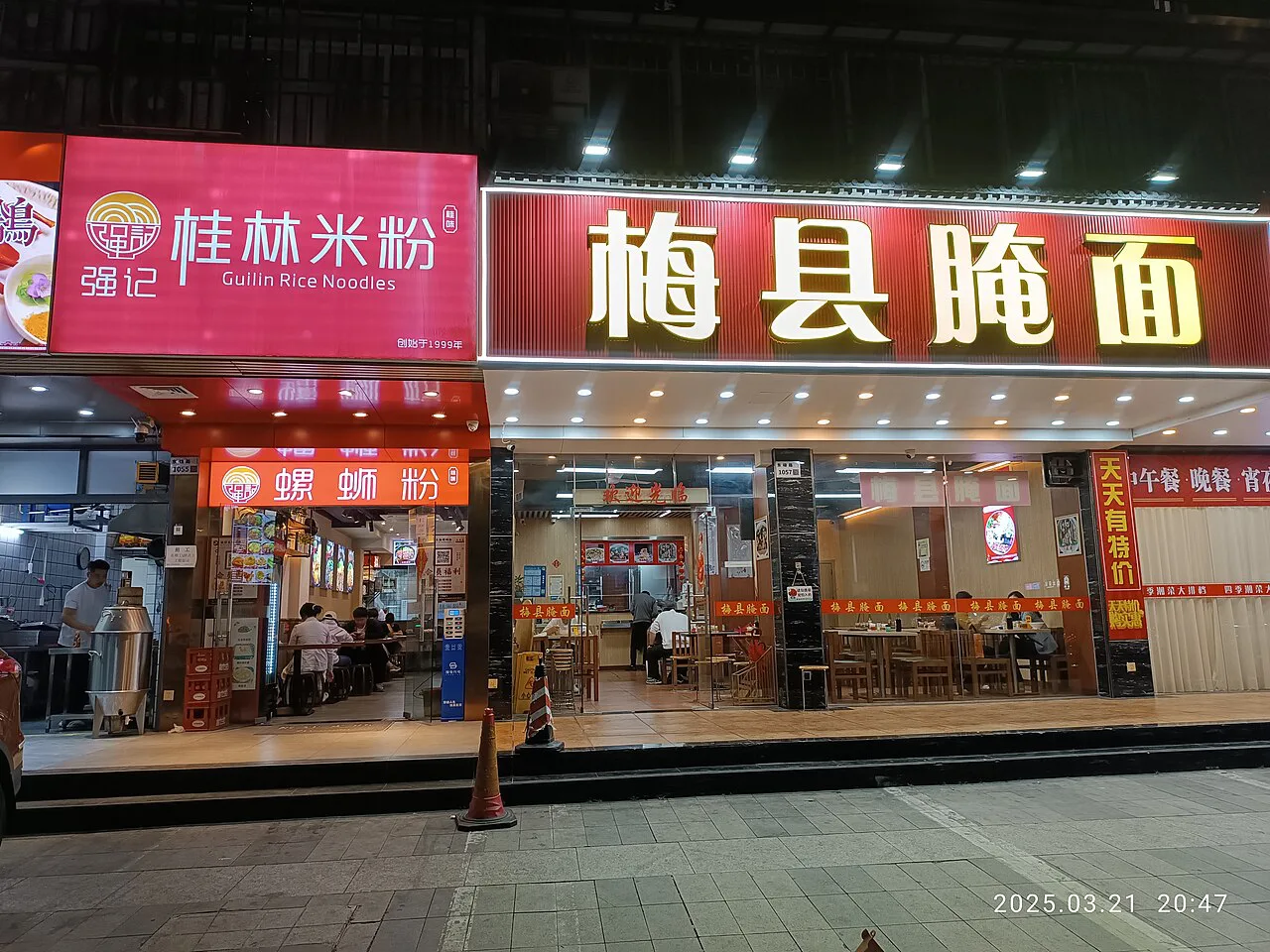
Look for a readable menu, visible toppings, somewhere to sit if you need it and staff who can answer dietary questions. Check current opening hours and accepted payment methods before crossing town. For more meal-planning ideas, see our Guilin restaurant guide. Planning an evening out instead? Use the Guilin night market guide, but don't assume a particular market stall serves this dish.
If you're comparing noodle choices, remember that luosifen is a separate dish. Order by its own name rather than treating it as a Guilin rice noodle topping. For another local item to explore later, read about Youcha in Guilin: What Oil Tea Is and How to Order It.
Origins and Local Significance
A traditional account links the dish to the Qin dynasty's military campaigns in the south. Northern soldiers were used to wheat foods, while rice was the available staple. As the story goes, cooks shaped rice into noodles to give the troops something familiar. Some tellings also connect an herbal soup with the early form of today's brine. Enjoy this as food tradition rather than settled history or health advice.
You may also see Guilin rice noodles described as intangible cultural heritage. Such labels can refer to a particular craft, listing level or year. To check the exact wording, look for the official entry through the China Intangible Cultural Heritage Network.
Can You Make It at Home?
You can make a home-style bowl by boiling rice noodles, draining them and adding brine or sauce with toppings. Stir the noodles as they heat so the strands separate. One shortcut is to use prepared brine, with sour beans or bamboo shoots on top.
Another home method uses a quick topping of sour beans and minced meat with seasonings. That can make a satisfying meal, but it isn't the same as preparing a shop's brine. Check packaged noodle and sauce labels if you have dietary restrictions. For your first taste in Guilin, focus on identifying the bowl in front of you and asking about the parts that affect your choice.
For trip-planning details, see Guilin Municipal People's Government.
Notes for your Guilin trip
Optional updates to our guides.
Also worth reading



Keep planning
More guides you'll find useful