6 Two Rivers and Four Lakes Highlights: Cruise or Walk?
Compare walking, day cruises and night cruises on Guilin's Two Rivers and Four Lakes, pick 6 highlights, and plan tickets, piers and transport.
Last updated November 2026: Two Rivers and Four Lakes (两江四湖, Liang Jiang Si Hu) is central Guilin's linked waterscape of rivers, lakes, bridges and landscaped shores. Your main choice is a lakeside walk, a day cruise or a night cruise. Walk for your own pace, or pay for a boat to see the setting from the water.
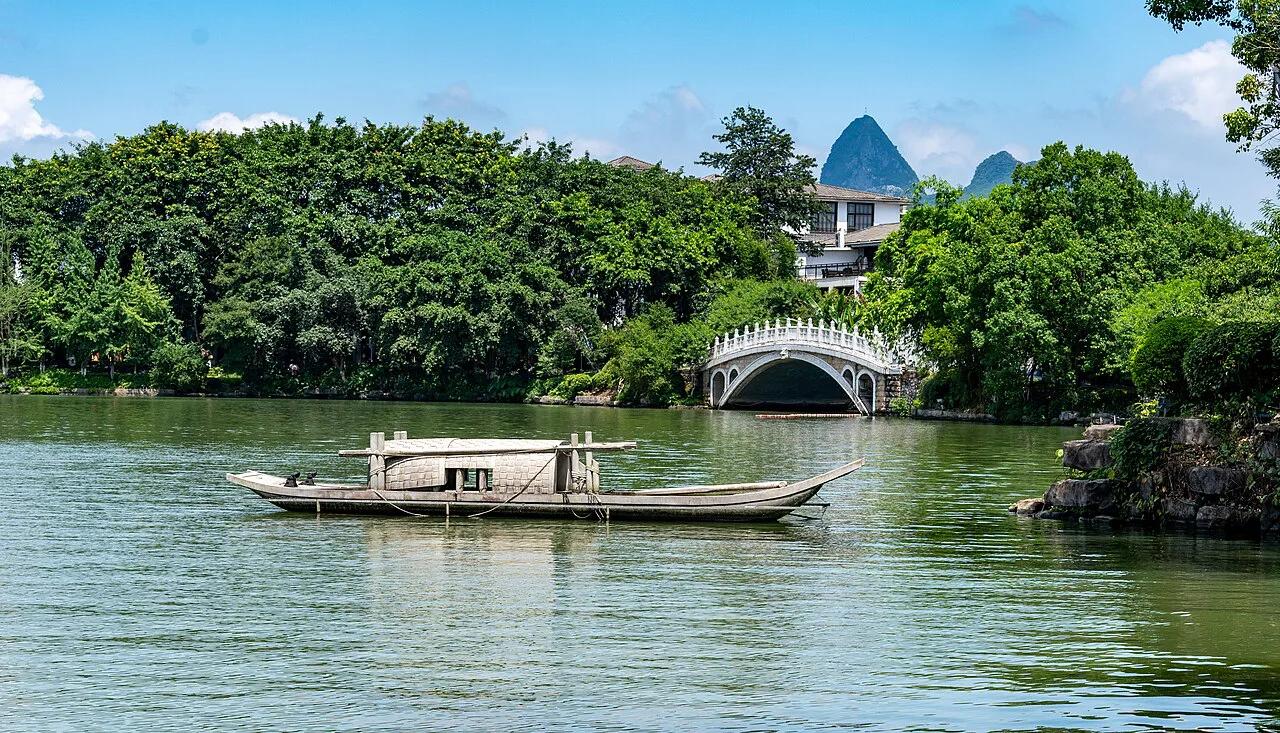
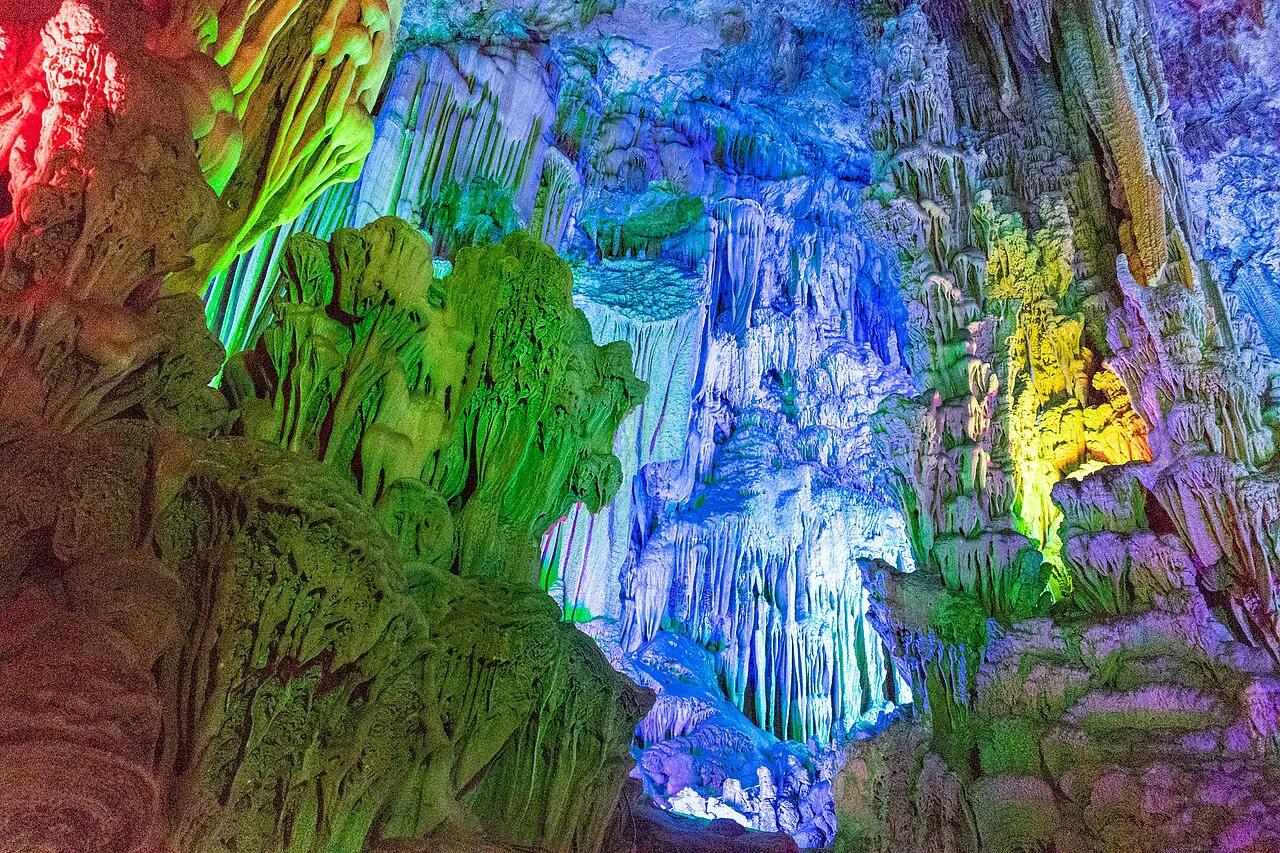
Featured image: xiquinhosilva, CC BY 2.0, via Wikimedia Commons.
What Are Guilin's Two Rivers and Four Lakes?
Its 2 rivers are the Li River (漓江) and the Taohua, or Peach Blossom, River (桃花江). Rong Lake (榕湖), Shan Lake (杉湖), Gui Lake (桂湖) and Mulong Lake (木龙湖) make up the 4 lakes. Guilin's municipal government website is a starting point for official city notices.
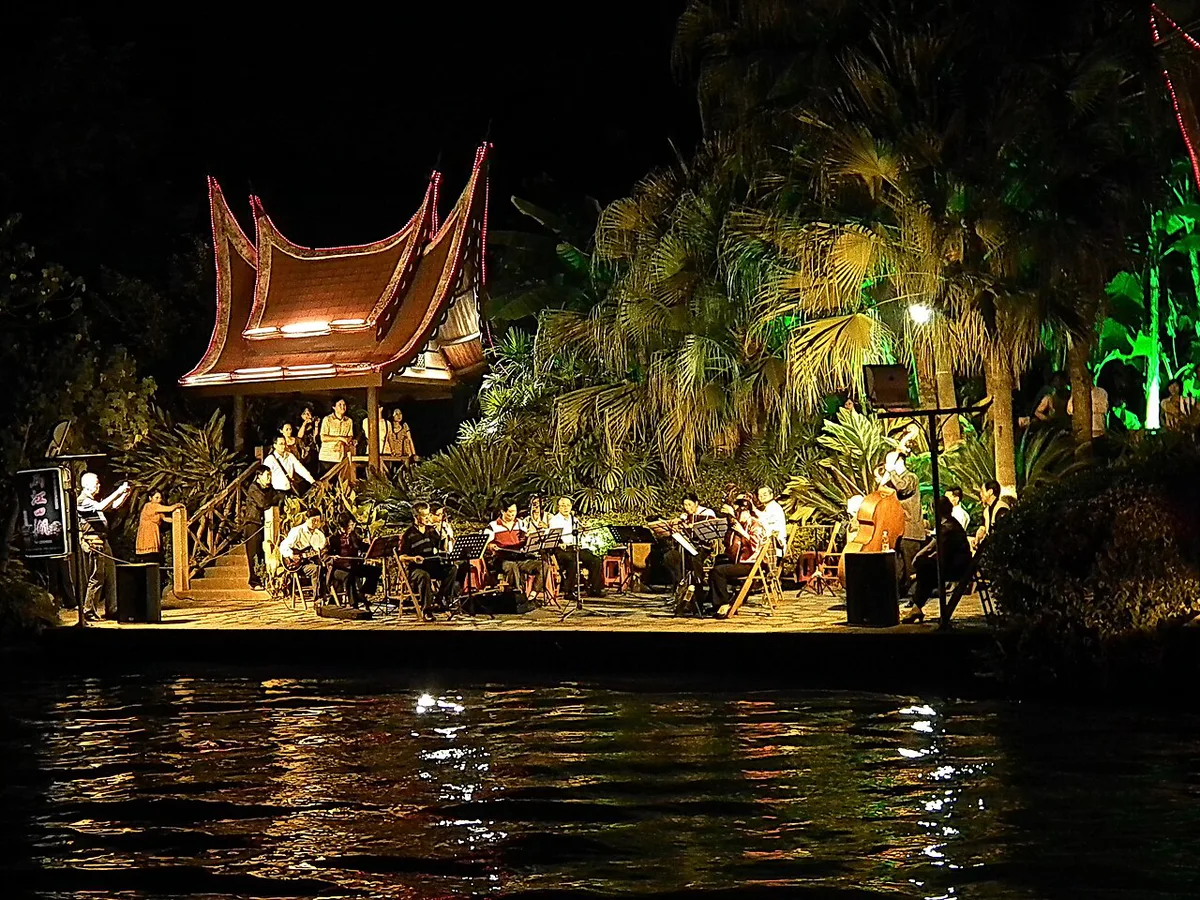
Holiday China Tour traces the network to the old defensive moat and dates a complete moat system to more than 1,000 years ago. By its account, silting later separated the waterways before they were restored and reconnected. Treat this city outing separately from a countryside trip on the Li River, and compare route maps before buying either one.
Walk, Day Cruise or Night Cruise?
In our editorial assessment, a night cruise suits you if illuminations are your priority. Pick daylight for bridge shapes and planting, or walk if you want to stop whenever you like. Guilin Deep Tour describes walking access as free and puts a cruise at about 90 minutes. TravelSetu gives 90–120 minutes, so leave room for the longer figure.
| Factor | Lakeside walk | Day cruise | Night cruise |
|---|---|---|---|
| Best for | Flexible stops | Bridges and planting in daylight | Illuminations from the water |
| Main trade-off | May miss boat-level views | Fixed departure and route | Later finish and onward transport |
| Listed adult cost (Guilin Deep Tour) | Free walking access | ¥90 | ¥210 |
| Time needed | Your choice | About 90–120 minutes, plus transfers | About 90–120 minutes, plus transfers |
| Access and booking | Shore paths; paid sites are separate matters | Boat ticket and assigned pier | Boat ticket and assigned pier |
| Skip if | You mainly want a ride on the water | You came for the lights | You have a tight evening connection |
6 Highlights of the Two Rivers and Four Lakes
Prices and hours checked November 2026. These 6 stops are places on or beside the water, and they are not a promised sailing order. Match your boat's route map against the ones you care about most. On foot, choose 1 section first, without assuming a continuous or step-free loop.
1. Sun and Moon Pagodas on Shan Lake
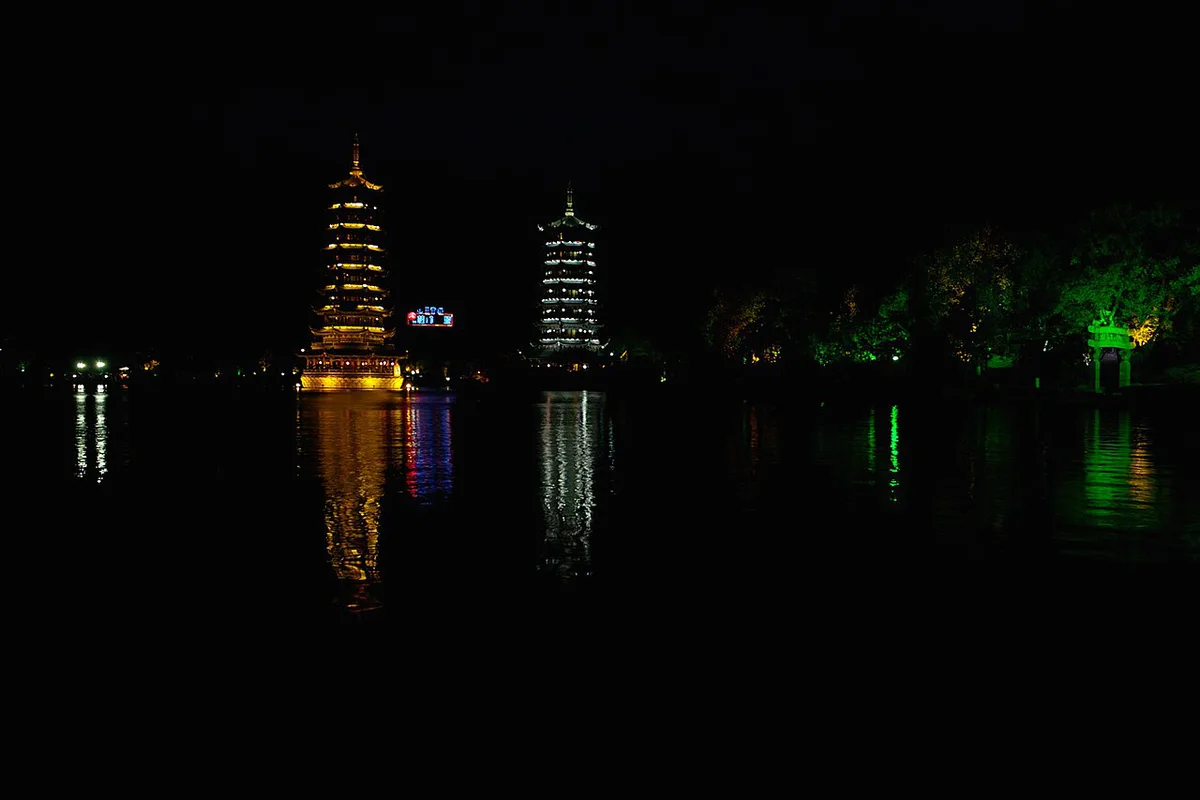
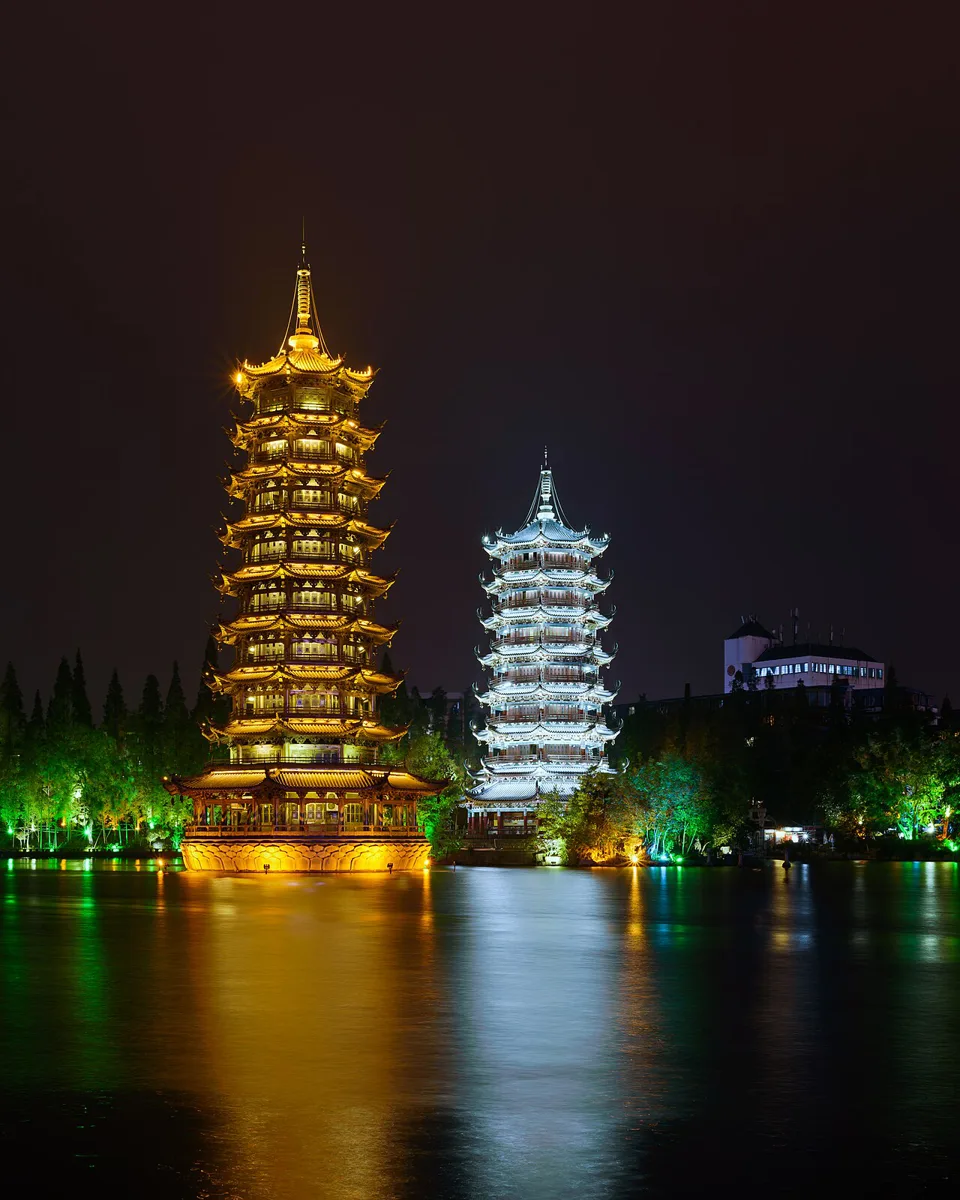
These twin towers in the water are the clearest reason to put Shan Lake on your route. Guilin Deep Tour lists the 9-story bronze Sun Pagoda at 41 m (about 135 ft) and the 7-story glazed-tile Moon Pagoda at 35 m (about 115 ft). Compare their colors and heights from the shore, a view you can plan separately from going inside.
TravelSetu lists outside viewing as free, with an extra charge for entry, so don't assume a boat ticket gets you in. Our twin pagoda guide focuses on this stop. Skip the interior if the lakeside silhouette is all you want, and don't plan your night around an unconfirmed light show.
2. Rong Lake and Its Banyan Shore
Rong Lake takes its name from banyan trees, which makes its shoreline a good choice for a slower daytime look. It lies west of Yang Bridge, and Ronghu South Road (榕湖南路) in Xiufeng District is a useful address for finding it. Look for the island in the lake, where Guilin Deep Tour describes a marble dragon boat, a lake pavilion, moon gates and granite sculptures.
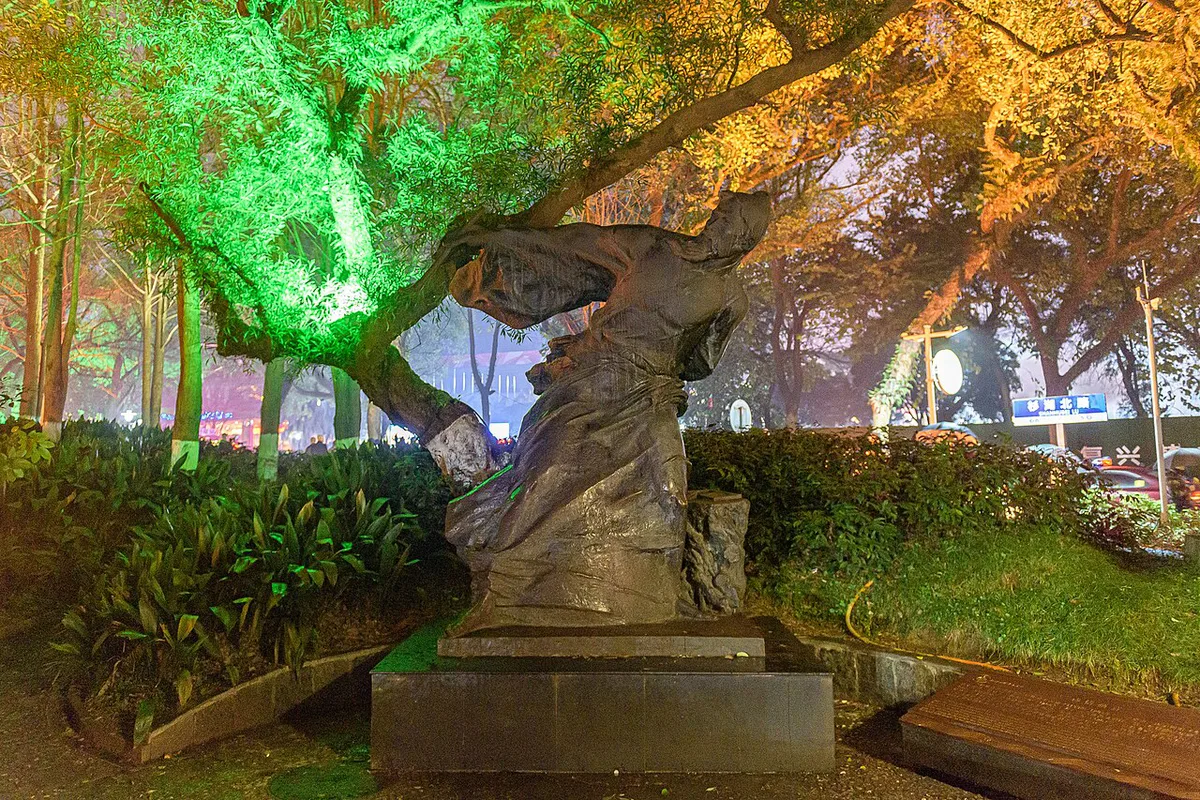
View it from the shore unless you have established that the island is open to visitors. Allow a flexible stop here and decide your length on the day. Skip it if your limited time is reserved for the pagodas on the other side of the bridge.
3. Yang Bridge Between Rong and Shan Lakes
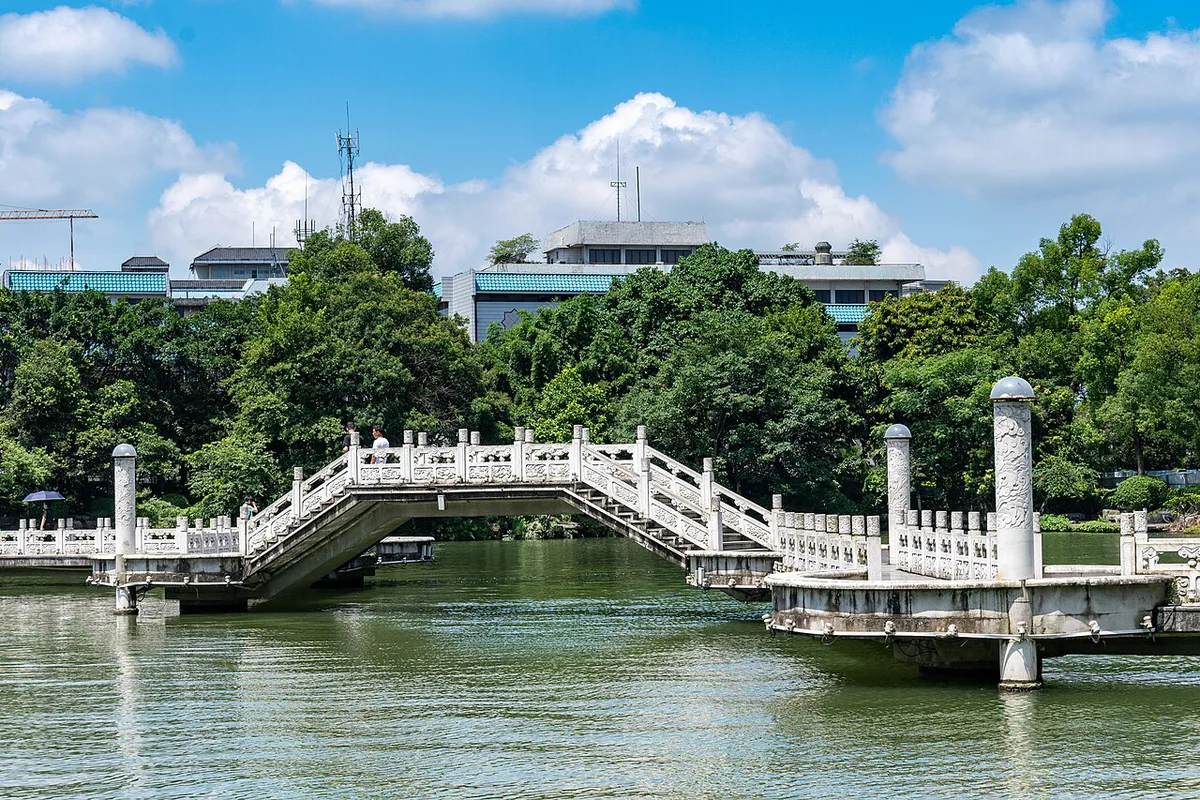
Yang Bridge (阳桥) is the easiest landmark for understanding the layout of the 2 central lakes. It stands where they meet along Zhongshan Middle Road. Rong Lake is on its west side, while Shan Lake and the twin pagodas belong to the east.
Use the bridge to choose which shore gets more of your walking time, then compare the banyan setting with the tower views. Outside viewing fits a short orientation stop, but boat visibility depends on your sailing. Skip a special detour if bridges interest you less than gardens or city-wall scenery.
4. Crystal Glass Bridge
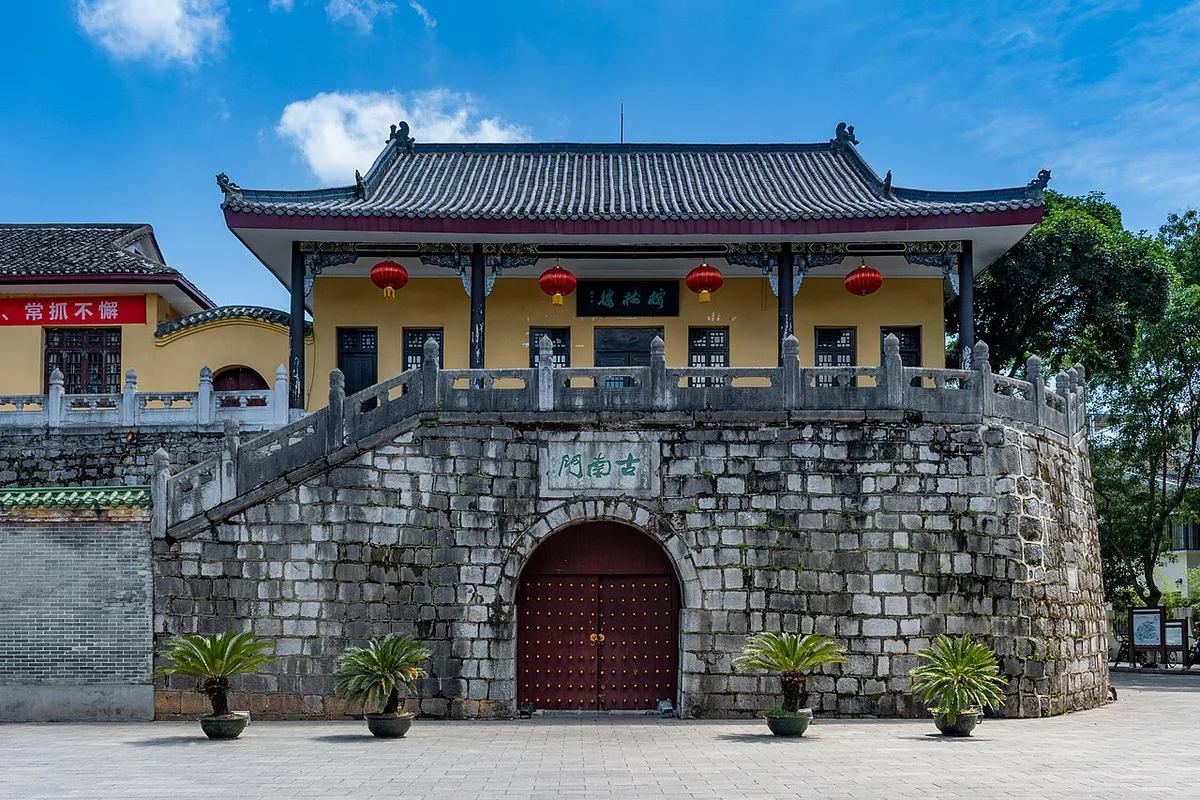
West of Yang Bridge, the Crystal Glass Bridge (水晶玻璃桥) is the stop for travelers who like unusual materials. Guilin Deep Tour describes crystal-glass elements in its structure, rain canopy, columns and railings. Look closely at those details if you can reach it, especially the railings.
The same guide says visiting the bridge carries an entrance fee but gives no amount. Check current access on site before counting on a crossing, and treat entry as separate from your walk or cruise. Skip it if you want only free shore views or have no interest in close-up design details.
5. Gui Lake Gardens and Bridges
Gui Lake shifts the focus from the central towers to planting, pavilions, stonework and small water features. Guilin Deep Tour describes artificial waterfalls, springs, walkways and relief sculptures along its banks, with planting themed around the 4 seasons. Bridge fans can look for red Lize Bridge on Lijun Road, a suspension design resembling San Francisco's Golden Gate.
Xiqing Bridge, below Laoren Mountain, takes its model from Cambridge's Mathematical Bridge. Its listed setting is called Xiqing Lake, so check its position on a map and don't assume your boat passes it. Choose daylight for the planting, and skip this section if you only have time around Shan Lake.
6. Mulong Lake and the City-Wall Scenery
Mulong Lake suits you if old city defenses and traditional-style architecture appeal more than central-city views. Look for the Mulong ancient ferry wall, Dongzhen Gate and Song-era wall remains, with Diecai and Baoji hills behind the lake. Song Street and other old-style scenery are developed attractions, so don't read every building as an original structure.
This area has its own ticket: visitors 1.5 m (about 4 ft 11 in) or taller need adult admission, which includes the main entrance fee. Children under 1.2 m (about 3 ft 11 in) enter free, while half-price and other discounts require document checks at the ticket window. Skip it if you want a free stroll without a gate.
Tickets, Hours and Booking
From April through October, boat ticket sales run 8:00–21:30. From November through March, they run 8:30–21:00. These are sales hours, not departure times or lighting hours. You can buy boat tickets through the WeChat mini program, which the operator describes as the more convenient option.
Buying near the 21:30 end of peak-season sales can work, but only if you reach the dock 20 minutes early.
Guilin Deep Tour lists daytime boat tickets at ¥90 and adult night tickets at ¥210. TravelSetu instead gives about ¥200–270 for a cruise. Neither is an operator quote, so compare the date, boat class, route and inclusions on your booking. Also check passport acceptance, ID, payment, refunds and weather or water-level cancellation terms.
Mulong Lake has separate admission rules. For that ticket, search 桂林两江四湖 in WeChat mini programs, then verify and collect it at the scenic area window. Unused Mulong Lake tickets can be refunded at any time. Don't apply that refund rule to a cruise or assume either ticket includes the other.
Cruise Piers, Routes and Getting There
Guilin Deep Tour lists 3 boarding docks. Its routes connect Riyuewan with either of the other 2, in both directions, so don't assume you'll finish where you started. Before paying, get the pier's Chinese name and address, entry point, arrival deadline and final dock. That guide advises arriving 20 minutes early. It lists a ¥20 per-person change fee after a missed boat for the next available sailing, or ¥40 to move to the next day.
Elephant Hill and the cruise area share a visitor center at No. 52 Minzhu Road, beside Gate 1 of Xiangshan Park. It is open 7:00–18:00, and you shouldn't treat it as your boarding pier without booking confirmation. From Guilin South Railway Station, take bus 16 to Xiangshan Park and walk 150 m (about 490 ft), about 25 minutes in total. Other arrival points are compared below. For your return, plan transport from the end dock named on your ticket.
| Listed dock | Location | How to identify it |
|---|---|---|
| Riyuewan (日月湾) | Shanshui Road, Xiufeng District | Opposite Lijiang Waterfall Hotel |
| Elephant Trunk Fisherman | 12 Binjiang Road, Xiangshan District | Next to Elephant Trunk Hill's No. 3 entrance |
| Wenchang Bridge | Southeast end of Wenchang Bridge | Near Elephant Trunk Hill, in front of Huating Restaurant |
How to Reach the Visitor Center
Driving from Guilin South takes about 10 minutes for roughly 1.6 miles (2.5 km). From the airport, about 19 miles (30 km) away, allow about 55 minutes by car or 2 hours 20 minutes by public bus connections. Use these times for the visitor center only, then add any transfer to your pier.
| Starting point | By car | By bus | Bus directions |
|---|---|---|---|
| Guilin North Station | About 30 minutes | About 50 minutes | Bus 100 to Yangqiao; walk 900 m (about 0.56 mile) |
| Guilin West Station | About 40 minutes | About 1 hour 30 minutes | Bus 22 to Ximenqiao; walk 880 m (about 0.55 mile) |
| Airport | About 55 minutes | About 2 hours 20 minutes | Airport bus to Civil Aviation Building; walk 51 m (167 ft); bus 16 or 23 to Xiangshan Park; walk 150 m (about 490 ft) |
How to Fit the Waterways Into Your Day
Short on time? Walk 1 shore around Shan Lake or Rong Lake and turn back when you need to. With 1 evening, choose a night cruise or stay on foot around the pagodas. With more time, walk by day and cruise after dark, accepting that some scenery may repeat. Add pier transfer, early arrival and the trip back to the roughly 90–120 minutes afloat.
Reconsider a cruise if you mainly want countryside scenery or have a tight onward connection. With limited mobility, ask about steps, boarding gaps and accessible drop-off before booking. Compare transport to both your start and end docks when choosing where to stay. In wet weather or changing water levels, check the operator's current sailing status.
After your outing, our after-dark Guilin guide can help with later plans. If a staged performance matters more, compare Guilin's evening shows without assuming your cruise includes one. For a street stroll, check your end dock's distance to Zhengyang Pedestrian Street, Guilin: Visitor Guide first.
For a daytime culture add-on, Guilin Museum Guide: Hours, Free Entry and Visit Planning is in Lingui District, away from these central lakeshores. Admission is free, with hours of 9:00–17:00 and last entry at 16:30. It closes Mondays except national statutory holidays, so check its holiday arrangements. Bring valid ID.
Practical Mistakes to Avoid
Most avoidable problems start with treating the scenic area's name as a complete itinerary. Match your ticket to a dock, direction and finish point. Don't buy for a particular bridge, tower or performance unless your selected sailing includes it. Recheck departure and lighting times for your date instead of relying on an old timetable.
Wear comfortable shoes, use public crossings and follow signs beside the water. If you're pairing Mulong Lake with Diecai Hill, note that a September 18, 2026 notice announced a temporary closure of Diecai's Xianhe Peak area. It gave no reopening date, so check its status before planning that climb. Bus routes 2 and 203 serve the neighboring Fubo and Diecai hill scenic area.
Explore More Guilin Guides
Keep planning your Guilin trip with these guides.
Guilin Guides
Notes for your Guilin trip
Optional updates to our guides.
Also worth reading
Keep planning
More guides you'll find useful