Yangshuo Deep Water Solo: Access, Risks & Planning
Yangshuo deep water solo access is unconfirmed as of November 2026. See the water risks, booking questions, reasons to skip it and other options.
Last updated November 2026: Yangshuo deep water solo means climbing without a rope above water around Yangshuo, where nothing but the water meets a fall. As of November 28, 2026, this guide cannot confirm a permitted site, bookable operator or official ban, so there is no established way to recommend doing it. Water does not make a fall safe.
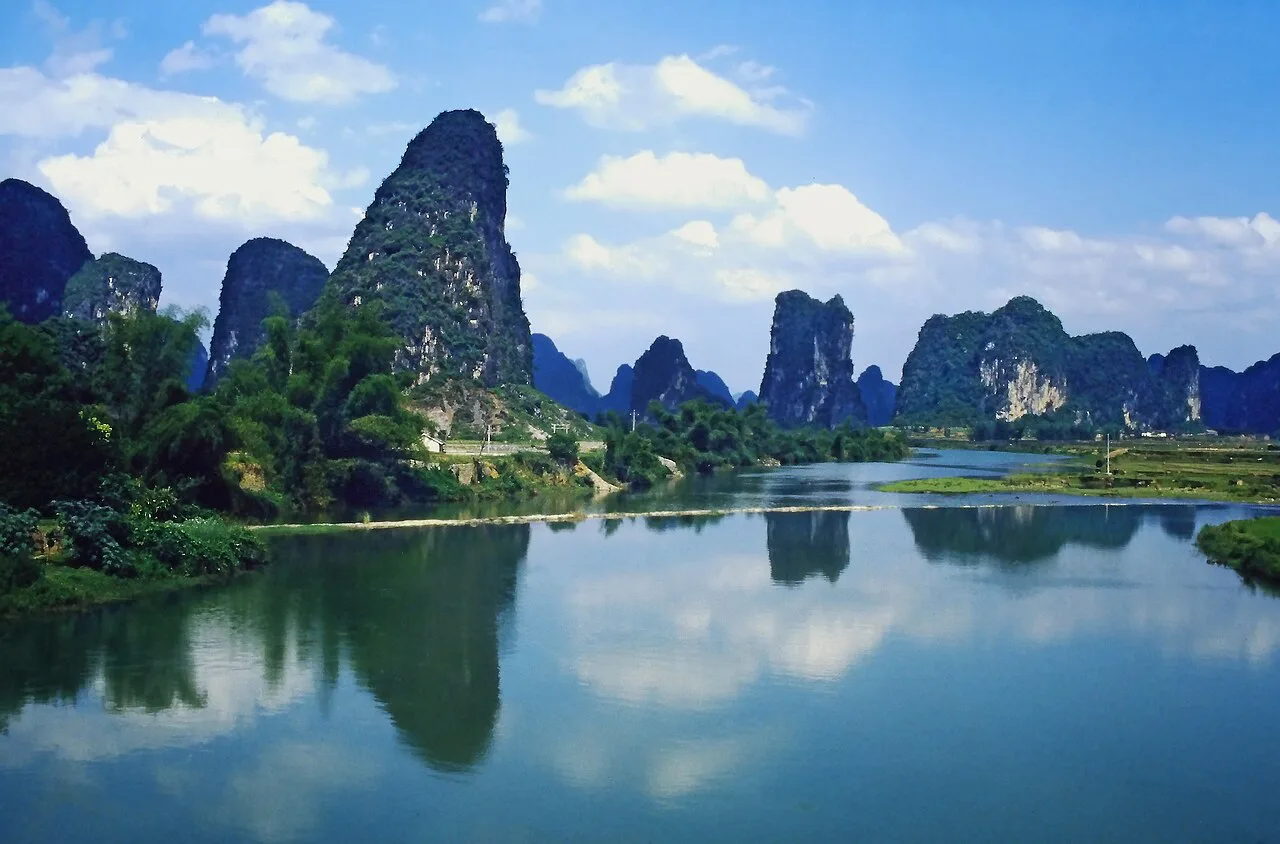
Featured image: shankar s., CC BY 2.0, via Flickr.
Can You Do a Yangshuo Deep Water Solo Right Now?
Its availability is unconfirmed, which is different from proof that it is allowed, banned or impossible. An operator's advertisement would show only what that business offers. It would not establish official permission or safety.
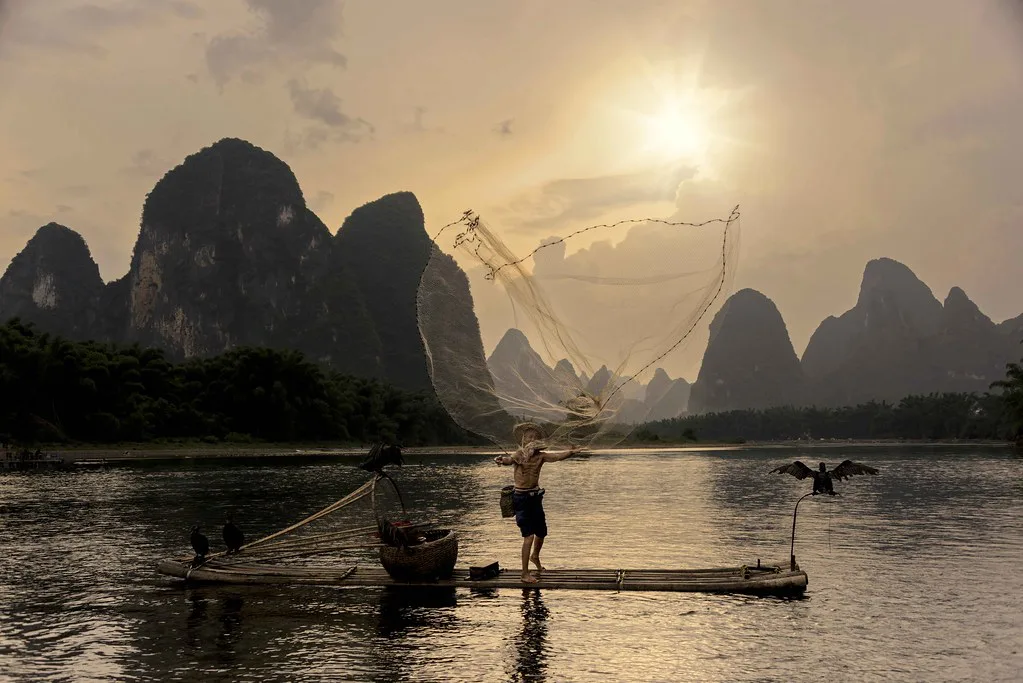
For permission, look for current Yangshuo County or Guilin government notices covering the exact site. Relevant offices may include sports, culture and tourism, water or maritime authorities. Useful Chinese searches include 阳朔 深水攀岩 (Yangshuo deep water climbing) and 阳朔 深水抱石 (Yangshuo deep water bouldering). Also search 禁止游泳 (no swimming) alongside the name of any proposed water body. If a closure or prohibition applies, drop the plan.
Should You Try It? Go, Pause or Skip
No verified local rule on age, health, swimming ability or climbing experience is available to quote here. Our editorial advice is to rule it out if you cannot swim confidently or accept an uncontrolled fall. Beginners should not read the lack of a rope as a simpler start. Raise injuries and medical conditions with a qualified clinician before committing.
- Go ahead with booking only if permission, current site conditions, supervision and rescue arrangements are all established. This still does not make the activity safe.
- Pause if any of those points is unknown or out of date, including conditions on your climbing day.
- Skip it if access is prohibited, conditions are unsuitable or you cannot meet the participation requirements.
- Skip it, too, if you cannot swim confidently or do not accept the consequences of falling without a rope.
Water, Fall and Rescue Risks to Settle
A pool or river that looks calm can leave major questions unanswered. Do not treat swimmers, old photos or your own visual inspection as proof that a landing is suitable. Responsibility for assessing the site on the day should sit with a named, qualified person. Ask that person to explain both the hazards and the rescue plan before anyone leaves the ground.
- Landing: current depth, underwater obstacles and changes in water level.
- Water: current, boat traffic, water quality and temperature.
- Fall: climb height, likely fall height, awkward body positions and landing instruction.
- Exit: how a tired or injured climber gets out of the water.
- Rescue: who is watching, how they reach you, what first aid is ready and how evacuation works.
When Conditions Should Change the Plan
No deep-water-solo season for Yangshuo is established here, so avoid choosing travel dates around an assumed best month. Rain, storms, water level, flow, temperature and holds that are wet or slippery all belong in the day's go-or-stop decision. Ask who can cancel, what triggers that call and when you will hear.
For forecasts, the WMO World Weather Information Service is a starting point. A weather forecast cannot tell you whether a climbing landing is deep, clear or open. Local water information and a site assessment remain separate requirements. Our guide to the general Yangshuo climbing season should not be used to judge water conditions.
What to Ask Before Booking
Get answers in dated writing, including the exact site and the people responsible on your session. Vague reassurance is not enough. Read your travel policy as well as any operator policy, and look for wording that covers deep water soloing by activity or definition. General climbing or water-sport cover may not answer that question.
| Question | Why it matters | Reason to walk away |
|---|---|---|
| Which site is used, and what permits this activity there? | A business offer is not official permission. | The site or permission basis is withheld. |
| Who assesses depth, hazards and water level, and when? | Conditions can change. | No current assessment or responsible person is identified. |
| Who supervises, with what climbing and water-rescue qualifications? | Instruction and rescue need different skills. | Qualifications or session staff stay unclear. |
| What rescue boat or swimmer, flotation, first aid and evacuation plan are provided? | Help must be able to reach an injured climber. | There is no clear rescue and evacuation plan. |
| How high are the climbs and likely falls, and how do you exit? | You need to understand the exposure before consenting. | Staff dismiss fall risk or cannot explain the exit. |
| Do operator and traveler insurance policies explicitly cover this activity? | General cover may exclude it. | Cover is only promised verbally. |
| What triggers cancellation, and what is refunded? | You need freedom to stop without guessing the financial outcome. | Terms are missing or pressure you to climb in doubtful conditions. |
Getting There, Time and Cost
No verified departure point, journey time or price for deep water soloing is established here. Request a dated written quote from any operator, while checking site permission separately with government sources.
For a rough cost comparison, Xinglong pier rafting is ¥180 for a two-person raft, but that figure is not a deep water solo price.
- Journey: meeting point, road transfers, boat access and total time away from town.
- On site: changing space, dry storage and language support for instructions and emergencies.
- Price: transport, boat, guide, equipment and insurance, with exclusions listed.
- Booking terms: minimum group size, deposit, weather cancellation and refund method.
- Itinerary: what happens to onward plans if conditions delay or cancel the session.
What to Do if Deep Water Soloing Is Off the Table
For a climbing day with a different setup, compare options for roped climbing around Yangshuo. Our broader climbing planning advice can help you frame the next decision. You can also read about the Yangshuo via ferrata option. Neither activity is risk-free, so check its current access, supervision and participation terms.
If your main goal is time on the water, consider rafting or a cruise as non-climbing alternatives. Prices and access details were checked in November 2026. On the middle Yulong River, Xinglong pier is 6 km from Yangshuo county town. Its official site lists the round trip at ¥180 for a two-person raft or ¥270 for a three-person raft.
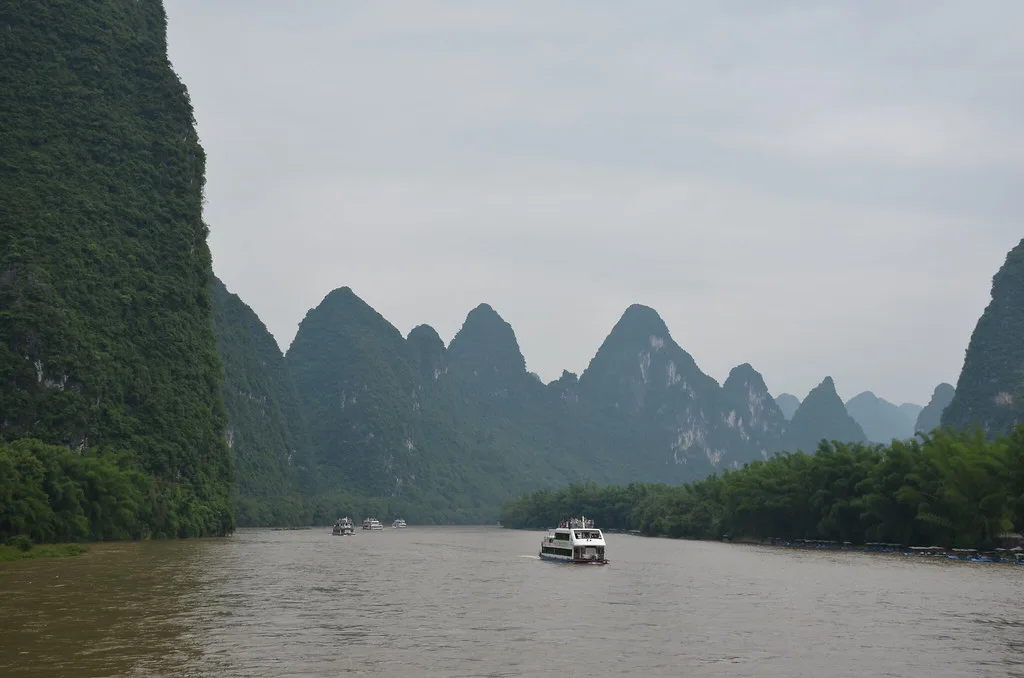
For longer river sightseeing, the Li River cruise route is about 61 km. It starts at Mopanshan (Zhujiang) Passenger Terminal, less than 30 km from downtown Guilin. Arrival is at Longtoushan (Shuidongmen) Pier in Yangshuo County. These river trips are not deep-water-solo access or evidence that swimming or climbing is allowed.
- Miaoling Cave rafting: about 3.6 km one way to Beitouba pier; ¥200 per two-person raft or ¥300 per three-person raft.
- Jinlong Bridge rafting: ¥320 per raft, running to Jiuxian general pier; about 12 km from Yangshuo county town.
- Yulong Bridge rafting: ¥180 per raft, starting and ending at Yulong Bridge pier; about 12 km from the county town.
Notes for your Guilin trip
Optional updates to our guides.
Also worth reading
Keep planning
More guides you'll find useful