
Yangshuo Scooter Rental: Rules, Costs & Checks
Planning a Yangshuo scooter rental? Check rider eligibility, rental terms, battery support and route limits, and compare other ways to get around.
Last updated November 2026: for a Yangshuo scooter rental, travelers report e-scooters at shops and hotels, but establish the vehicle's legal class and your eligibility before paying. A Yangshuo scooter may be a legally classed electric bicycle, an electric moped or an electric motorcycle, and a shop calling it a “scooter” or “e-bike” does not settle which.
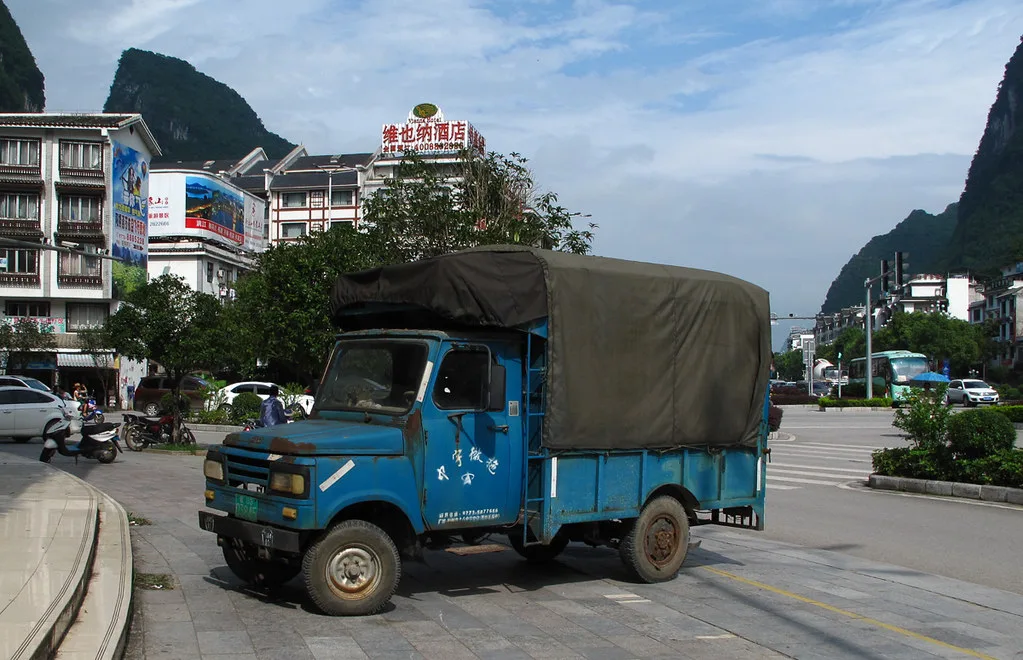
Featured image: Fredlyfish4, CC BY-SA 4.0, via Wikimedia Commons.
Can You Rent a Scooter in Yangshuo?
You may be offered one, but an offer to rent does not prove that you can legally ride it. Treat license-free claims with care, especially as a foreign visitor. Foreign-rider eligibility for each vehicle class is unconfirmed here, including whether a foreign or international driving permit counts.

Legal class matters more than appearance or the English name on a listing. Electric bicycles are a separate category from more powerful moped-style and motorcycle-style vehicles. Ask for the model details and any registration document or plate. You can search the China national standards portal for current technical definitions. A technical standard alone may not tell you who can ride on local roads.
For local notices, start with the Guilin municipal government website. Put rider questions to the Yangshuo or Guilin traffic police, and ask your hotel to help with translation if needed. Do not assume petrol scooters are available.

- Class: is this legally an electric bicycle, electric moped or electric motorcycle, and what document shows it?
- Rider: what minimum age, license and ID rules apply to you and this vehicle?
- Permits: is your foreign license or international driving permit legally accepted?
- Equipment and passengers: what are the helmet rules, and may this vehicle carry an adult or child passenger?
- Access: which roads or areas are restricted, where can you park, and what applies after dark?
Yangshuo Scooter Rental From a Shop, Hotel or Package
Traveler reports mention rental shops, hotel rentals and a hotel package that included e-scooter use. One package does not show what other hotels offer. Hotel pickup can save you a separate errand, but convenience tells you nothing about vehicle condition or replacement support. Use the same questions for each option, and inspect the actual vehicle you will receive.

| What to compare | Rental shop | Hotel rental | Hotel package |
|---|---|---|---|
| Pickup convenience | How far is pickup from your room? | Is pickup at the hotel or elsewhere? | Is a vehicle reserved for your arrival? |
| What is included | Are a helmet, lock and charger supplied? | Which items come with the rate? | Which rental items does the booking list? |
| Deposit and ID | What deposit and ID handling apply? | Does your room booking change these terms? | Is any separate deposit due at check-in? |
| Battery support | Is there a swap or recovery service? | Who helps if the battery runs low? | Does the package cover swaps or recovery? |
| Return conditions | Where and when must you return it? | What happens after reception closes? | Does included use end before checkout? |
Rental Costs and Terms to Check

Rates may differ by season, vehicle and business, so get a written quote for your travel date. Ask the shop or hotel for the full total in yuan (¥), with refundable money shown separately. For a package, compare what the booking includes with the terms for renting separately.
Pair the return deadline with battery reserve: if “one day” means 24 hours, a late ride still needs enough charge to get back.
“One day” needs a definition. It could mean business hours, a calendar day or 24 hours. Get the exact return date and time written down, along with the late fee.
Ask how the deposit is paid, when it is returned and what can be deducted. If staff request your passport, find out why and whether they will keep it. Do not agree to ID handling that you are uncomfortable with or whose legal basis is unclear.
Insurance needs two separate reviews. Request the rental policy wording and read your own travel policy. Look for exclusions tied to vehicle class, licensing, injury and damage to other people or their property. A verbal “insured” does not explain what is covered.

- Rate: daily or period price, rental start and exact return time.
- Money held: deposit amount, payment method, refund timing and deductions.
- Power: charging instructions, swap fees, pickup fees and recovery charges.
- Penalties: late return, damage, theft, and lost keys, lock or charger.
- Cover: your possible excess, injury cover, third-party liability and exclusions.
What to Check Before Riding
Do the inspection before you pay any nonrefundable amount or leave the pickup point. Test controls while stationary first. Try a slow ride only where it is lawful and you are eligible. Ask for another vehicle or walk away if a fault remains.
Settle breakdown and crash procedures at the same time. Find out whom to call, which language they can use and who collects a disabled vehicle. Ask what pickup or replacement costs, and when that help is unavailable. For emergencies, follow official guidance; calling the rental business does not replace contacting emergency services.
- Establish the vehicle's legal class and your eligibility to ride it.
- Test the brakes, tires, lights, horn, lock and any mirrors.
- Check that your helmet fits securely and has no obvious damage.
- Read the battery level and ask what range to expect with your load and planned route.
- Photograph or film every side, the dashboard and existing damage, ideally with staff present.
- Get the price, deposit, return time and all fees in writing.
- Save the operator's phone or messaging contact and the exact return location.
Battery and Route Planning
Plan around getting back, not around reaching your farthest stop. Keep battery in reserve for detours and a missed turn. Load, hills, weather and battery condition can affect range, so ask about your particular vehicle. A traveler's experience with another scooter cannot tell you how far yours will go.
Before leaving, ask where swaps happen, what they cost and whether a charged replacement can be held for you. Do not count on an immediate swap during busy periods. Find out whether you would have to wait for charging or return the vehicle yourself.
Signs near some sights may be unclear. Save the route, your destination and the return point on your phone, including an offline copy. Keep enough phone power for navigation and an emergency call. A saved Chinese-language address can also help when you ask for directions.

You can use these cycling route ideas for research. A route suited to a bicycle is not automatically legal or suitable for your electric vehicle. Check road access and parking for every planned stop, and shorten the outing if any section remains uncertain.
Scooter, Bike, Tour or Driver?
Choose by eligibility and confidence before comparing convenience. Independent riders may value route freedom if they can ride legally and manage navigation. First-time riders should not use a busy road to learn unfamiliar controls. A driver or taxi may suit short visits or travelers who would rather leave driving to someone else.
Families should not assume that any two-wheeler can carry a child or extra passenger. Settle the legal rule and suitable safety equipment first. If pedaling appeals more, compare options for renting a pedal bike.
For navigation help, consider a guided ride by bicycle. Ask which vehicle is included, because a bike tour may not offer electric models. With taxis, arrange your return rather than assuming you can hail one anywhere. Our broader guide to cycling here can help you plan a pedal-powered outing.

| What to compare | E-scooter | Pedal bike | Guided bike tour | Driver or taxi |
|---|---|---|---|---|
| Eligibility | Depends on legal class and rider rules | Ask about age, local rules and rental terms | Ask about participant and vehicle requirements | You are a passenger; ask about group and child seating needs |
| Effort | Motor support, but active vehicle control | Pedaling and steering | Depends on bike and tour pace | No pedaling or driving |
| Route freedom | Flexible within legal access and battery limits | Flexible within bicycle access rules | Shaped by the tour plan | Depends on booking and road access |
| Navigation | You manage it | You manage it | Ask how the guide leads the group | Agree on destinations and pickup points |
| Range concern | Plan battery reserve and return | No battery limit on an unassisted bike | Ask about support if using electric bikes | Discuss any route limits with the driver |
| Costs to price | Rental, deposit, cover and battery help | Rental, deposit and loss or damage fees | Tour fee, equipment and exclusions | Fare or hire fee, waiting and extras |
When to Skip the Scooter
Walk away from the rental when a basic safety or legal question has no satisfactory answer. Losing a convenient pickup is better than accepting a risk you do not understand. Choose another form of transport in any of these situations.
- You cannot establish that you are eligible to ride that vehicle.
- You are not confident controlling it around other road users.
- A safe, properly fitting helmet is unavailable.
- Weather, road, light or vehicle conditions make riding unsafe.
- Insurance exclusions leave a financial or injury risk you are unwilling to accept.
If the Scooter Breaks Down or You Have a Crash
Agree the response plan before leaving. Save the operator’s phone or messaging contact, its return address, and any translation help your hotel can provide. Ask whether support reaches your planned route, who authorizes a replacement, and whether recovery creates a separate fee.
A Trip.com traveler reported roughly 4–5 hours of active riding from one charge and received a replacement from their hotel. Treat that as one experience, not a promised range or swap service. Keep enough battery to return, especially if your rental’s “one day” period is not a full 24 hours.
If a fault develops, stop somewhere safe and photograph the vehicle, dashboard, and location before moving it. Contact the operator before arranging repairs or leaving the vehicle unattended. After a collision, prioritize emergency help and follow official instructions. Exchange necessary details, document the scene, and notify the rental business promptly. Do not assume its policy covers injury, third-party damage, or recovery costs.
Notes for your Guilin trip
Optional updates to our guides.
Also worth reading



Keep planning
More guides you'll find useful