Li River vs Yulong River: Which Raft Should You Take?
Compare Li River and Yulong River rafting by scenery, motor vs pole, weirs, timing and booking, plus how the Li cruise affects your choice.
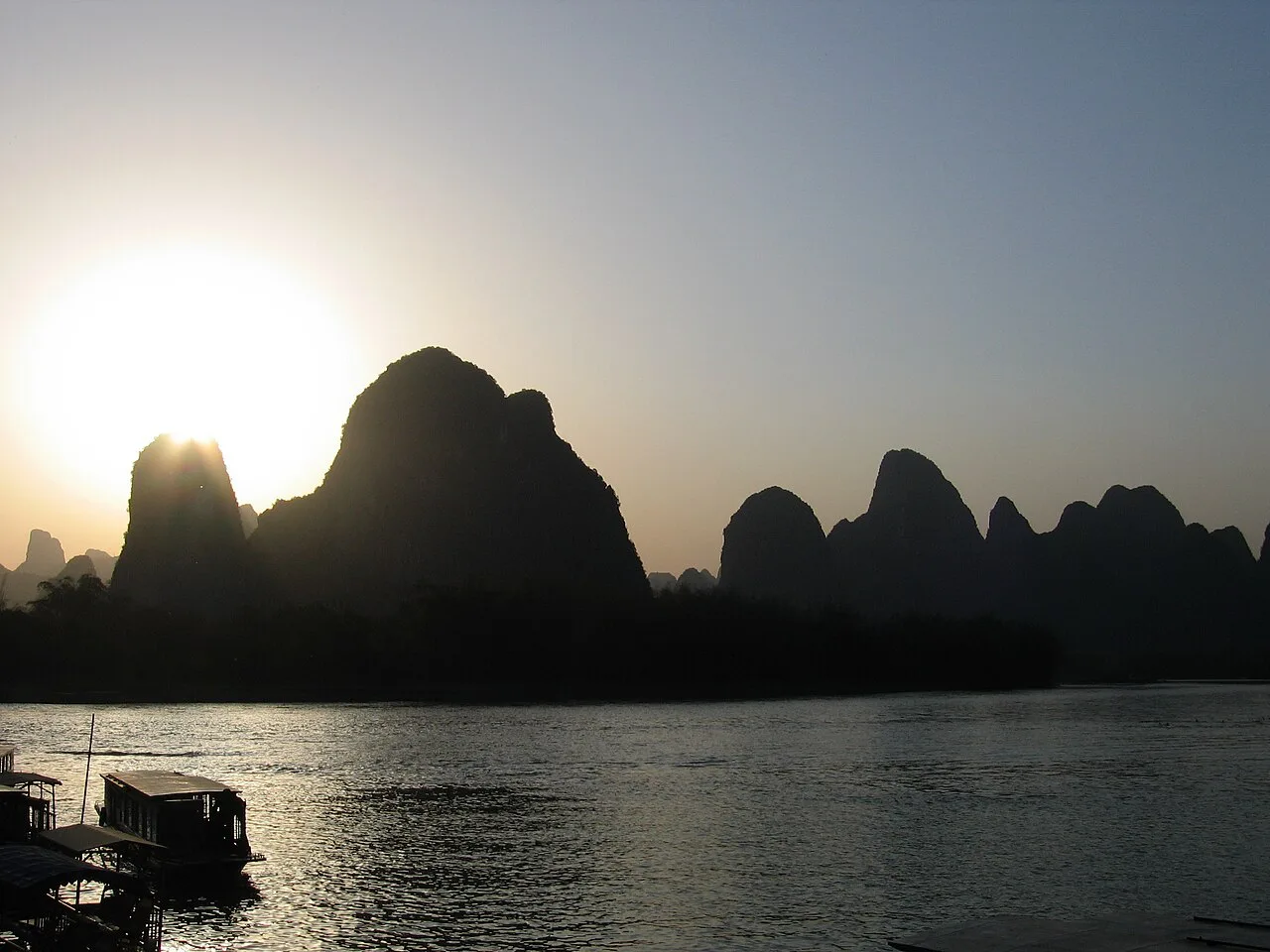
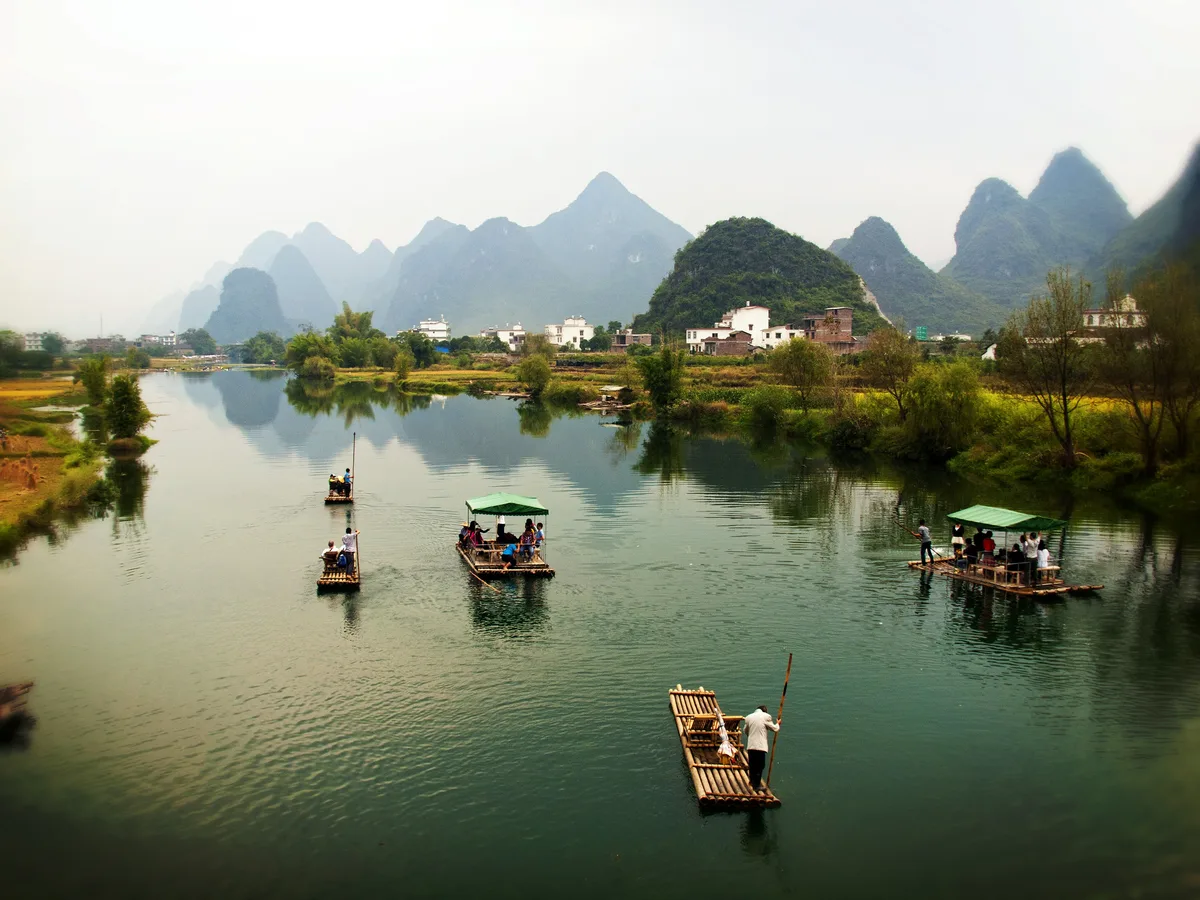
Last updated November 2026: for li river vs yulong river, choose the Li if you want large karst peaks along the Guilin–Yangshuo corridor. Choose the smaller Yulong (遇龙河), a tributary near Yangshuo, if you'd prefer a rural, hand-poled raft ride.
Featured image: Kebailan, CC0, via Wikimedia Commons.
Quick Verdict
"Li River" can mean the long Guilin–Yangshuo cruise or a shorter motorized raft between Yangdi and Xingping. "Yulong" usually means the tributary raft. Your main raft-to-raft decision is big river scenery with a motor, or countryside scenery with a boatman and pole.
- Cruise already booked: Yulong adds a more distinct experience. The Li raft still suits you if you want a lower, water-level view of the larger peaks.
- No time for the cruise: consider the Li raft for the big karst views.
- Want no motor: consider Yulong. Crowds can differ by route and time.
- Traveling with children or older relatives: settle eligibility for the exact raft and route before picking a river.
Li River vs Yulong River at a Glance
These fares are unofficial planning ranges noted in November 2026. Times and rules can differ by route, so check your exact product with an official ticket seller before paying.
| Factor | Li raft | Yulong raft | Li cruise |
|---|---|---|---|
| What it is | Shorter ride on the Yangdi–Xingping stretch | Ride on a Li tributary near Yangshuo | Guilin–Yangshuo boat journey |
| Power | Motor | Hand-poled | Powered passenger boat |
| Scenery | Large karst peaks from low on the water | Rural riverbanks and karst countryside | Long karst corridor from a larger boat |
| Noise and crowds | Expect motor noise; it can be busy | No raft motor; crowds vary | Shared boat; commentary may use a loudspeaker |
| Weirs | None expected | Low weirs on some routes | Not a weir ride |
| Time on water | About 45 minutes–2 hours | About 30–70 minutes | About 3–5 hours |
| Fare basis | ¥90–255 by route; ask whether per person or per raft | ¥180–320 per raft; some leisure floats ¥45 per person | About ¥215 (3-star) to ¥360 (4-star) |
| Booking | Ask about current ticketing and ID rules | Check online release and walk-up sales | Reserve at least a day ahead |
| Eligibility | Age and other limits may apply | Rules may differ by raft type | Check operator conditions |
| Start and end | Yangdi–Xingping stretch; ask about direction and piers | Depends on route | Guilin-area pier to Yangshuo; ask which piers |
| Best for | Big views in a shorter slot | Countryside and hand-poling | Traveling from Guilin toward Yangshuo by water |
| Skip if | Motor noise would spoil it | You mainly want the largest river panorama | Your day is too tight |
Scenery and Ride Experience
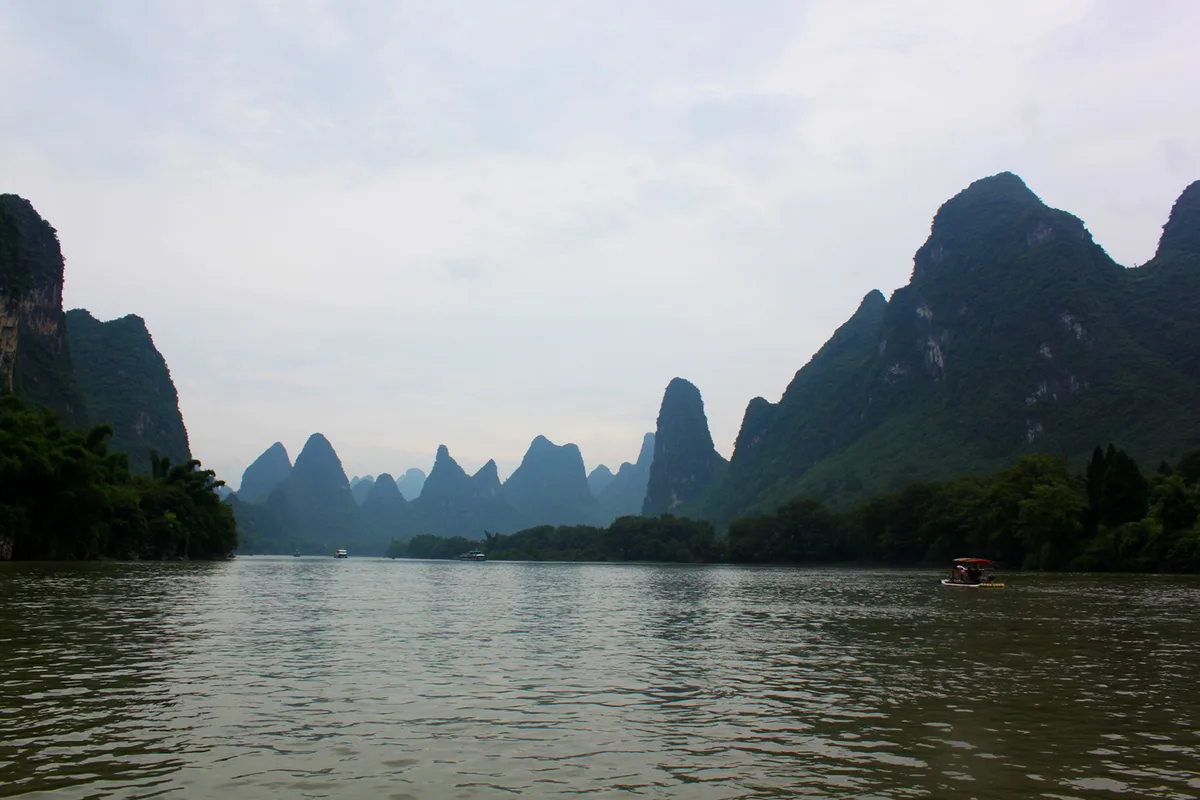
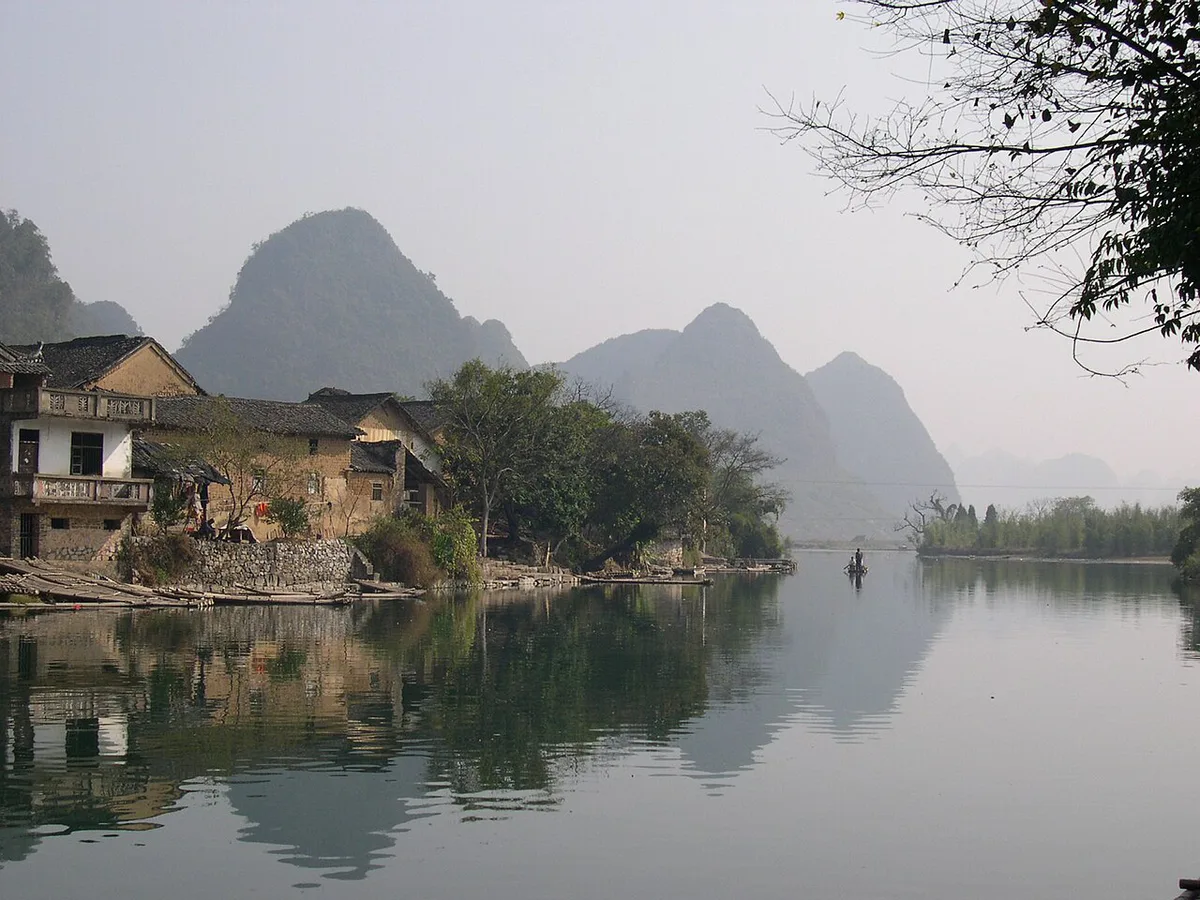
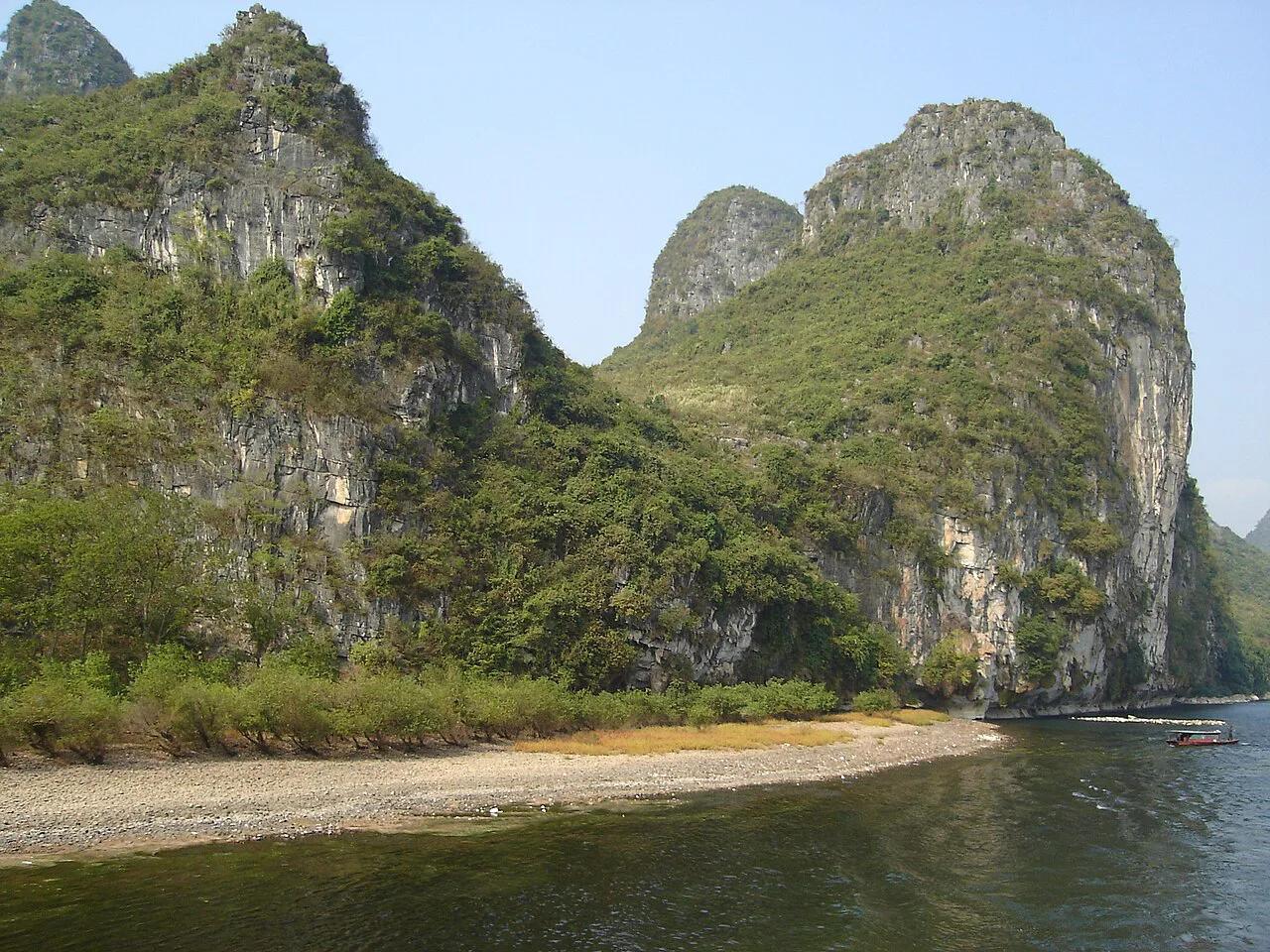
On the Li raft, you sit low beneath the larger peaks, with a motor running. Nine Horse Fresco Hill, Yellow Cloth Shoal and the 20-yuan note view near Xingping are associated with this area. Raft and cruise views or landings may differ, so match any must-see landmark to your route. Our Li raft route details cover that option further.
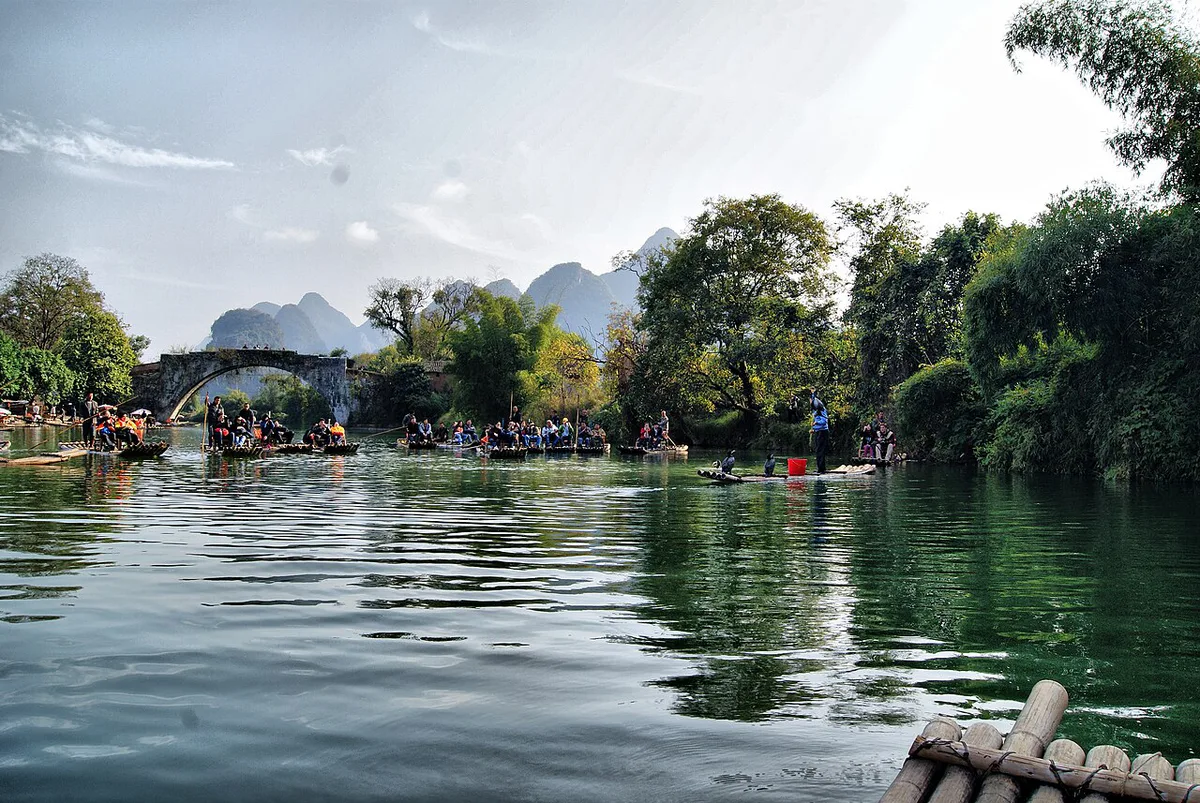
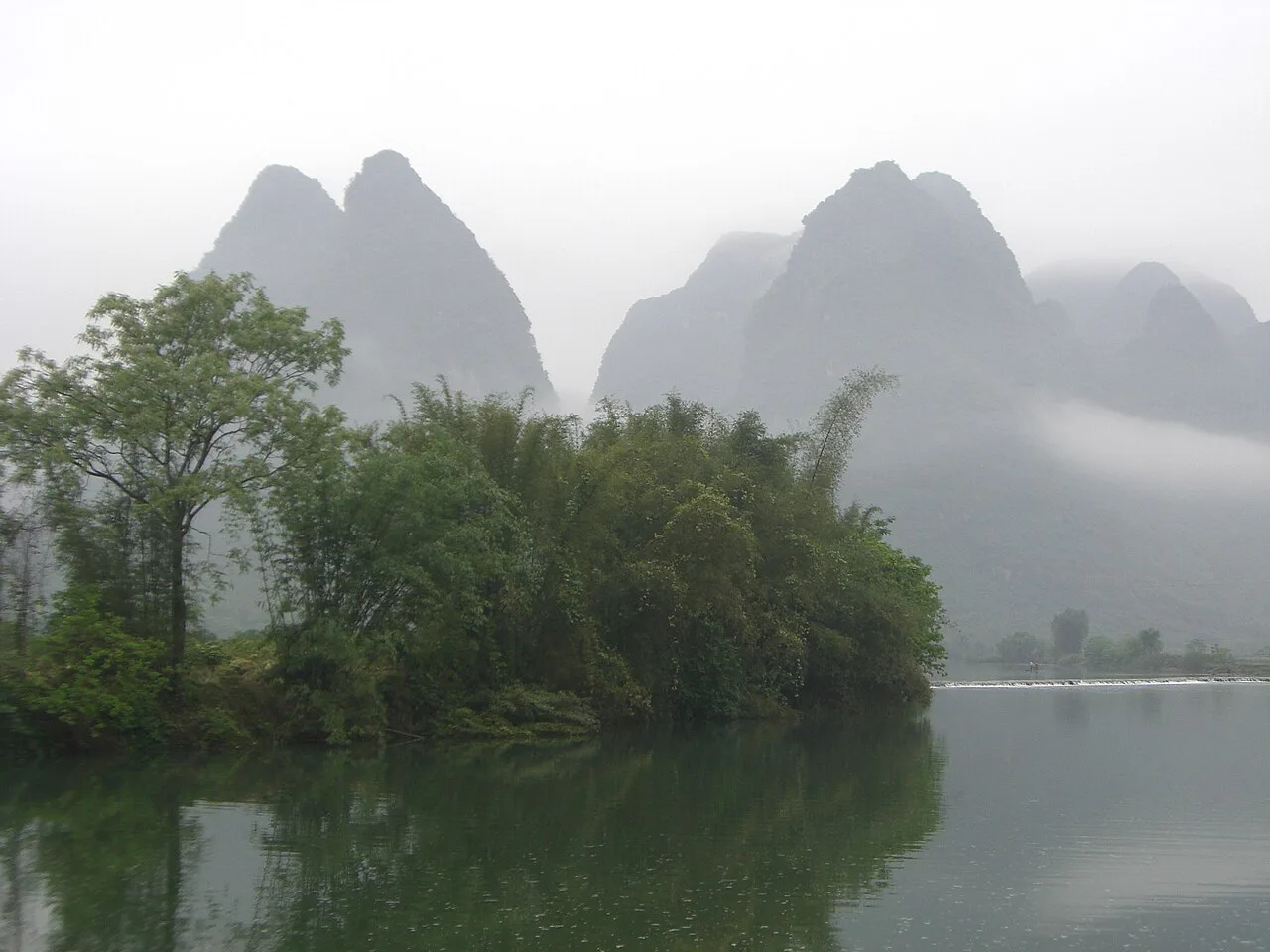
Yulong has a smaller setting, with rural riverbanks and a boatman poling the raft. Some routes slide over low weirs, which can bring a quick drop and splash. Protect your phone and expect possible wet shoes or clothing. Route choice can change your pier, ride length, weir crossings and raft type. A longer list of routes doesn't necessarily mean more kinds of scenery. Don't assume a hand-poled ride is easy to board or suitable for limited mobility.
Already Taking the Li River Cruise?
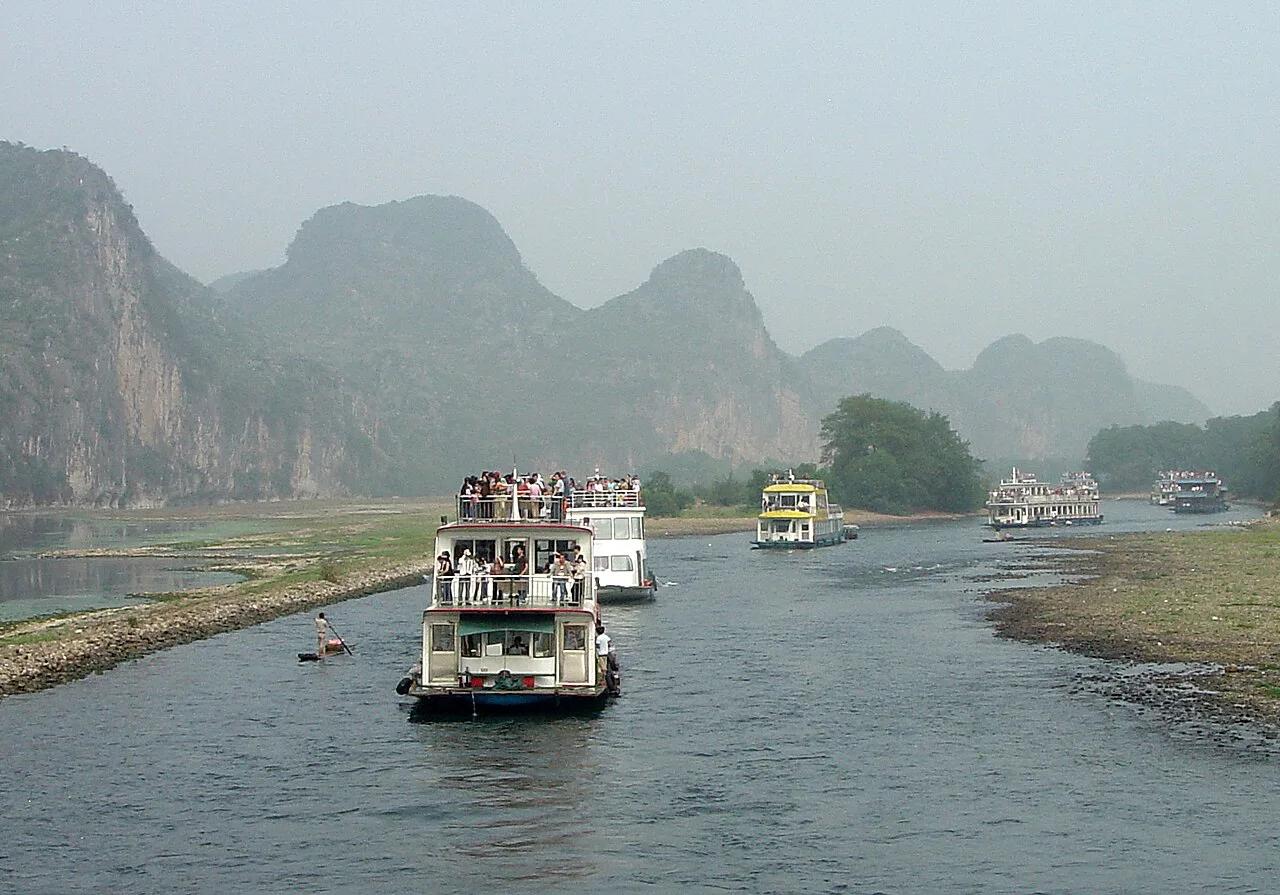
You can usually skip the Li raft if variety matters most. Its Yangdi–Xingping water overlaps with the cruise corridor, while Yulong takes you onto a different river. Add the Li raft only if a lower seat and a shorter, closer view are worth revisiting similar peaks.
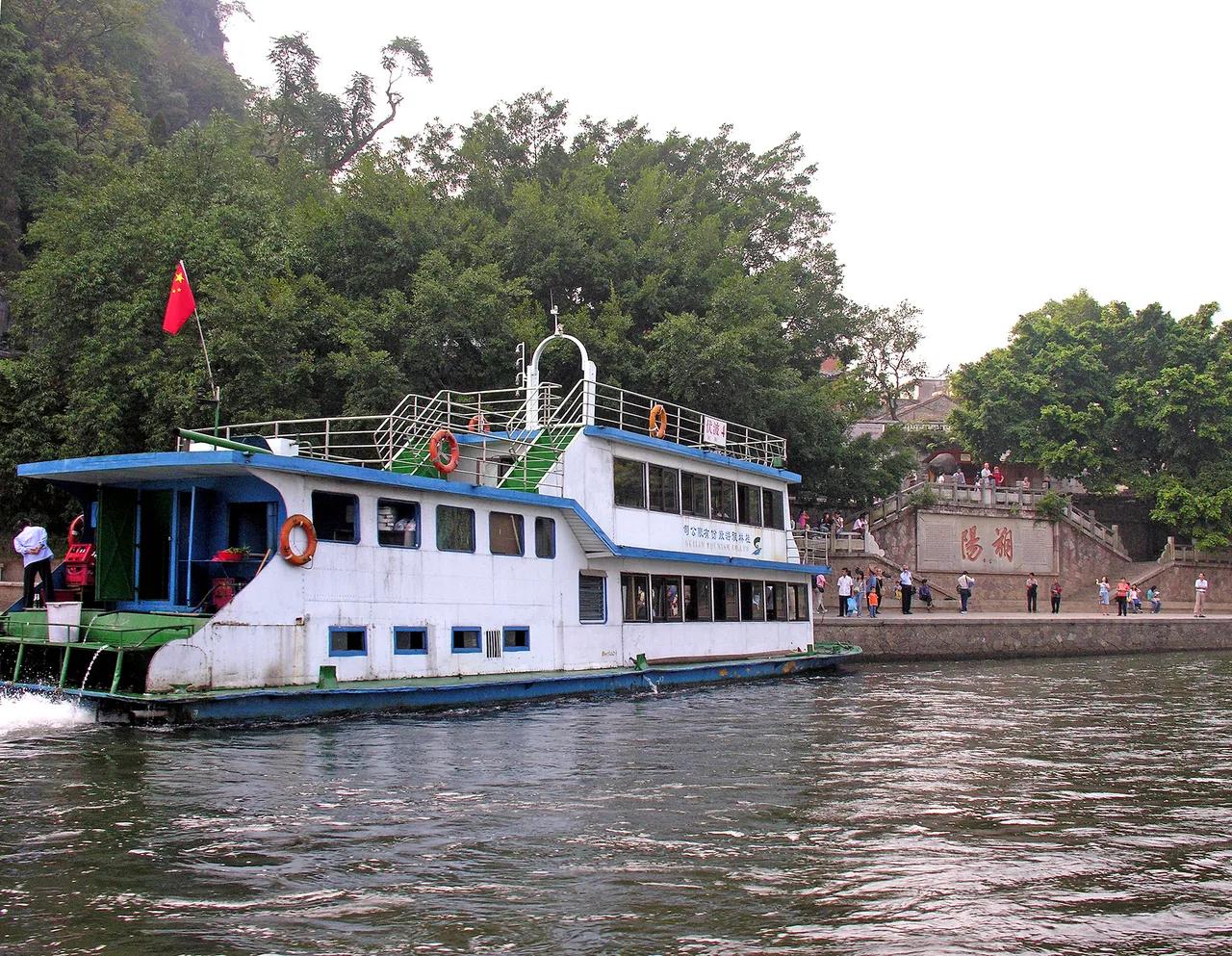
A cruise can also move you from Guilin to Yangshuo, which a short raft ride doesn't do by itself. Compare boat classes and the longer journey in our Guilin–Yangshuo cruise guide. For wider route context, use this overview of the Li.
Cost, Time and Booking
Yulong's quoted ¥180–320 applies to a raft, so it isn't automatically a per-person fare. Ask how many seats it covers and whether a solo rider pays for the whole raft. Where a ¥45-per-person leisure float is available and everyone qualifies, two fares total ¥90. Four total ¥180. These sums exclude any extra insurance or transfers.
For the Li raft, ask what ¥90–255 buys before multiplying it by your group size. Check minimum charges too.
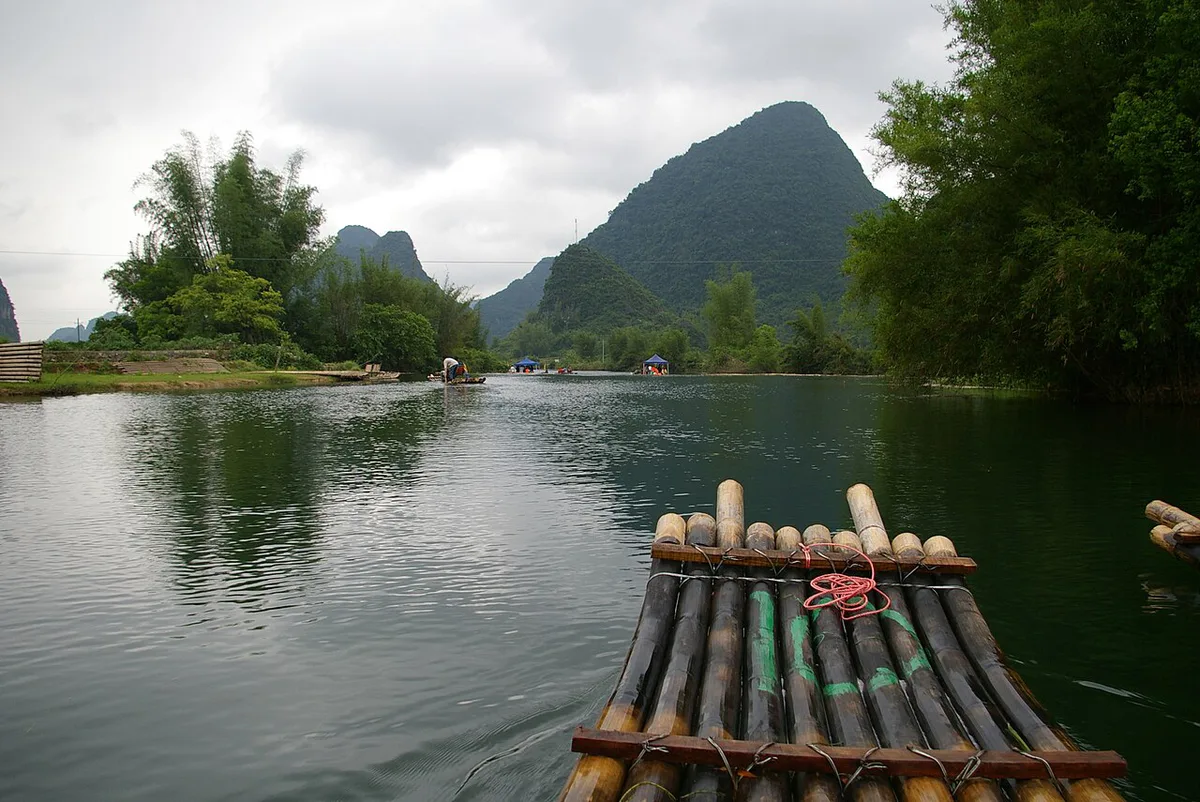
Online Yulong tickets have reportedly opened at 20:00 the previous evening through Chinese-language booking. Before relying on that release, ask about passport acceptance, payment methods, walk-up sales and holiday availability. Check the Li raft's real-name and ID requirements separately. Keep another activity ready if your preferred slot sells out.
- Door-to-door time: add the ride to your hotel-to-pier transfer.
- At the start: allow for ticket collection, check-in and any queue.
- At the finish: include the walk from the landing, any return shuttle and onward travel.
- Before payment: ask what the fare includes, how cancellations work and whether weather suspensions are refunded.
Getting There and Where You Finish
From a Guilin base, the cruise fits a day when you're moving toward Yangshuo. Published timing estimates put departure around 8–9am and arrival around 1–2pm. Your ticket should identify both piers. Allow separate time to reach the departure point, which may be about an hour from central Guilin by road.
For the Li raft, plan both ends rather than just the Yangdi–Xingping ride. As rough, undated estimates, allow 40 minutes from Xingping to Yangshuo or 2 hours back to Guilin. Transport type, exact endpoints and traffic can change those times. Our Yangdi pier logistics can help you map the connection.
From a Yangshuo base, choose your Yulong route by its start and finish docks. Ask how you'll get back from the landing. On a hotel-change day, arrange luggage storage or a luggage transfer before booking. Don't assume your bags can ride on the raft or meet you at the other end.
Can You Do Both Rivers in One Day?
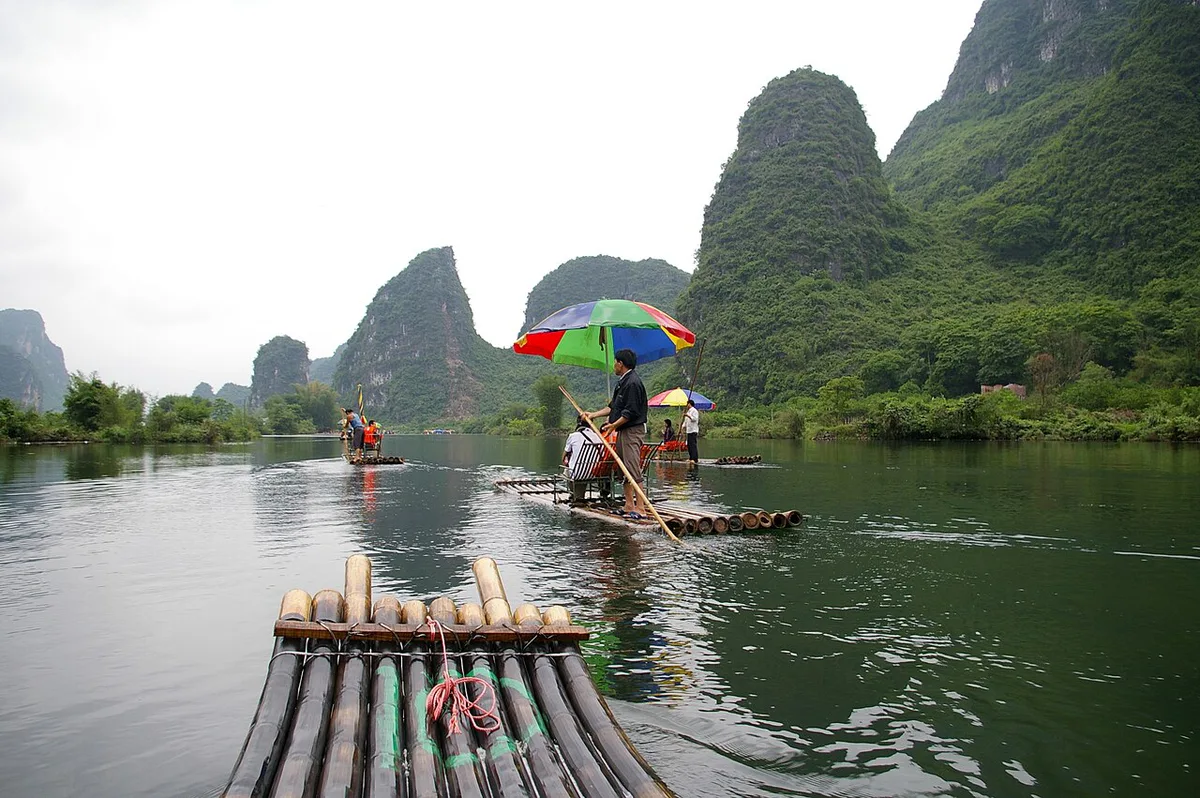
A same-day pairing can work, but only when your booked times leave enough room between docks. A cruise arrival in Yangshuo isn't an arrival at a Yulong pier. Leave a buffer for late docking, leaving the boat, road traffic and raft check-in. A 1–2pm cruise arrival doesn't guarantee an afternoon raft seat.
Ending a Li raft in Xingping can mean 2 hours back to Guilin, so a same-day Yulong slot needs a wide buffer.
- Cruise then Yulong: hotel to cruise pier, cruise, Yangshuo landing, road transfer to the Yulong dock, raft and return. Both bookings matter. A late cruise is a major risk, so drop the raft if you can't make check-in.
- Li raft then Yulong: base to Li pier, raft, exit, road transfer toward Yangshuo, Yulong check-in, ride and return. You need two compatible slots. Queues or transport can delay you, so drop the second ride if the buffer disappears.
- One experience only: base to pier, check-in, ride, exit and onward journey. You need one slot. A transfer delay is still possible, so cut optional sightseeing first.
Which One Fits You?
Start with the limit that could stop your booking, then choose the scenery. A 70-and-over exclusion has been reported for the Li raft. Yulong rules may differ between raft types, including conditions for accompanying guardians. Before payment, make sure every traveler meets the age, height, health, pregnancy and ID rules. Follow the operator's restrictions.
- Cruise booked: lean toward Yulong for contrast; check that the second booking fits your arrival.
- Short on time: consider one raft near your base; compare the full transfer chain.
- Couple: consider a two-seat Yulong raft if offered; check occupancy and total fare.
- Family: compare exact raft types; check each child's eligibility and any guardian condition.
- Older traveler: choose only a permitted product; ask about steps, boarding, weirs and the exit.
- Photographer: pick the Li for larger peaks or Yulong for rural foregrounds; check the route and secure your gear around splashes or passing-boat waves.
- Non-Chinese speaker: choose a product you can book and navigate clearly; save the Chinese names of both docks and check passport and payment rules.
Season, Weather and Backup Plans
Neither raft should be treated as guaranteed year-round. Dry-season water levels can disrupt Li services, while heavy rain, flooding or severe storms can affect river operations. Yulong conditions can also change with high or low water. Check operating status for your exact route close to departure, especially when planning a winter trip.
Rain cover differs by boat, so bring a layer and waterproof phone protection. Ask about shade too. If the ride is suspended, look at riverside walking options. Ask about current access and any river crossing before setting out. A land plan shouldn't depend on a ferry or raft running.
Your Final Choice and Booking Checklist
Pick the Li raft for larger peaks in a shorter slot. Yulong suits a countryside ride with no raft motor, while the cruise suits a longer journey from Guilin toward Yangshuo.
- Product: Li raft, Yulong raft or cruise.
- Route: exact start and finish piers, plus any weirs.
- Eligibility: every passenger meets the current rules.
- Fare: per-person or per-raft basis, minimum charge and extras.
- Operations: water or weather status, cancellation terms and refunds.
- Return: transport, luggage and a land-based fallback.
Frequently Asked Questions
Why is the Li River famous?
It's known for steep karst peaks along the Guilin–Yangshuo corridor. A view near Xingping is also associated with the landscape printed on China's 20-yuan note.
Which city is better to visit, Guilin or Yangshuo?
For these river choices, Yangshuo is the practical base if Yulong is your priority. Guilin works if you want to begin the cruise there and finish in Yangshuo.
Can you swim in the Yulong River?
Don't assume swimming is allowed just because rafts operate there. Follow current local signs and official safety rules, and stay out of the water around raft traffic and weirs.
Notes for your Guilin trip
Optional updates to our guides.
Also worth reading

Keep planning
More guides you'll find useful