
Guilin vs Halong Bay: Which Should You Choose?
Guilin or Halong Bay? Compare river and sea-bay scenery, access, cruise costs, seasons and crowds to choose the karst trip that fits your route.
Last updated November 2026: in the Guilin vs Halong Bay choice, Guilin offers inland Li River karst toward Yangshuo, while Vietnam's Ha Long Bay offers marine karst islands. Favor Guilin if you're routing through China and want river scenery; favor Halong Bay if you're visiting northern Vietnam and want a sea cruise. When time allows only one, let your existing route and entry options guide you before you compare scenery.
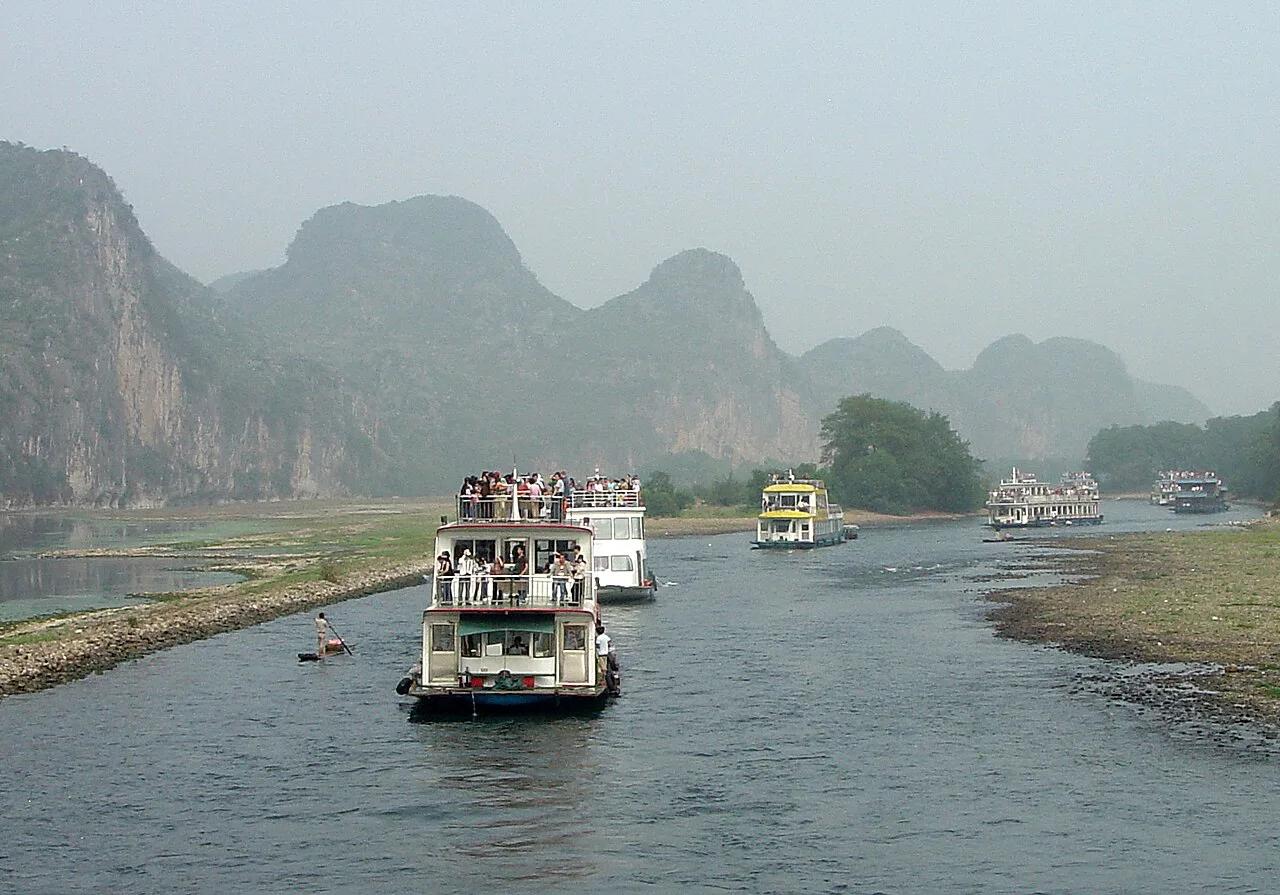
Featured image: Flora-Victoria, CC0, via Wikimedia Commons.

Quick Verdict: Which Karst Trip Fits You?
Neither place wins for everyone. Your pick depends on where you'll already be, whether you prefer a river or a bay, and how much transfer time you can accept.
- Choose Guilin if China is already on your route and you want an inland river landscape toward Yangshuo.
- Choose Halong Bay if you'll be in northern Vietnam and want limestone islands at sea, possibly with a night on board.
- Skip the extra detour if it adds a border crossing or long backtracking that leaves only a rushed visit.
Guilin vs Halong Bay at a Glance

Compare complete trips, with Guilin meaning the city plus the Li River landscape toward Yangshuo. On the Vietnam side, this comparison keeps Halong Bay separate from neighboring bays and their activities or prices.
| Factor | Guilin and the Li River | Halong Bay |
|---|---|---|
| Country | China | Vietnam |
| Setting | Inland river karst | Limestone islands in the sea |
| Core scenic route | Li River toward Yangshuo | Boat route on the bay |
| Gateway to plan around | Your Guilin arrival point | Hanoi for many northern Vietnam trips |
| Natural route fit | A China itinerary | A northern Vietnam itinerary |
| Key booking check | River section, craft, piers and onward transfer | Port, sailing route, cabin and transfers |
| Entry planning | China's rules for your nationality and entry point | Vietnam's rules for your nationality and entry point |

River or Sea Bay: How the Experience Differs
A Li River trip keeps you inland, following the karst landscape toward Yangshuo. In Halong Bay, limestone islands rise from the sea, and boats travel among them. That change from river to bay is the clearest case for seeing both. It may not be enough if you only want to see limestone peaks once. Doing both makes more sense when a river journey and time on a sea bay appeal to you separately. For the Chinese side, start with this guide to the Li.

How to See Each One
On a Guilin trip, treat boat rides, rafting and walking as separate plans. Match each option's start, finish, onward transfer, operating status and age limits before paying. Compare Li River boat options if you want to see the scenery from the water. Different craft may not cover the same section, so assess bamboo rafting choices separately. Walkers can research hiking along the Li. When a listing names Yangdi, use this background on Yangdi to examine its place in your route. Still deciding between waterways? Read about choosing the Li or Yulong. In Vietnam, you can compare day trips with overnight sailings. One operator, Halong Bay Lux Cruises, describes a 2-day, 1-night trip as about 24 hours on the water, from noon to noon. Treat that as an example, then check your own boarding and return times.

- Guilin: confirm the exact river section, craft and piers, plus how you'll get to your next stop.
- Halong day trip: compare actual time on the bay with total road time.
- Halong overnight: 2-day, 1-night and 3-day, 2-night formats are offered.
- Possible Halong activities: Sung Sot Cave, the Ti Top Island viewpoint, kayaking at Luon Cave and swimming. Inclusions vary by route, and weather can affect swimming.
Access, Time and Route Fit

Hanoi is a common starting point for Halong Bay. One Halong Bay Lux Cruises guide gives a distance of about 160 km and a journey of 2.5 hours. Another page from that company says 170 km and 3–4 hours. Legend Travel Group also lists 3–4 hours. Allow for the longer estimate, then add pickup, port waiting and the return. For Guilin, measure from your arrival point to the correct pier, then onward to that night's bed. Check current Chinese transport schedules for your exact route. Combining these trips means crossing an international border. Check current cross-border services and door-to-door time rather than assuming an easy direct connection. China and Vietnam entry requirements can depend on your nationality and entry point. Use official immigration or consular guidance, including re-entry rules if your route doubles back.
- Already in China: price Guilin from your preceding city to your following stop, including any needed nights.
- Already in northern Vietnam: compare a Halong day trip with an overnight sailing, including both road transfers.
- Visiting both countries: place each destination within its country leg and leave margin around the border journey.
- Very limited time: stay on your current side of the border; delays can consume the sightseeing time.

Cost and Booking Trade-Offs
These Halong Bay operator examples use US dollars and were read in November 2026. Legend Travel Group lists an average 2-day, 1-night cruise at $80–$450, without stating the pricing basis in its comparison table. Halong Bay Lux Cruises lists budget 2-day, 1-night options at $120–$160 per person. Its mid-range band is $170–$280 per person. These examples aren't a market-wide quote or a full trip total. A matched Guilin price isn't included here, so this comparison can't name a cheaper destination. Ask current Guilin operators for a quote covering the same duration and comfort level.
Budget two-day, one-night sailings at $120–$160 per person still spend about 24 hours on the water, so compare that time as well as the fare.
- Transport: include gateway travel, pier or port transfers and the journey to your next stop.
- Trip: separate the boat or cruise fare from lodging, meals, activities and entry fees.
- Extras: check surcharges and any visa costs.
- Booking terms: get the route, pier or port, pickup point, time on water, craft or cabin type and exclusions in writing.
- Disruption: compare refunds and replacement arrangements for weather cancellations or route changes.

Best Season and Disruption Risk
For Halong Bay, Legend Travel Group favors November–April. It advises avoiding June–September where possible because of heat, rain and typhoon risk. Halong Bay Lux Cruises reports 15–24°C in October–April. It gives 25–35°C, with occasional storms, for May–September. One of its guides also flags fog in February–March, so cooler months don't guarantee clear views. Don't apply those northern Vietnam patterns to Guilin. Check the local Chinese forecast and ask how rain or river levels could affect your chosen trip. For either destination, keep a spare day if the boat journey is your main reason to go. Without that buffer, choose an alternative plan before departure.
Crowds, Comfort and Who Each Fits

Halong Bay operators report crowding at popular stops, particularly during busy periods. Those reports don't establish how crowds will compare with your chosen Guilin route and date. Check holiday calendars in both countries and ask when your boat reaches its main stops. Mobility matters too: Halong Bay Lux Cruises puts the Ti Top viewpoint climb at 427 steps. Ask about boarding gaps, transfer boats, stairs, seating and age limits on either trip. If you're motion-sensitive, discuss the craft and expected conditions before booking. Lan Ha Bay and Bai Tu Long Bay are other Vietnam options if crowds worry you. Compare their access, fares and sailings separately. Should a Li listing include fishing birds, ask whether it's a staged display and how the birds are treated. This cormorant fishing background can help you frame those questions.
- First-time visitor: choose the destination in the country already on your itinerary.
- Short on time: favor the shorter verified door-to-door journey.
- Photography: decide whether you want river views or sea islands, and allow for poor visibility.
- Night on the water: Halong Bay has documented overnight cruise formats.
- Active travel: compare Li walking routes with the exact cave, climbing-step or kayaking stops on a Halong itinerary.
- Families or limited mobility: choose only after the operator answers your boarding, stair and age-limit questions.
- Budget or crowd concerns: compare matched dates, routes and inclusions on both sides.

Should You Visit Both? Mistakes to Avoid
Visit both when they fit a sensible two-country route and the river-to-sea contrast matters to you. If the second stop demands a special detour, a different kind of experience nearer your route may use that time better.
- Don't compare a short river outing with an overnight cruise as though they're equal products.
- Don't count road transfers or pier waiting as time among the karsts.
- Don't assume that boats on either side serve the same stops or include the same activities.
- Don't book connected travel before checking entry and re-entry requirements.
- Don't leave an essential onward connection without room for weather or transport disruption.
Final Choice: Follow Your Route
With China already planned, put Guilin and the Li River toward Yangshuo first. On a northern Vietnam trip, favor Halong Bay and decide whether its overnight format is worth the added time and cost. Add the other only when its separate experience justifies the border journey.
Frequently Asked Questions
How far is Lan Ha Bay from Halong Bay?
Lan Ha is a neighboring area on the southeastern edge of Cat Ba Island, and the distance depends on which points you measure. For trip planning, compare the departure piers and routes; Legend Travel Group lists Lan Ha as 3.5–4.5 hours from Hanoi.
Is Halong Bay really worth it?
It's a sensible choice if northern Vietnam is already on your route and you want to travel among limestone islands at sea. Think carefully if crowds bother you or reaching it would require a long, rushed detour.
Notes for your Guilin trip
Optional updates to our guides.
Also worth reading


Keep planning
More guides you'll find useful