Dong People of China: Culture, Villages & Etiquette
Meet the Dong people of China: where they live, their bridges, drum towers and songs, plus village etiquette and how to plan a Guangxi visit.
Last updated November 2026: the Dong people (侗族), whose self-name is often written Kam, are an ethnic minority in China living mainly where Guizhou, Hunan and Guangxi meet. They are associated with drum towers, roofed "wind and rain" bridges, singing traditions and oil tea, and their villages are home to living communities. Use this guide to understand those traditions, behave well as a guest and plan a visit around Chengyang or another Dong area.
Featured image: Rutger van der Maar, CC BY 2.0, via Flickr.
Where Do the Dong People Live?
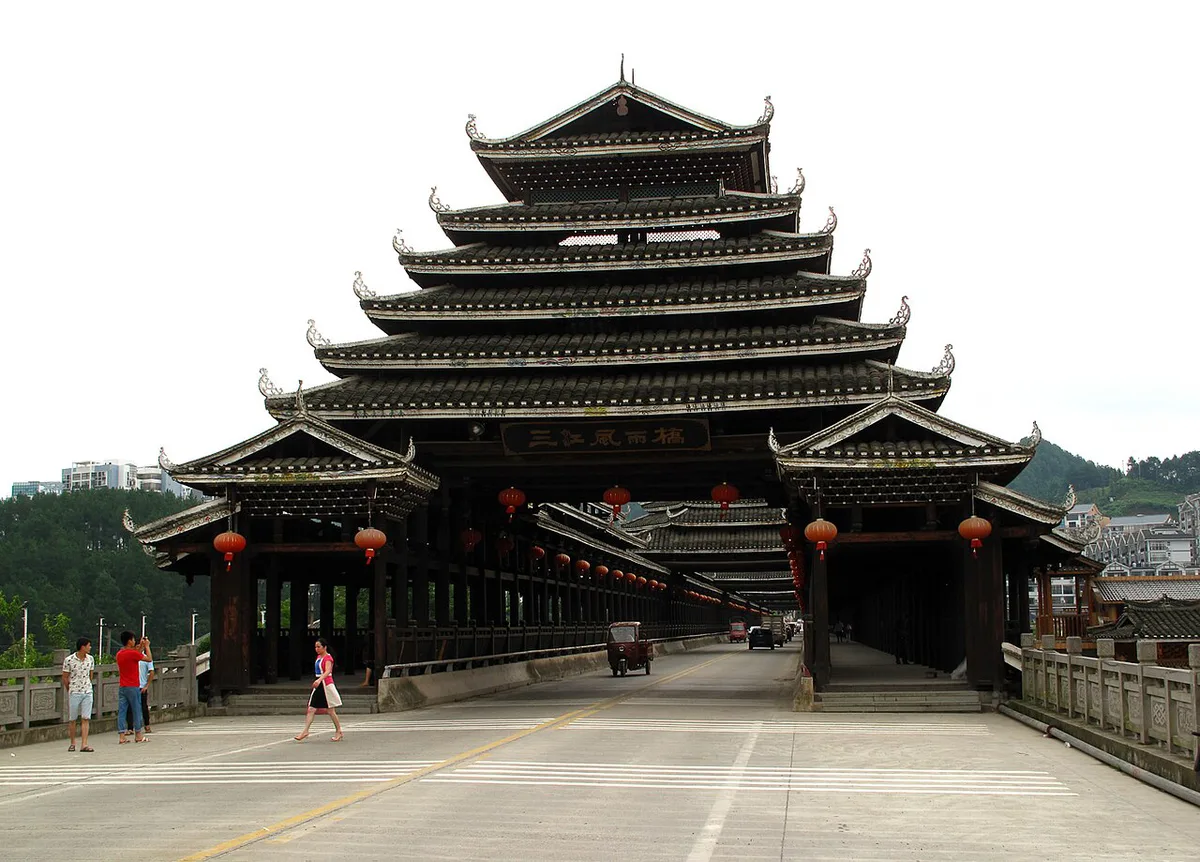
Dong communities span a border region shared by 3 provinces: Guizhou, Hunan and Guangxi. For wider context, start with our guide to ethnic minorities in Guangxi.
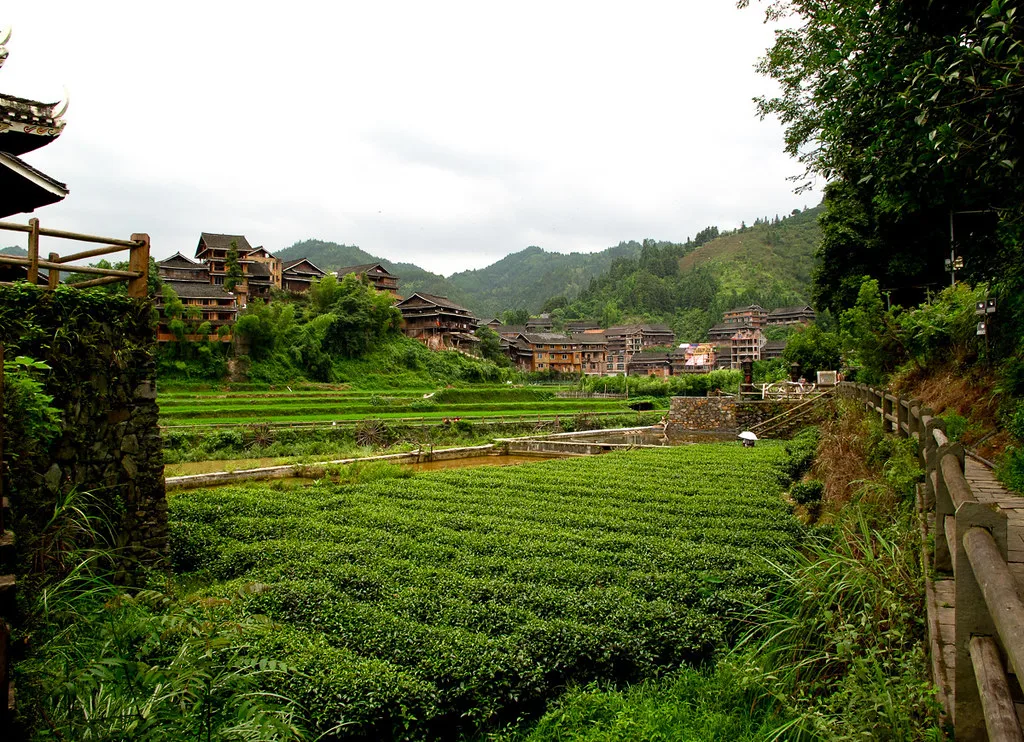
In northern Guangxi's Liuzhou area, Sanjiang Dong Autonomous County is a clear orientation point. Its Chengyang Eight Villages lie along the Linxi River in Linxi Town. Government information places the area 19 km (about 12 miles) from Guyi Town, the county seat.
Across the provincial line in Hunan, Tongdao Dong Autonomous County includes a song-festival setting at Sanshengpo. A shared border region doesn't make every village an easy hop from the next, so plan each transfer separately. For other communities in the region, read about the Zhuang people. You can also explore Yao communities and culture.
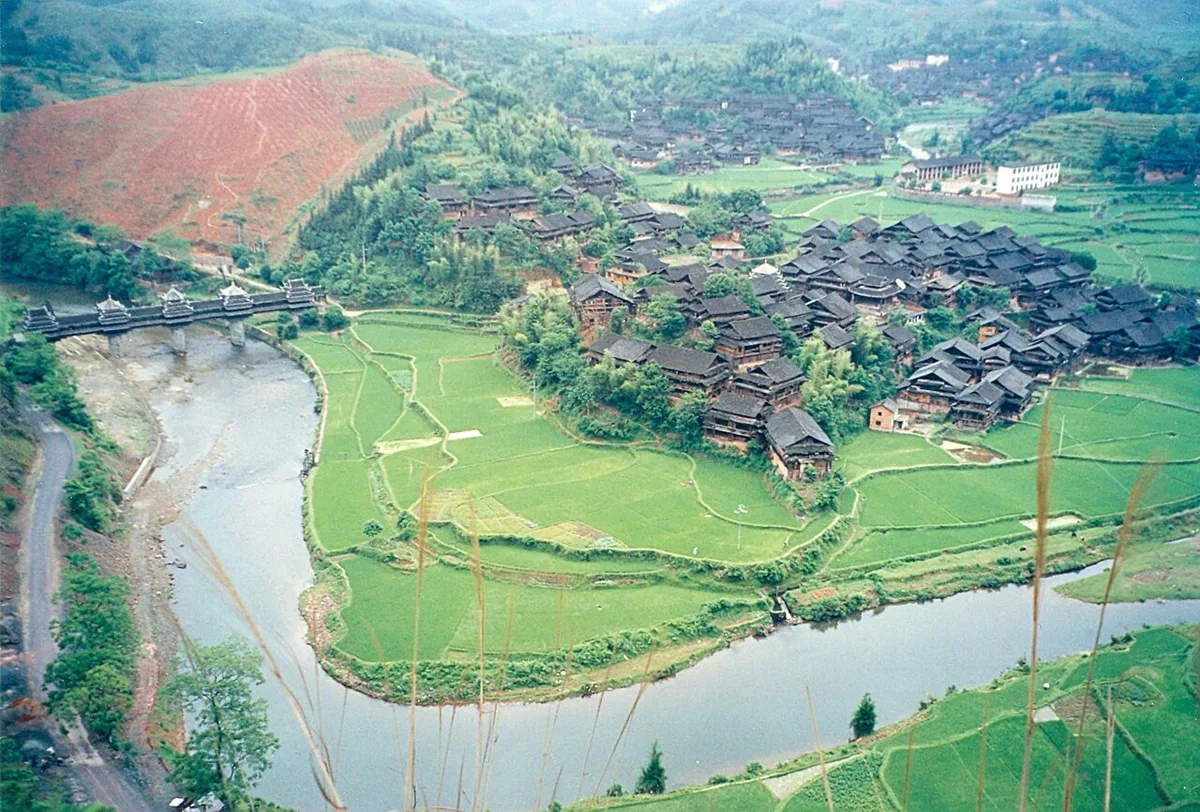
Drum Towers, Wind and Rain Bridges and Village Homes
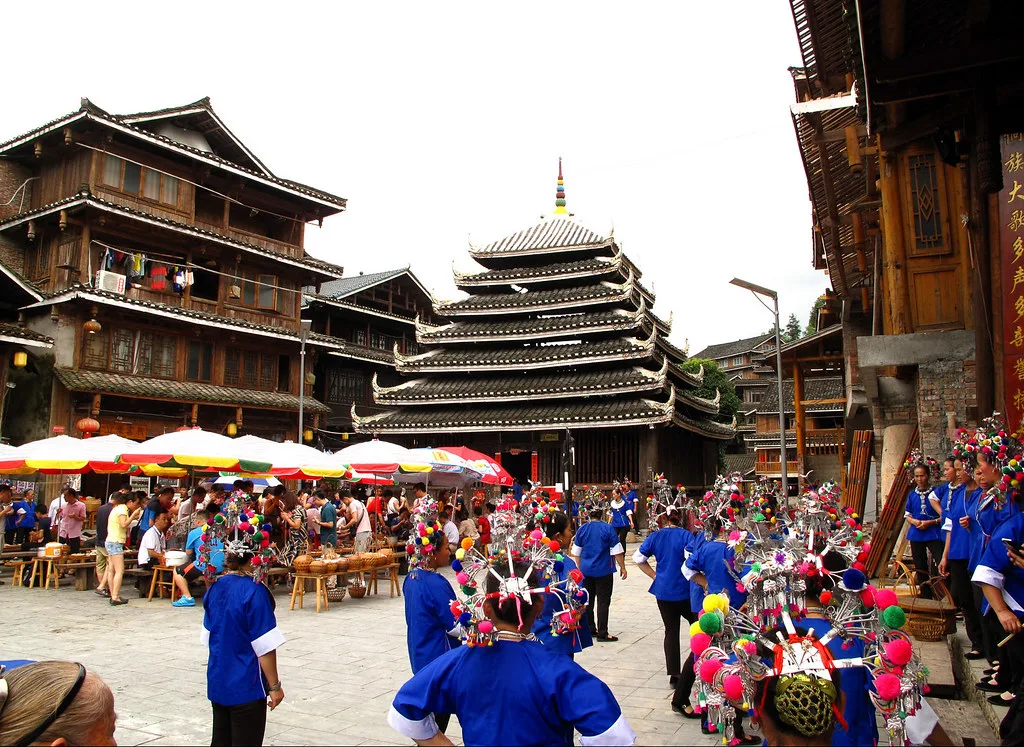
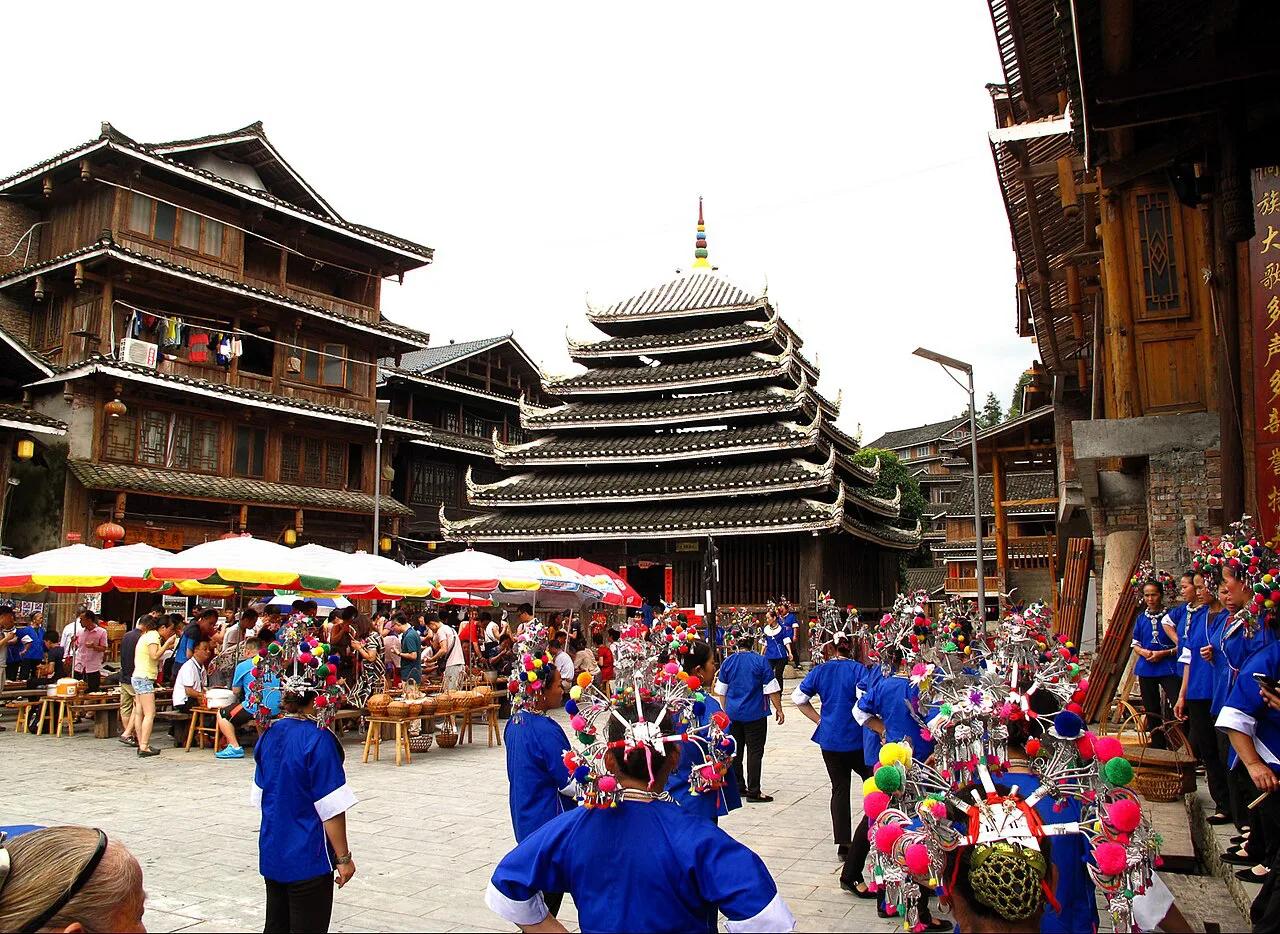
Drum towers are among the best-known features of Dong architecture, and they can have a part in cultural life. A Huaihua government account of customs describes young people learning songs there or in someone's home. In that account, evening practice follows the August rice harvest as singers prepare for exchanges with partners.
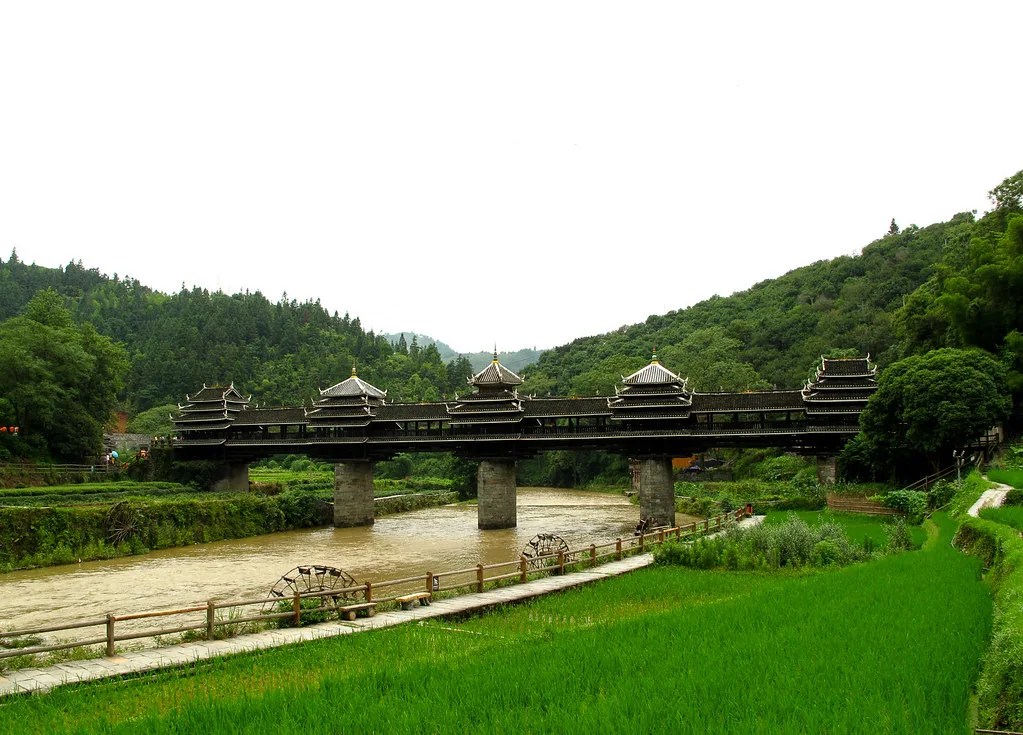
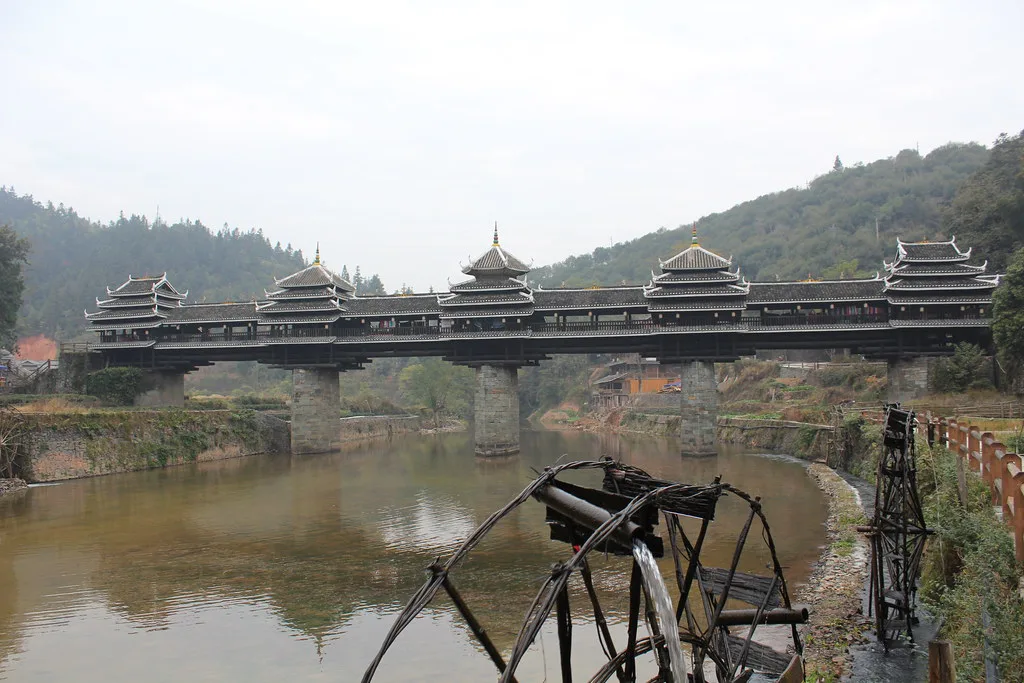
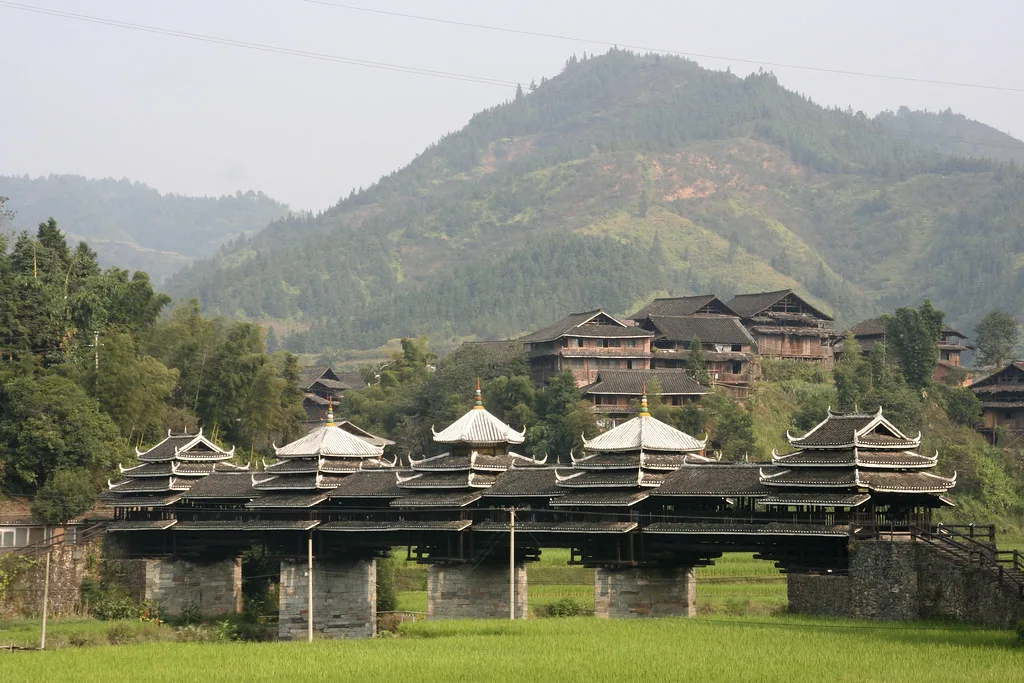
Wind and rain bridges are roofed bridges, and their architecture is closely identified with the Dong. Guangxi's best starting example is Chengyang Wind and Rain Bridge. You'll find it downstream of Ma'an Village (马安寨), inside the Chengyang Eight Villages scenic area. That scenic area carries China's AAAA tourism rating.
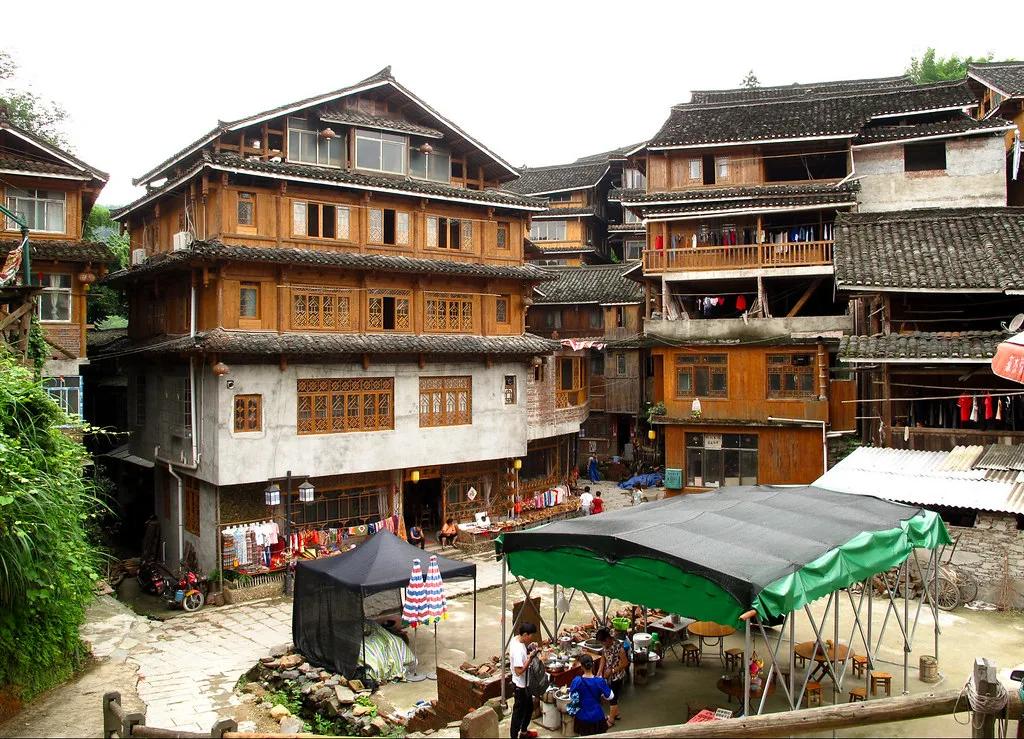
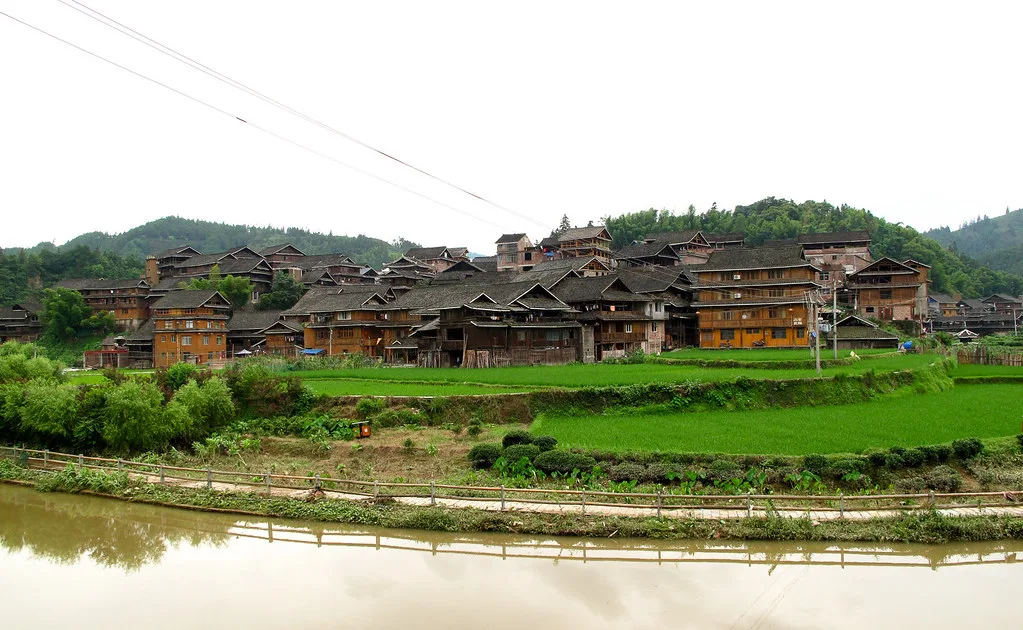
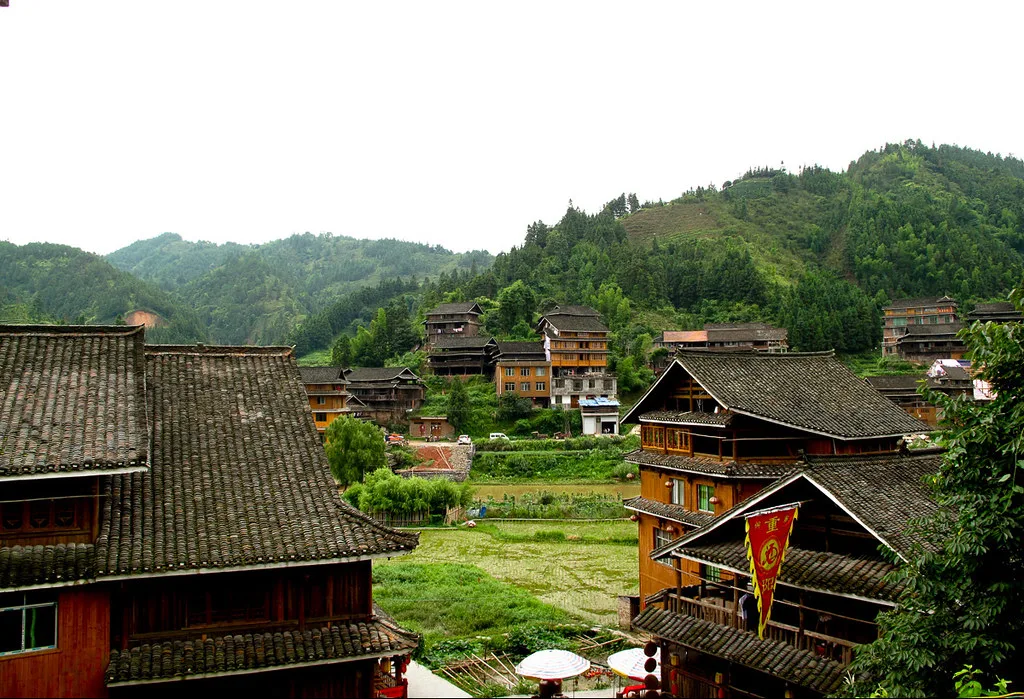
Housing has its own building tradition. A 2006 China Daily article, republished by CCTV, described 2- or 3-story fir houses raised on stilts on slopes or riverbanks. People lived upstairs, while the ground level held animals and firewood. Read that as a picture of a traditional form, since it doesn't describe how every Dong household lives now. A house with old-style timberwork may still be a private home, so admire it from public space unless someone invites you in.
Songs, Oil Tea and Everyday Traditions
Song is a major part of Dong cultural identity. UNESCO includes the Grand Song of the Dong on its Representative List of intangible cultural heritage.
Nighttime antiphonal singing is a different, courtship-related tradition described in the Huaihua account. Antiphonal means that 2 sides answer each other in song. Young men and women sit facing one another, about 1–2 m (3–7 ft) apart, while older villagers and children sit around them. Women open with 3 songs, which form a round. Men must answer the first 2, then take a different theme for the third.
Exchanges move through 3 stages. Singers begin by testing knowledge with subjects such as human origins, the calendar and riddles. A short transition follows, before the final stage turns to love songs. Treat this as part of community courtship, not an activity for visitors to join or request.
Oil tea is closely tied to welcoming guests. That 2006 China Daily article called serving it a traditional form of Dong hospitality. If a host offers some, you're receiving a household welcome; don't assume every visit includes it. Banquets can carry their own courtesies. Under the Huaihua account, hosts send invitations 1 day ahead, then follow up once or twice on the day.
Dong Festivals: What to Check Before Planning Around One
Two song festivals connected with Sanshengpo need to be kept apart. June 6th Song Festival, also called Cenlangpo Song Festival, falls on day 6 of lunar month 6. Its Dong-language name is given as qak jenc leegx. According to legend, it remembers the tragic love of Zou Xia and Cui Xianglang during the Jiaqing reign of 1796–1820. Their story includes a refuge near Chengyang Village in Guangxi, but that detail doesn't make Chengyang the festival venue.
Dawuliang Song Festival follows another rule: it takes place on a Dawu day in lunar month 3. Young Dong men and women from Hunan, Guangxi and Guizhou use antiphonal singing to express feelings and seek partners. Huaihua's account likens it to a Dong Valentine's Day. It also cites historical records tracing the festival to the Song dynasty, with growth under the Ming and Qing.
Lunar dates move on the Western calendar. Before booking, ask local authorities for this year's date, exact meeting place, public access and any changes. For more seasonal reading, see our Sanyuesan festival guide. Plan Dawuliang using its own date and venue details.
In Hunan's Jingzhou County, Dong and Miao communities both take part in Lusheng dancing; that linked guide focuses on Guangxi. Named Dong gatherings there have separate lunar dates, so match the village to the day.
- June 6th Song Festival: Sanshengpo area; day 6 of lunar month 6; linked by legend to a love story.
- Dawuliang Song Festival: Sanshengpo, Yatunbao Town, Tongdao; a Dawu day in lunar month 3; associated with singing and finding partners.
- Shaba Lusheng gathering, Jingzhou: Dong gathering on day 2 of lunar month 1.
- Chongnen Lusheng gathering, Jingzhou: Dong gathering on day 4 of lunar month 1.
- Xinjie Lusheng gathering, Jingzhou: Dong gathering on day 15 of lunar month 7.
How to Be a Good Guest in a Dong Village
Home etiquette matters because a threshold, stool or fireside seat can carry family meaning. Huaihua's guidance reflects customs reported from the Hunan side, so follow your host's lead in other communities. Hearths serve for cooking, warmth and receiving guests. An invitation to the middle seat there is an honor.
In the same account, new red-painted four-legged stools signal a recent marriage and form part of the bride's dowry. They are reserved for her until she has a child. Afterward, others may use them freely.
General visitor courtesy is separate from these specific customs. Ask before photographing someone or entering a home, private room or ceremonial space. Let residents decline without pressing them. Village life includes work and rest, so don't expect anyone to sing, dress up or pose on demand.
- Avoid sitting on the main threshold with your back to the ancestral shrine; this is considered disrespectful to the household's ancestors.
- Avoid casually using new red four-legged stools.
- Do sit upright if offered the central guest seat at the hearth; don't spread your legs wide or casually cross them.
- General courtesy: ask before taking close photos or stepping into private or ceremonial spaces.
- General courtesy: watch quietly unless a host clearly invites you to participate.
Where to Experience Dong Culture and How to Plan
For a first Guangxi visit focused on architecture and village walking, Sanjiang's Chengyang area gives you the clearest planning base. Allow about half a day for a simple visit to the whole scenic area. Its classic walk starts at Chengyang Bridge and Ma'an Village by the main gate, continues to Dazhai and takes about 2–3 hours. Many visitors stay overnight and spend 1–2 days.
Chengyang sits 19 km (about 12 miles) from Guyi Town, the county seat, so add that leg to any rail-arrival plan.
Prices and hours checked November 2026. Chengyang Eight Villages is open all day, year-round. A county government page dated October 2016 lists adult admission at ¥60. Age, height and status concessions are below; bring the relevant ID or certificate.
On holidays and in peak season, Chengyang Dazhai often holds a paid Hundred-Family Banquet at midday. Visitors arriving during a festival or wedding may also be able to join traditional Dong celebrations. Don't build your day around a chance event.
For rail arrivals, Sanjiang South (Sanjiangnan) station has direct trains to and from a network that includes Guilin, Liuzhou and Nanning. Direct services also connect it with Guiyang, Guangzhou and Shenzhen. Check your travel date, the transfer to your village and the journey back before booking. An overnight stay gives you more breathing room when an evening plan or return connection is uncertain.
Choose Tongdao if a dated Sanshengpo festival is your main reason to travel. A flexible village visit suits you better if architecture matters more than a particular day. In Guizhou, Zhaoxing and Sanbao are other Dong village names to research. Compare their current visitor services, performances and access individually. More services don't make a village less authentic, and fewer services don't make it more so. With limited time, pick 1 base instead of assuming that cross-province connections will be simple. Before paying for transport or lodging, match the venue to your event and secure a workable way back.
- Free admission: children aged 6 and under, or 1.2 m (about 3 ft 11 in) tall and under.
- Half price: children over 1.2 m and up to 1.4 m (about 4 ft 7 in).
- Seniors with their own valid ID: half price at ages 60–64; free from age 65.
- Students: half price for full-time enrolled students with a student ID.
- Free with the relevant credential: active-duty military personnel with their own officer ID and people with disabilities with their own disability certificate.
Notes for your Guilin trip
Optional updates to our guides.
Also worth reading
Keep planning
More guides you'll find useful